The Arc logo

Need Help with Governance, Management, and Operations at Your Chapter?

The Standards for Excellence Institute helps nonprofit organizations achieve the highest benchmarks of ethics and accountability in governance, management, and operations. Through an exclusive agreement with The Arc, chapters have free access to the Institute’s Standards for Excellence®, an informative set of guidelines that promote high standards of ethics, effective management, and accountability in nonprofit governance. In addition to these guidelines, chapters can use additional educational resources. (Note: You must be logged in to view this page). Chapters interested in obtaining accreditation will enjoy discounted rates negotiated by The Arc. Contact Karen Wolf-Branigin for additional details.

The Arc logo

Introducing The Arc’s 2019 – 2020 National Sibling Council!

We are excited to welcome eight new members to our 2019-2020 National Sibling Council! They bring a wide range of expertise and passion and we are fortunate to be working with them for the next term year. The Sibling Council fosters active involvement of siblings of individuals with intellectual and developmental disabilities (I/DD) in The Arc’s grassroots advocacy efforts nationwide. Meet our new council members and learn more about why they joined the Sibling Council and what motivates them to promote and protect the rights of individuals with I/DD throughout the country!

Caitie Jones, Alaska

My brother, Chris, has Down syndrome and lives in Anchorage, Alaska. I have been a very active member of Chris’ support team and have been working in the disability field for five years. Currently, I am the Family Partner at Hope Community Resources, Inc., assisting families in accessing resources throughout the community and am working on opening a center where families of kids with disabilities can come together for support. I joined the sibling council to connect with other siblings and to continue advocating for people with disabilities.

Cameron Kell, Missouri

There are several reasons I wanted to join The Arc’s National Sibling Council. First, I am grateful for the work The Arc has done to benefit my brother, Nathan. As an advocate, I want to play a role in The Arc’s efforts to promote and protect the rights of people with I/DD across the country.

Karen McDowell Downer, Tennessee

My sister, Mindy, is 61 and lives in a residential facility in their hometown. As Mindy’s sister and supporter, I want to advocate for positive change in the continuity of her care and support systems. The most important issue Mindy currently faces is staff turnover among her direct service providers (DSP) and licensed professional nurses (LPN) due to their insufficient pay. I believe that this issue among DSPs and LPNs are representative of late in life issues people with I/DD will face — this is when siblings must step up.

Kim Keprios, Minnesota

I am the proud sibling of Mike Keprios, my constant teacher of what matters, and how I found The Arc and my rewarding career with the organization. I am grateful for the collective efforts of The Arc to change policies, attitudes, and lives with and for people with I/DD, their families, and our communities. New challenges emerge with our aging demographics growing. I am committed to the advocacy work The Arc is leading and raising awareness of unique needs siblings face. The Arc’s National Sibling Council provides me the opportunity to serve, connect with siblings, and advocate with and on behalf of people with I/DD.

Mary Valachovic, Massachusetts

I am the Executive Director of The Arc of Greater Plymouth in Plymouth MA. Although I have over 25 years of work experience supporting people with disabilities, my true journey began when my brother Matthew was born. Matthew has significant disabilities and has served as my inspiration over the years, both personally and professionally. It is Matthew that led me to The Arc’s National Sibling Council. At age 12, I became an active member of her local chapter youth group and my passion continues to this day. I am committed to the power of listening to people with disabilities and their families and am honored to serve on The Arc’s National Sibling Council.

Nayma Guerrero, California

I joined The Arc’s National Sibling Council because I know that my role as a sibling is very important in the life of my brother, Eric, who has autism. My passion and eagerness to advocate for others like my brother is one of the main reasons I am active with The Arc. I hope to make a difference in my community and to continue encouraging other siblings to become involved and a part of their siblings’ lives.

Rachel Hafner, North Dakota

I am the Executive Director of The Arc, Upper Valley in Grand Forks, North Dakota. I was 13 years old when my brother Timothy was born. Sibling issues have always been very important to me and have been the catalyst for the work I do as a professional. I hope that by serving on The Arc’s National Sibling Council, I can help shine a light on the important role siblings play in the lives of their brothers and sisters throughout their lifetime.

Sandra Tucker, Colorado

I am the Executive Director at Sibling Tree and my brother, David, is on the autism spectrum. I joined The Arc’s National Sibling Council because I believe that the sibling voice is important and needed in order to advocate for the unique needs of siblings, as well as the needs of brothers and sisters with I/DD.

The Arc logo

It’s About Community: Celebrating the 20th Anniversary of Olmstead Decision and Advancing the Integration Mandate

The U.S. Supreme Court Olmstead v. L.C. decision 20 years ago established that unjustified isolation is a form of discrimination under the Americans with Disabilities Act (ADA). The decision acknowledged that segregating individuals with disabilities in institutional settings deprives them of the chance to participate in their communities, interact with people who do not have disabilities and make their own day-to-day choices. The Olmstead decision furthered the promise of the ADA, prohibiting unnecessary segregation and expanding integrated services for people with disabilities.

At this important milestone, let’s join together to acknowledge Lois Curtis and Elaine Wilson, two women with diagnoses of mental health conditions and intellectual disabilities, whose determination to return to the community has come to benefit us all. Let’s also celebrate the efforts of people with disabilities and their families and the disability rights community, and the progress we have made together. We must continue to build an array of community-based and integrated options to support choice and independence, and work to end inappropriate and unnecessary institutionalization. Together, we can advance integration, encourage and support full, meaningful inclusion in community life, and economic self-sufficiency.

The Arc logo

Department of Health and Human Services Proposes Rule to Weaken Nondiscrimination Protections of Affordable Care Act

The Arc continues to work to protect the significant achievements of the Patient Protection and Affordable Care Act (ACA), including the nondiscrimination provisions in Section 1557. We are disappointed to see the proposed rule from the Department of Health and Human Services (HHS), which radically narrows application of the nondiscrimination protections and limits the remedies for people who are impacted.

Sec. 1557 of the ACA prohibits discrimination on the basis of race, color, national origin, disability, age, and sex in healthcare. This section of the ACA is an important tool for achieving health care equity for people with disabilities and others. The proposed rule narrows important civil rights protections and undermines or eliminates key provisions covering individuals who have experienced discrimination in health care programs and settings.

The Arc promotes strong enforcement of existing civil rights laws in the face of attempted rollbacks, and opposes this proposal that puts people at greater risk of being denied necessary and appropriate health care. We will continue to pursue civil rights protections against discrimination based on disability, health status, ethnicity, race, sex, pregnancy, gender identity and expression, sexual orientation, religion, familial status, age, language, national origin, and genetic information in the administration of and access to health care.

What can The Arc and disability rights advocates do? This rule is not yet final, and today is the beginning of a 60-day public comment period. The Arc will participate in the comment process and will share resources to help others engage. To stay informed, sign up for our Disability Advocacy Network email list.

A distressed woman on her cellphone sits with her head in her hand

Get Help for Urgent Needs

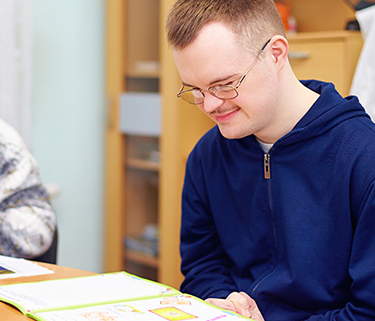
A young man wearing glasses smiles while sitting at a desk and reading a booklet

See How Others Have Planned

Close up of stack of papers

Find Future Planning Resources

The United States Capitol building with green lawn in forefront and blue, cloudy sky in background

Public Policy Goals

Caucasian father with 4 biracial children at park, surrounding son in wheelchair

Position Statements

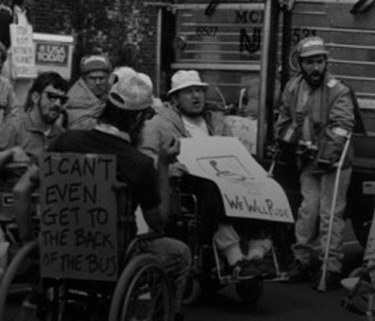
A historical black and white photo of activists with mobility aids. The back of a man's wheelchair reads "I can't even get to the back of the bus"

Our History