
A diverse classroom with a teacher sitting on the floor next to two students, who are looking at a workbook.

The Ultimate Back-To-School Guide for Families of Children With Disabilities

Updated August 4, 2026

Written by: Robyn Linscott, Director of Education & Family Policy and Katy Neas, CEO of The Arc of the United States

The start of a new school year can bring excitement, but for parents and caregivers of children with disabilities, back-to-school preparation often includes much more than supply lists and first-day nerves. You may be reviewing an IEP or 504 plan, making sure services and accommodations are ready, preparing your child for a change in routine, and figuring out how to work with a new team at school.

Recent changes to how the U.S. Department of Education oversees special education and civil rights protections have also left many families wondering what, if anything, will be different for their child this year. We break down what those changes actually mean, and don’t mean, for your family’s rights in our explainer on moving special education oversight out of the Department of Education.

The short version: the laws that protect your child, including the right to a free appropriate public education, haven’t changed. But given the shifting federal landscape, it’s more important than ever to start conversations with your child’s school early and keep having them all year long.

Most back-to-school checklists assume a fairly uniform experience: the same supply list, the same first-day jitters. Families of children with disabilities are often left to figure out the rest on their own. This guide is for you.

Before the School Year Starts

How Can I Prepare My Child With a Disability for a New School Year?

Have a real conversation with your child about what’s coming. What are they excited about? What’s making them nervous? Use it to set clear, honest expectations. A visual calendar you build together to mark the first day, picture day, breaks, and other milestones can make the transition feel more predictable and less abstract, especially for kids who rely on routine and visual supports.

How Can I Help My Child With a Disability Adjust to a New School Routine?

Don’t flip the switch overnight. Start rebuilding a consistent before- and after-school routine a couple of weeks out, whatever that looks like for your child: a calm morning routine, dedicated homework space, predictable bedtime wind-down, etc. Keep weekend plans light for the first few weeks so your child has room to decompress instead of starting each week already worn out.

Should I Review My Child’s IEP or 504 Plan Before School Starts?

Before the first bell rings, sit down with your child’s IEP or 504 plan and read it thoroughly. Know every goal, every accommodation, every related service, and every deadline in it. If anything has changed since the last meeting (i.e. new needs, a new diagnosis, assistive technology that could help) request an IEP or 504 review meeting now, before small issues turn into bigger ones once the year is underway.

If you’re not sure which document applies to your child, or why, you’re not alone. It’s one of the most common points of confusion for families, and most back-to-school advice skips it entirely. In short: an Individualized Education Program (IEP) is a legal document under the Individuals with Disabilities Education Act (IDEA) that provides specialized instruction and services for children who qualify. A 504 plan, under Section 504 of the Rehabilitation Act, provides accommodations for children who don’t need specialized instruction but do need a level playing field.

We break down IEPs in detail in our IEP rights guide, and Parents.com has a helpful explainer on 504 plans that includes input from The Arc’s policy team: Everything Parents Need to Know About 504 Plans.

Keep a running record of everything: your child’s progress, setbacks, and any communication with the school. It becomes invaluable at the next meeting and for tracking growth over time.

How Can I Build a Strong Relationship With My Child’s Special Education Team?

Reach out to your child’s teachers and service providers before school starts. Share what you know: your child’s strengths, interests, and what you’re hoping for this year. Agree on a communication plan that works for all of you, whether that’s a weekly email, shared log, or something else that keeps everyone on the same page.

It’s also okay to be direct. If the federal changes to special education oversight have you uneasy, say so. Ask your child’s school outright: what is your plan to make sure nothing changes for my child this year? A good school will have an answer. If your child is starting at a new school, ask for a tour ahead of time and start planning the transition with both schools early. If they’re in a before- or after-care program, build a relationship with that staff too. They’re part of your child’s day even when they’re not in the classroom.

A Resource to Share With Your Child’s School

Families shouldn’t carry the responsibility for making schools inclusive. Educators also have a critical role in preventing bullying and creating classrooms where students with disabilities belong. On the Leading Equity podcast, The Arc’s CEO Katy Neas discusses why students with disabilities are targeted for bullying, what adults may be missing, and how educators can build safer, more inclusive classrooms.

Listen to the podcast: Why Your Student With a Disability Is Being Bullied (And What You’re Missing)
Watch the conversation on YouTube

Once School Starts

How Can I Help My Child With a Disability Build Self-Advocacy Skills?

Teach your child developmentally appropriate ways to advocate for themselves: asking for a break when they’re overwhelmed, asking a teacher to repeat instructions, sharing what they need in the moment. These are skills they’ll use well beyond this school year.

What Should I Do If My Child With a Disability Isn’t Getting the Support They Need at School?

The first few weeks are rarely smooth for anyone. Give your child and their teachers room to find their groove. But keep watching closely, and if something isn’t working, don’t wait it out. A quick, respectful conversation in week two is a lot easier than a crisis meeting in month three.

Recognize Your Child’s Progress, Not Just the Problems

Notice the effort, not just the outcome, such as a good week, new friendship, proactive or creative school work, or hard morning handled well. Naming it out loud builds the kind of confidence that carries a child through a harder day later on.

Finding Support and Understanding Your Rights

Where Can Families of Children With Disabilities Find Support and Help with School Issues?

You don’t have to figure this out solo. Your state’s Developmental Disabilities Council, your local chapter of The Arc, and inclusive extracurricular activities in your community can connect you with other families living the same challenges right now, people who’ve likely already found the workaround you’re looking for.

What Special Education Rights Should Parents Know at the Start of the School Year?

Under IDEA, your child has a federal legal right to a free appropriate public education, tailored to their needs. That right doesn’t depend on which federal agency is overseeing it, and it doesn’t disappear because of policy changes in Washington, DC. If you’re ever unsure whether your child is getting what they’re legally entitled to, The Arc@School was built exactly for this: plain-language guidance on your rights and real support finding your footing when something feels off. Knowing your rights here is the foundation everything else on this list depends on.

Your well-being is part of this, too. A quiet hour with a book, call with a friend, or even five minutes of scrolling isn’t indulgent. It’s what keeps you steady enough to show up for your child the other 23 hours of the day.

You’re not doing this alone. We’re here for every step of it. Here’s to a strong start to the year.

More Back-to-School and Special Education Resources for Families of Children With Disabilities

Common Back-to-School Questions Families of Children With Disabilities

What should I check before my child with a disability starts school?

Confirm transportation, health needs, accessibility, and who to contact if something goes wrong. If your child has an IEP or 504 plan, review the supports that should be ready on day one.

What should I tell my child’s teacher about their disability?

Share what helps your child learn, communicate, manage sensory needs, and feel supported. Focus on useful information about your child as a person, not just their diagnosis.

How can I ease the school transition for my child with a disability?

Make the new routine as predictable as possible. Practice key parts ahead of time, use visual or communication supports that work for your child, and leave space to decompress after school.

What if my child’s disability supports aren’t ready?

Contact the school team early and be specific about what is missing. Keep a written record, and use our IEP rights guide if you need more information about your child’s legal rights and next steps.


Roll of red, white, and blue "I voted" stickers on a white table

You Have the Power: Go Vote!

It’s almost time to cast your vote in the midterm election. Are you ready?

According to the Centers for Disease Control and Prevention, 1 in 4 adults have a disability. Any cohort of this magnitude carries significant political power, especially during a midterm election year such as 2022.

People with disabilities and their family members recognize that their votes help elect the officials who will run the government, make laws, decide where government money gets spent, and much more. All these decisions have a significant impact on the lives of people with disabilities, their families, and the workforce that supports them.

The Center for American Progress found that nearly 62% of voters with disabilities cast a ballot in the November 2020 election, compared to just 56% in 2016. This increase is in spite of the fact that people with disabilities continue to face barriers to casting their ballot, such as complex mail-in voting procedures, inaccessible voting locations, inexperienced polling workers, guardianship laws, transportation barriers, and more.

This fall, the disability community and their supporters have another opportunity to make their voices heard through their vote. In this current midterm election cycle, all 435 seats in the House of Representatives and 35 of the 100 seats in the Senate are on the ballot.  Additionally, eligible voters in 36 states will vote to install new governors. That’s a lot of opportunity for our community to shape the future of our country by simply going to the polls.

To help you navigate this election season, The Arc has created several resources and put together essential information about voting. At thearc.org/vote you can find the following materials in plain language in both English and Spanish:

  • The Arc’s Disability Voting Guide
  • The Election & You: Thinking About Disability
  • Sample Questions for Candidates

You can also check out The Arc’s Civic Action Center to find your state’s upcoming election information, your closest polling location, and verify if you are registered to vote (make sure you know your states deadline!).

Let’s keep the momentum going and show our civic power again this election season. Take the first step and pledge to vote today!

The United States Capitol Building

Senate Leaves Out of Reconciliation Bill a Badly Needed Investment in Disability Services

WASHINGTON, DC – Following the U.S. Senate’s vote today on the Inflation Reduction Act, people with disabilities, their support staff, and families will continue to fight for desperately needed resources for the home and community-based services system that has been strained to the breaking point throughout the COVID-19 pandemic.

Throughout the budget reconciliation process, The Arc and our allies in the disability, labor, and direct care worker communities has been advocating for a historic investment in home and community-based services. But the legislation that just passed the Senate completely left out the needs of the disability services system, and the workforce that is disproportionately women of color, who are long overdue for the recognition and benefits of a raise for their important work. It also fails to address other longstanding needs of people with disabilities, family caregivers, and workers, such as paid leave. The bill does help our community in other ways – it will directly impact people with disabilities and their families by lowering drug prices for Medicare beneficiaries, continuing health insurance subsidies, and taking steps to address climate change.

“We are deeply disappointed that Congress is not taking this historic opportunity to provide people with disabilities and their families the services and supports they need to live as independently as possible.

“Since the start of the pandemic, the disability services system has been teetering on the brink of collapse. The entire care infrastructure already had huge gaps and cracks, and the unprecedented pressure of this crisis galvanized people with disabilities, their support staff, and their families to advocate for the investment needed to help people now and into the future.

“For the first time, many people who don’t have a personal connection to disability became aware of the needs of our community, thanks to advocates willing to share their deeply personal struggles with legislators, the media, and their neighbors. The uprising generated hundreds of thousands of pleas to Congress to enact a care package that would provide more access to services in the community, and pay the people doing the work a fair, living wage.

“We will not stop pushing for what we need because home and community-based services for people with disabilities make all the difference in the quality of life for a person with a disability and their family,” said Bethany Lilly, Senior Director of Public Policy, The Arc.

Nurse holding the hand of a patient

Disability Advocates Urge for Investment in Launch of 988 Hotline: A Mental Health Crisis Deserves a Mental Health Response

The Arc of the United States through its National Center on Criminal Justice and Disability, and the Autism Society of America, two of the nation’s largest and oldest grassroots organizations representing people with intellectual and developmental disabilities (IDD), mark the national rollout of the 988 National Suicide Prevention Lifeline, a Suicide and Crisis Lifeline, by calling for true transformation in crisis response across the nation.

On July 16, 2022, the U.S. will transition to using the three-digit 988-dialing code, nationwide. The expanded hotline will provide 24-hour access to people across the country experiencing a mental health crisis or behaviors that are part of their disability.

According to the National Center for the Dually Diagnosed, 30% -40% of people with IDD are likely to have co-occurring mental health disabilities (almost 70% for people with Autism). In addition, the Centers for Disease Control says adults with disabilities are almost four times more likely to report suicidal ideation compared to persons without disabilities (31% versus 8% in the general U.S. population).

Too often, people with disabilities in crisis have nowhere to turn and call 911, many times resulting in bad outcomes. In some instances, family or friends call 911, only escalating the situation. Research shows people with mental health conditions are 16 times more likely to be killed by law enforcement, people with disabilities make up 33% of people killed by law enforcement, and these risks increase for Black people and other people of color (Policing and Racial Injustice: A Disability Rights Perspective Impacts and Solutions, Disability Rights Ohio).

Disability-related behaviors can be misunderstood by law enforcement officers who are trained to gain control and compliance on a scene but typically not trained to identify a disability or know how to interact or communicate with persons with disabilities. Behaviors such as rocking back and forth, walking or running away when being approached or questioned, and having trouble communicating can be misunderstood and wrongly believed to be indicative of violent behavior or behavior associated with drugs.

“A mental health crisis deserves an emergency response that addresses behavioral health, as well as intellectual and developmental disability for people with co-occurring diagnoses. We applaud the launch of 988, but we believe more investment in the system is needed to ensure people with IDD who have mental health challenges, in every state, have access to the hotline and to make sure 988 effectively serves communities,” said Peter Berns, Chief Executive Officer of The Arc of the U.S.

“Suicidal ideations and attempts disproportionately affect the Autism community at a rate at least three times greater than the neurotypical rate. The Autism Society put together a Suicide Prevention Task Force, which is working to provide more actionable guidance for crisis centers, like the 988 Suicide Prevention Lifeline, to better support the Autism community,” said Chris Banks, President and CEO of the Autism Society of America.

We urge the federal government to:

  • Invest in the creation of community-based infrastructure that can effectively respond to individuals in crisis, and avoid inappropriate institutionalization, hospitalizations, or incarceration.
  • Require a national training curriculum for 988 call-center staff to understand how to respond to callers with intellectual and developmental disabilities, such as Autism, Down Syndrome and Fetal Alcohol Spectrum Disorder (FASD). For example, The Arc’s National Center on Criminal Justice and Disability offers the Pathways to Justice training program. The program offers not only training, but also supports a community-based response through Disability Response Teams that address the topic of people with IDD and criminal justice issues. 988 call center staff can be part of Disability Response Teams, joining a community-side effort to support people with IDD in their own communities.
  • Expand the definition of “first responders,” generally thought of as police, paramedics and firefighters, to include civilian mental health crisis responders.
  • Develop nationwide mobile crisis teams equipped with trauma-informed mental health professionals, peer supports, and community de-escalators.
  • Invest in training mental health professionals, first responders, and related personnel in meeting the needs of people with IDD.

As 988 is rolled out in states and communities across the country, we must work to ensure community-based supports are in place for all callers, including those with mental health disabilities and IDD.

On September 13, The Arc is hosting a free, virtual teach in and workshop, titled “Disabled BIPOC: Disrupting Danger in Crisis Response”. Learn more and register.

A row of $20 bills

The Arc Supports Bill to Allow People With Disabilities to Earn and Save More Money

Washington, D.C. – The Arc supports a bipartisan bill introduced in Congress to finally give people with disabilities and older Americans significantly more freedom to earn and save money without risking the loss of vital benefits, their livelihoods, and their ability to support themselves and members of their family. The SSI Savings Penalty Elimination Act, introduced by U.S. Senators Sherrod Brown and Rob Portman on Tuesday, updates Supplemental Security Income (SSI) asset limits for the first time since the 1980s. Current SSI asset limits prevent individuals who receive the modest benefit from saving more than $2,000.

The bill raises SSI asset limits from $2,000 to $10,000 for individuals and from $3,000 to $20,000 for married couples and indexes them to inflation moving forward. SSI provides money to 8 million adults and children with disabilities and older Americans. Many recipients are Black, Hispanic, and other people of color and further marginalized – making it even more critical that Congress pass this bill.

“The SSI Savings Penalty Elimination Act is a positive step forward in The Arc’s ongoing push to give millions of people with disabilities the economic opportunity they deserve and more financial security to save for emergencies and unexpected expenses. We see too many people with disabilities and their families forced to impoverish themselves in order to maintain critical SSI benefits, instead of being able to save for the future and for emergencies that arise in all of our lives,” said Peter Berns, CEO of The Arc of the United States. “Raising asset limits would significantly improve the lives of people with IDD who receive SSI.”

For many years, The Arc has advocated relentlessly for changes to SSI asset limits and against the existing unfair and discriminatory caps. Along with advocates, we have continuously urged Members of Congress to update SSI asset limits to at least adjust for inflation, so that people with disabilities can take advantage of financial opportunity to provide for themselves and their families and feel a better sense of financial security.

The Arc sent a letter to Senators Brown and Portman in support of the bill. Read it here.

Woman on escalator wearing a face mask; she's holding a cell phone in one hand and her suitcase handle in the other

The Arc Responds to New CDC Mask Guidance

Washington, DC – The Arc is disappointed by the decision by the Centers for Disease Control and Prevention (CDC) on Friday to revise masking guidelines for the United States. The new set of criteria deprioritizes the importance of case counts, resulting in approximately 70% of United States counties shifting status overnight. This does not mean that those counties do not still have high case counts or that people in those communities who are immunocompromised and at higher risk of contracting and being harmed by COVID-19 should not still protect themselves. The CDC acknowledges as much in their new guidance, detailing different rules for people who are immunocompromised.

“People with intellectual and developmental disabilities are at extremely high risk of contracting and dying from COVID-19 – having an intellectual disability was the strongest independent risk factor for presenting with the diagnosis and the strongest independent risk factor other than age for COVID-19 mortality,” said Peter Berns, The Arc’s CEO. Even though recent variants have been milder in some circumstances, there is no indication that they are still not a serious risk for people with IDD.

“Since the beginning of the pandemic, we have had to push back on the idea that people with IDD are second class citizens who should be deprioritized when rationing care or that the providers who serve them are not essential workers. This change to the masking guidance specifically lays out a completely separate set of rules for people with disabilities, recognizing that they are still at risk, but not asking the general public to continue to take protective measures to help reduce their risks. Access to high quality masks; accessible, affordable and available testing; monoclonal antibodies; and other mitigation options are still – two years into this crisis – not widely available and accessible to people with disabilities. Placing the burden of protecting themselves solely on the high risk individuals without these basic tools in place is unacceptable—even more so with case counts still high and non-universal access to vaccines.

“Masking indoors not only protects the individual wearing the mask, but everyone around them by reducing transmission of the virus. For people who are high risk, the amount of virus in their community is an incredibly important data point. This is especially the case for individuals with disabilities who might not be able to mask themselves and so rely on others. And it also crucial for children with complex medical needs under 5 who cannot be vaccinated right now and for children with disabilities in school who are at high risk.

“Like everyone else, people with disabilities and their loved ones are very tired of the pandemic and want to go back to something like normal. But we are still waiting for vaccines to be universally available and for case counts to drop to protect immunocompromised people. 2,797 people died of the virus on Friday when the guidance was announced and we have almost reached one million deaths, including a disproportionate number of people with IDD. We must ensure that our public health policies focus on and reflect the needs of people with disabilities, not simply tell them to fend for themselves or stay home.

“As this abrupt policy change disregards the needs of people with disabilities begins to be implemented, we ask everyone to think about others in their neighborhoods, in their communities, in that moment when questioning whether it is necessary to put on a mask. Many people will benefit from widespread masking, until things improve for everyone.”

The Arc advocates for and serves people wit­­h intellectual and developmental disabilities (IDD), including Down syndrome, autism, Fetal Alcohol Spectrum Disorders, cerebral palsy and other diagnoses. The Arc has a network of nearly 600 chapters across the country promoting and protecting the human rights of people with IDD and actively supporting their full inclusion and participation in the community throughout their lifetimes and without regard to diagnosis.

Editor’s Note: The Arc is not an acronym; always refer to us as The Arc, not The ARC and never ARC. The Arc should be considered as a title or a phrase.

The Arc logo

House of Representatives Passes Historic Disability Funding Through Build Back Better Plan

“We need the Senate to understand all that is on the line”

Today, the U.S. House of Representatives passed President Biden’s Build Back Better plan, bringing us one important step closer to making significant investments in our country, in the lives of people with disabilities and their families, and the direct support workforce. The reality is change can’t come soon enough for millions of people.

The proposal includes $150 billion for Medicaid home and community-based services, or HCBS, which provide the support people with disabilities need to be a part of their community, and better pay for the workers who support them.

“This plan is major progress in our country doing what we know is right: putting vital dollars behind something that really should never come with a price tag – basic humanity. People with disabilities, families, and the direct support professionals who support them are struggling to persevere through the hardest of times while suffering in unprecedented ways. And the clock is ticking on how much more they can take,” said Peter Berns, Chief Executive Officer of The Arc.

For years, the service system that people with intellectual and development disabilities (IDD) and their families rely on, Medicaid, has been underfunded. Millions of adults and children all over the country are stuck on waiting lists for HCBS, the direct care workforce is underpaid and undervalued – the quality of services suffer, and too often, unpaid family caregivers are left to fill the gaps, struggling to balance work and family responsibilities.

Build Back Better expands access to services for people with disabilities on waiting lists and starts addressing the direct care workforce crisis, including raising wages and creating more jobs. We need this plan – and more, and we urge the Senate to move swiftly and further humanize this deal, by adding more funding for HCBS.

Congress has heard the outcry from across the country on the need for paid leave, and included a national program so no one has to choose between taking care of themselves or a family member, and their paycheck. The Arc has long advocated for a national paid leave program for family caregivers. The pandemic forced millions of people to choose between their own health, the well-being of their families, and their livelihood.

“Taking time off to care for the people we love should not be so hard. The pandemic has only underscored the urgency of implementing a national paid leave policy, and so the time is now to do the right thing for all caregivers,” said Berns.

The Arc is also pleased that the proposal includes:

  • The expansion of the Supplemental Security Income (SSI) program to over 3 million people with disabilities living in U.S. territories
  • The extension of improvements to the Child Tax Credit for one year and permanent expansion of the credit to the lowest income families
  • The expanded Affordable Care Act premium tax credits through 2025
  • The extension of improvements to the Earned Income Tax Credit for low-wage workers with disabilities.

“We need the Senate to understand all that is on the line. The futures of people with disabilities, families, and this critical workforce depends on this moment,” said Berns.

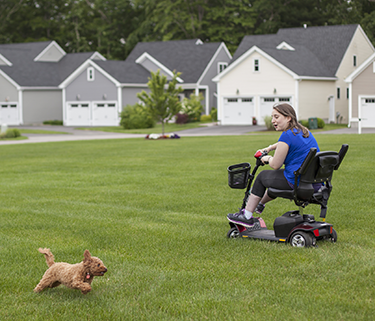
A woman in a motorized chair plays with a small dog on a grassy field in front of a community of houses

New Budget Framework Provides Historic Investment in the Disability Services System

Today, President Biden announced the Build Back Better budget framework that would make significant investments in our nation, people with disabilities, their families, and the direct support workforce. This new deal includes $150 billion for Medicaid home and community-based services, or HCBS, which provide the support people with disabilities need to be a part of their community, and better pay for the workers that support them.

For years, the service system that people with intellectual and development disabilities (IDD) and their families rely on, Medicaid, has needed an investment. People are stuck on waiting lists for HCBS, the direct care workforce is underpaid, and too often, unpaid family caregivers are filling in the gaps.

“This proposal is a huge down payment on investing in the futures of people with disabilities and their families. It will expand access to services for people with disabilities on waiting lists and start addressing the direct care workforce crisis, including raising wages and creating more jobs. Without a robust and well paid workforce, the promise of services in the community falls apart – so it was urgent that the direct support workforce be bolstered in this deal,” said Peter Berns, CEO, The Arc.

While the investment in HCBS is major, and includes long fought for funding, even with the most robust investment in these services, families still need paid leave. The Arc has long advocated for a national paid leave program for family caregivers. The pandemic forced millions of people to choose between their own health, the health of their families, and their livelihood. As the BBB package moves forward, The Arc urges Congress to include paid leave as the package moves through the House and Senate.

“We have always known because of the many stories from our network, but the pandemic highlighted for everyone how crucial paid leave is for people with disabilities and their families. Leaving out paid leave is unacceptable, and Congress should include paid leave in this package,” said Berns.

The Arc is also pleased that the framework includes:

  • The extension of improvement to the Child Tax Credit for one year and permanent expansion of the credit to the lowest income families;
  • The expanded Affordable Care Act premium tax credits through 2025; and
  • The extension of improvements to the Earned Income Tax Credit for low-wage workers with disabilities.

“We urge Congress to act quickly on this plan, add more funding for HCBS as negotiations continue, and fulfill the promise on paid leave. Change can’t come soon enough for millions of people with disabilities and their families,” said Berns.

The United States Capitol Building

During Congressional Recess, We Must Raise Our Voices for Care!

By: Nicole Jorwic, Senior Director of Public Policy

After a slight delay, both Senators and Representatives are back in their states and districts for August recess, but in fact, it goes until mid-September. That means it is a key time to engage, reach out, and share your stories about why Medicaid home and community-based services (HCBS) matter in the lives of people with disabilities, their families, direct care workers, and the care infrastructure.

Every year, The Arc sends out t-shirts and signs to support advocates and encourage them to get out and ask their members of Congress to support the legislative priorities of people with disabilities. Those boxes were sent out to chapters this year, but with the ongoing pandemic, it is clear that in-person events may not be the best option. Moreover, we know that accessibility issues at town halls, even virtual ones, are a constant barrier to access.

While The Arc staff continues the work to increase access to the political process for all people with disabilities, an alternative way for ALL people with disabilities to participate fully in recess, and have their stories known had to be created.

That is why today, The Arc is launching the “Raise Our Voices for Care” campaign. Even if you can’t get to DC, your state capital, or a local town hall, your story still matters and must be shared. Our story tool is easy to use. At the end of recess, we will put all of those stories together to show the strength of all the voices rising up to support the $400 billion investment in Medicaid Home and Community-Based Services.

As a sister to my brother Chris, who doesn’t use his voice to speak, I know how incredibly important it is that we ensure that every person has the ability to communicate, and that includes with their legislators. Join us, share your HCBS story, and help us Raise Our Voices for Care because #CareCantWait!


The United States Capitol Building

Better Care Better Jobs Act Will Make Huge Investment in Disability Services

The system that provides supports and services for people with intellectual and developmental disabilities (IDD) and their families has fallen far short of their needs for decades, and the COVID-19 pandemic exposed and worsened this reality.

The Better Care Better Jobs Act (BCBJA) introduced today will make a huge investment necessary to change disability services into the future. This bill puts into motion the proposals that were included in President Biden’s American Jobs Plan, which prioritizes the crumbling care infrastructure in this country and recognizes the importance of fixing it and building back for the future.

“Every day, people with disabilities are waiting for their lives to start and often going without the supports they need to achieve their goals. Families that want a different life than an institution or nursing home are forced to navigate a patchwork system of supports with waits and no guarantees. Family members are often forced to either quit or limit their job choices to provide care due to lack of services. And the direct care workforce is underpaid and undervalued.

“We are desperately overdue for a huge investment in disability services. The Better Care Better Jobs Act introduced today will be a game-changer and must be enacted quickly for the disability community to be a part of our economic recovery from this disastrous pandemic,” said Peter Berns, CEO, The Arc.

When the BCBJA becomes law, it will provide huge funding enhancements to states which focus on improving and expanding their Medicaid home and community-based services (HCBS) delivery system. The bill would provide funding to expand access to services for people who are currently on waiting lists for these vital services, and create more and better direct care jobs for the paid workforce that provides these services.

Learn more about how HCBS are vitally important to the lives of people with IDD and their families.