




Have you registered yet for this year’s Summer Leadership Institute? If not, now is your last chance to take advantage of our lower rate! Registration will increase after Monday, July 8. Need more convincing? Check out our top five reasons to attend!
Historic Charleston is bursting with Southern charm and hospitality. Take in incredible views of the Battery and the French Quarter as you stroll Waterfront Park, and visit the many culinary jewels that make Charleston consistently rated as one of the best cities in which to eat in the south. At night, try a ghost tour for an introduction to the spooky side of the city. If you venture off the peninsula, historic plantations and nearby beaches await!
Charleston can be hot during the summer, but it’s nothing compared to this year’s program! Attend sizzling breakout sessions on current hot topics, engaging plenary sessions, and networking opportunities to connect with other professionals in the I/DD sector looking to share their expertise and knowledge with you.
SLI is exciting, invigorating, and inspiring, but it can also be overwhelming your first time. With the buddy system, veteran attendees help first-timers prepare for the event, advising them on the best sessions to attend and how to make the most out of the networking events. An opportunity to make professional and personal connections with like-minded peers and professional leaders in an intimate setting designed to incite meaningful networking has never been better with a buddy on your side. Learn more and sign up here.
Become an expert by sharpening your skills with powerful content specific to your area of practice.
Take in the beautiful views of downtown Charleston from the water! Join your fellow professionals for a four-course meal and dancing while cruising the Charleston harbor. This is an event you don’t want to miss!
Are you convinced and ready to learn more? Check out the full program to see what else SLI has to offer. Register today before rates rise!
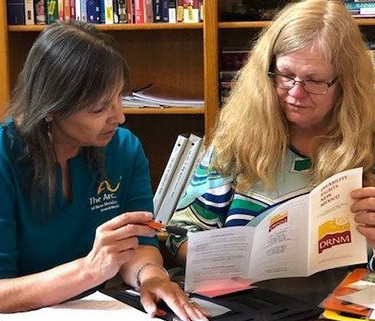
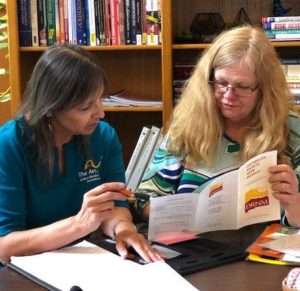 In communities across the country, a silent epidemic plagues the disability community. People with intellectual and developmental disabilities (I/DD) are seven times more likely than the rest of the population to experience sexual violence. Despite this, understanding of how to effectively provide services for people with I/DD remains elusive, and survivors often find themselves unable to get the help they need in their communities. Organizations across the country are working to tackle this problem through training, education, and trauma-informed care. The Arc of New Mexico is one such organization, where Chief Executive Officer Veronica Chavez-Neuman and program lead Pamela Stafford are providing victim advocacy services for survivors of sexual assault with I/DD and helping build the capacity of their community to respond in an informed, effective, and sensitive way.
What kind of victim services do you provide? How are you making yourself known as a resource to victims with disabilities?
We provide support to access the justice/legal system. We provide support to improve disability informed medical and mental health supports and trauma-informed disability services. We have presented at various conferences and provider forums, posted information on social media, and have had articles written in The New Mexican newspaper. We have also presented at various case management agencies, provider agencies meetings, and community access locations.
What are the steps you take when you become aware that someone with I/DD has experienced sexual assault? Who typically reports the incident to you, and does that affect your next steps for addressing it?
It’s difficult to talk about typical when each situation is individually unique. The safety of the individual is always a priority. We get referrals from sexual assault providers, from family members and from self-referrals. The victim /survivor is the decision maker about how they want to proceed and what help they need. We are finding that the services we provide are distinct from other victim advocacy agencies in terms of the variety of supports needed.
How do you train and recruit staff to ensure confidentiality and appropriate response when someone needs help?
In order to assure we have legal privilege in courts, each person who may provide victim advocacy is required to take at least 40 hours of victim advocacy training. This first year in particular has been a very heavy training year. We also contracted with an attorney specifically for this program to help review policies and internal procedures. In terms of recruitment, we debated whether experience with disability or experience with sexual assault was a priority. The person we selected had educational experience with marginalized populations and a strong sense of community justice.
How does this program help the broader criminal justice community (including law enforcement, legal professionals, and victim service agencies) better respond effectively in sexual assault cases? What are some challenges you have faced that other chapters may need to be aware of?
Amanda Thompson, our victim advocate, participates in several sexual assault response teams and a high-risk victims’ task force. Her participation has increased awareness of the I/DD population in general. One surprising challenge is how distinct perceptions and even language is between sexual assault providers and disability communities. Even the word “advocacy” means very different things in the two groups. Another surprise was the reluctance of a high school to comply with Title IX regulations in a case within a special needs classroom. The breadth of knowledge to do this job well surprises us daily.
What advice do you have for other chapters looking to build their own technical assistance and referral program for victims of sexual assault? How they can secure funding and build a successful program?
The primary thing I would do differently is begin with two victim advocates instead of one to build a greater support team due to the emotional toll of the position. I also wish we had spent more time getting to know the players and politics of the sexual assault victim advocacy world in New Mexico prior to implementing the work. Our program is funded with state appropriations from the crime victims reparation commission but there is federal funding as well.
Kevin’s Story
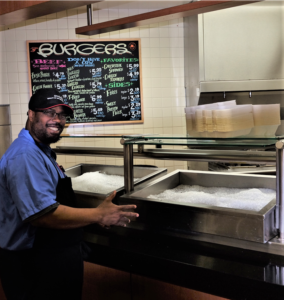
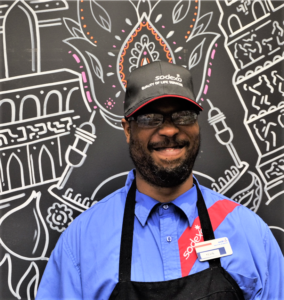 Kevin will be the first to tell you that he is a people person — and it is easy to see why. His sense of humor, high energy, and positivity are hard to miss in National Geographic’s Food Court, where he works both in the front and the back of the house to ensure that the center’s employees are well taken care of during their lunch breaks.
“I love my job. I especially like speaking with our customers and making sure that they have what they need to be happy. My job is to make the customers happy and I take pride in that.”
Kevin is one of several employees with disabilities who were hired this year at Sodexo’s site at the National Geographic’s headquarters in downtown Washington, DC through a partnership between Sodexo and The Arc of the United States. Laura Monto, General Manager of Sodexo’s site at National Geographic, was inspired to create the internship program from the personal experience of being an aunt of a young man with autism. “Knowing how sharp, caring and eager to learn my nephew is, I wanted to provide people with disabilities with the opportunity to learn valuable professional skills and be part of an inclusive team of hardworking and dedicated individuals,” said Monto.
The Arc and Sodexo’s Long-Standing Collaboration on Disability-Inclusive Hiring
The Arc and Sodexo started a similar joint-disability hiring initiative in 2017 at a site in Philadelphia. The site’s General Manager, Dolores Abbonizio, has worked for Sodexo for three decades and has more than 20 years of experience in successfully hiring people with disabilities. More than just creating job opportunities for people with disabilities, Abbonizio believes that creating this program has positively impacted the lives of her employees without disabilities, a positive feeling which is also felt by guests and senior leadership alike. Abbonizio said that her site’s success at hiring and retaining employees with disabilities comes from her entire team’s buy-in to creating an inclusive working and learning environment. “There are certain things that need to happen and systems that need to be in place in order to create a disability-inclusive workplace, but it begins with the whole team’s commitment to making sure that all of our employees feel welcome and are set up to succeed,” said Abbonizio.
Managing a disability-inclusive workplace does have some challenges, but Laura Monto points out that these are no different than managing any other sites she has worked at in the past. “Whether an employee has a disability or not, there is always a learning curve and every individual has a unique work style and personality,” said Monto, “The key to creating a truly inclusive environment is to provide the right supports to your employees to create equity, while ensuring that you treat them all equally and with respect,” Similarly, Dolores Abbonizio said that understanding an individual’s skill set and career goals is critically important to setting them up for success in the workplace. “When you’re working with a new hire, regardless of their abilities, it is important to make sure that their skillsets are matched to the tasks and responsibilities given to them so that they can succeed, create positive momentum and grow,” said Abbonizio.
Bringing Disability-Inclusion to Scale at Sodexo
Back at Sodexo in DC, Kevin is now an integral part of Sodexo’s team at National Geographic and continues to improve his performance and gain autonomy. Aside from what he brings to the table professionally; Kevin’s positive attitude and energy is felt throughout his workplace. Kevin’s success at Sodexo is the result of his hard work, but also of the enabling and inclusive environment that Laura Monto and her team have created. The Arc and Sodexo plan to take the lessons learned from its local successes in Washington, DC and Philadelphia and work with other sites in Sodexo’s national network to bring disability-inclusion to scale at Sodexo. “[Hiring people with disabilities] has always been a positive experience,” said Abbonizio.






Will you pledge to vote this November?