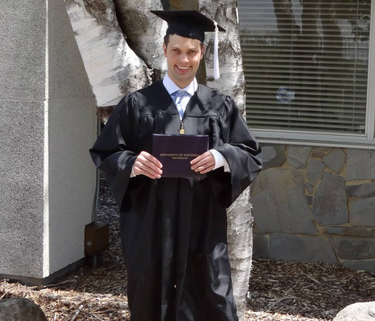
A graduate stands in front of a tree on a sandy spot with boulders around him. He is wearing a cap and gown, holding a diploma, and smiling.

Expecting the Best From Me

By Nathaniel Lentz
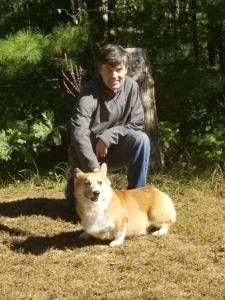
A young man squats, posing with his dog and putting his hand on its head. He is smiling and there are evergreen trees behind them.Throughout my life there was one phrase that was ingrained in my brain: expect the best from myself. I always believed if there was something I really wanted to do, that I should not let my disabilities stop me. No matter how challenging or difficult something might be, I would work my hardest to succeed.

It started when I was very young. My parents treated me like any other child. They didn’t make things easier for me, but they also realized that I would need extra help. They would work with my public school teachers to make sure I had the support I needed to pass my classes. Sometimes my teachers would try to make things easier for me because they thought regular class assignments would be too hard. That did not sit well with my parents.

I remember a meeting with my mom and my sixth-grade teachers.  The teachers recommended that I sign up for a particular class because it did not require much writing. My mom strongly disagreed. She said more writing was what I needed, so I was assigned a class where the students had to write a lot, and I learned how to write.

From my elementary classes though the end of high school, I would study a lot more than most students. I would often spend weekends with my grandma. She would tell me that we could go to Taco Bell after I finished my homework. When I would wake up on Saturday morning, there would be a pile of practice tests and assignments that I had to finish before I could get some tacos.

When I was a senior in high school, I was interviewed by Disability Rights Wisconsin for a position speaking to high school parents and teachers about transitioning from high school to college or job training. That first engagement led to many more speeches advocating for people with disabilities at the local, state, and even the national levels.

My parents made sure that I took college prep classes, even though because of my learning disabilities, teachers thought I would never make it in college. But I had learned what I needed to succeed: study until I understood the material. A lot of my roommates would spend their weekends at parties or in bars. I spent my weekends in the library.
A graduate stands in front of a tree on a sandy spot with boulders around him. He is wearing a cap and gown, holding a diploma, and smiling.

Working on my college degree gave me the confidence to advocate for myself. If I saw that a professor would not work well with me, I would change to another. The same applied to tutors who were unhelpful. I also developed strategies that were somewhat unorthodox to help me learn the information at a fast pace.

Another way I advocated for myself in college was with living arrangements. If I felt my prospective roommates would make it harder for me to study, or who would ridicule me because of my disabilities, I would schedule a meeting with the Housing Director, and she would find a dorm or a room where my roommates would be respectful.

Because I advocated for myself, my college experience was the best. I had the right support, the right accommodations, the best professors a student could ask for. That is how I earned my bachelor’s degree.

Because I had my bachelor’s degree and with my experience as a public speaker, I was appointed to a position on the Wisconsin Board for People with Developmental Disabilities. Before my eight-year tenure on the board had ended, I had served on numerous committees, including the Executive Committee, and I was the Chair of the Nominating Committee.

Since then, I have been appointed to the Living Well grant. I was also hired by People First Wisconsin as an Outreach Advocate and selected to be an officer on the National Council of Self Advocates.

In my work for the Living Well Grant, I reach out to people with intellectual and developmental disabilities to ask about their experiences with the Safe and Free Curriculum, a program created by the Living Well staff to help people learn about self-advocacy, how to reach personal goals, and how to live independently. I also assist the staff in writing follow up questions, as well as working on other projects.

As an Outreach Advocate for People First Wisconsin, I am facilitating meetings, reaching out to organizations for our Advocacy Information Discussion (A.I.D.) meetings, taking notes during our collaborative meetings, working on video projects, and assisting with the organization’s website.

My duties as a National Council of Self Advocates Officer deal with public policy at the national level. I work on documents about public policy, make recommendations, and serve on the Technology Coalition. I have been advocating for the public policy documents to be translated into plain language or accompanied by visual aids to make them more accessible to people who would be unable to understand the policies in their current form.

My main goal in working with these organizations is to help people with intellectual and developmental disabilities to learn what their rights are and how to advocate for what they need, so they can build a good life for themselves just like I have!
Want to read more stories like this? Visit thearc.org/stories

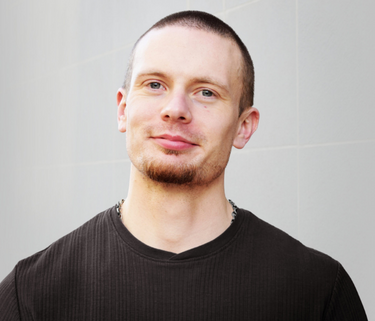
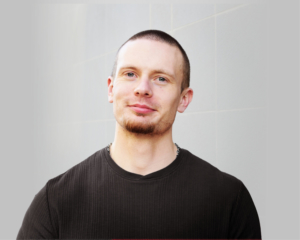
A man smiles softly, wearing a black shirt. His head is shaved and he has a short goatee.

I Turn My Suffering Into Art To Tell Others How Far I’ve Come, so They Know They Can Do It Too

By Poet and Speaker Russell Lehmann

A man smiles softly, wearing a black shirt. His head is shaved and he has a short goatee. I grew up in the Seattle area. I wasn’t diagnosed [with autism] until I was 12, even though I struggled from the day I came out of my mother’s womb because we couldn’t find a competent doctor. I was struggling with severe OCD and panic attacks that consumed my life. I was that “weird” kid in the corner of the classroom with his hood on, not making any eye contact, or even speaking. I was completely closed off, a prisoner inside my own body. When I finally got my diagnosis, suddenly I wasn’t just that weird kid anymore, I was the weird autistic kid. A word that, back in 2003, was very misunderstood and oftentimes resulted in either pity or unconscious spite, for my behavior, on face value, made it seem like I was lazy and disinterested in life. If only they could hear my heart’s silent cries for help.

Suffice to say, this diagnosis, although welcomed, made me even more of an outcast when it came to my interactions, and lack thereof, with society—there’s a lot of stigma. I eventually had to drop out of public school due to my struggles which quite rapidly dissolved all bridges to the outside world, and from 12 to 27 I was completely isolated—my mom would bring home my work and take it back to school for me throughout middle school and in high school, I stayed home and took online classes to receive my GED. I missed out on the entirety of my adolescence, teenage years, and transition into an adult. I didn’t know what it was like to have friends or to even be around others outside of my immediate family. Isolation can do strange things to the mind, the repercussions of which I still deal with to this day.

In my early 20s, I began dabbling in poetry, and this art soon became the friend and companion I had always yearned for. To be able to express my pain, frustrations, dread, sadness, and ongoing struggles was extremely liberating, and to create a piece of art, a poem, out of my suffering, well…there’s not much that was, and is, more cathartic and healing.

In my mid-20s, I self-published a book of poetry that was met with much appreciation for the rawness and transparency it portrayed into my lived experience. The book was featured in the LA Times, earned an Honorable Mention at the 2012 NY Book Festival, and won the award for Literary Excellency at the 2013 International Autistic People’s Awards in Vancouver, Canada.

A few years later, I decided to try and take my advocacy efforts to the next level. I was 25, on disability benefits with no job, living with my parents, and hadn’t had friends in almost 14 years. I knew I had a lot to give and not much to lose, so I set my sights on becoming a public speaker to speak up for those who are pushed to the margins of society like me.

Things took off quite rapidly, as I had a natural talent for connecting with others through topics of vulnerability, a positive by-product of spending half my life alone and looking inward into my painful emotions. Some call me a self-advocate, but I’m not doing this for me. I am doing this so that others have it a bit easier. I shed hindsight and insight to generate foresight for others and perform spoken word poetry in my presentations to offer a more dynamic look into the world of autism, mental health, and the suffering of existence, for it is my belief that art would cease to exist it if wasn’t for the universal commonality of human suffering.

I’ve come so far in life that I feel as if I have lived multiple lives. I had so many dreams growing up, but my struggles got in the way and squashed them, along with an insincere societal environment that put the final nail in the coffin of what I had hoped for my future.

In July of 2021, I decided to take a huge risk and move to Los Angeles by myself to start a new chapter of personal and professional growth, without knowing anyone. If there is one thing my seclusion has always brought me, it was time alone with my heart; time I did not, and still do not, take for granted, for the heart knows the way, and I always listen to mine.

I had been speaking full-time for about three years, but I conflated this professional success with having a personal life, and when travels ceased during COVID I realized that while I may have been traveling quite frequently, I was still very much in a bubble, for my only socialization in my personal life was with my mom, the one human who had been by my side since day one. The decision to move to LA by myself and leave my mom’s side, the sole source of safety and support I had ever known, was brutally painful, to say the least. However, discomfort is the impetus behind growth of any kind, and now, for the first time in my entire life of 31 years, I am fully independent, and for the first time in 20 years, I can finally say three words I had always dreamed of saying: “I have friends”. It’s excruciatingly overwhelming at times and emotionally exhausting, but I know I have to encounter the immense growing pains in order to make up for my lack of social experience.

I have an incredible career, but the friction I encounter with society on a daily basis is a lot to cope with. My job requires a lot of travel, and I’ve had numerous meltdowns (mental and emotional breakdowns due to system overload stemming from external stimuli and exacerbated symptoms of OCD and anxiety, all in the midst of an extremely overwhelming scenario) at airports where passersby see a grown man curled into a ball, sobbing, rocking back and forth, and biting his nails. If I looked more disabled, maybe people would be more understanding, but no one would know or think I have autism when I’m walking down the street—so if they see me having a meltdown, they don’t recognize that as autism, and either look upon me as if I am crazy, or don’t look at all and pretend I’m invisible. I am not sure which response is more soul-crushing.

It’s a rough world out there, for during my moments of crisis, where all I need is some simple reassurance and compassion, I have had cops called on me. When I have meltdowns in public, I just look like a scary big grown man, and no one wants to come close to me. I receive no help—and I know a lot of people go through these situations too. Once I was in Dallas on a layover, and I missed my connection. I had a meltdown and was crying. Ten desk agents were right in front of me and not one even looked at me. I even said, “I have a disability, can someone please help me? ” They just continued to ignore me. The trauma that occurs in situations like this deepens a lifelong wound of being cast aside by society.

In situations like that, I need simple human connection. People need more training on emotional awareness—look into my eyes and see that I’m struggling. I know it’s not intentional, it’s from a lack of awareness. I don’t need you to fix anything, I just want support. Just sit next to me and ask if there’s anything you can do. I will most likely say that just asking that question helps.

We run from things we don’t understand because they scare us, for we as humans fear the unknown. Yet, if we can stop and stare back at our fears, instead of turning our back on them, we begin to see that which scares us dissipate like morning fog, revealing behind it a beautiful sunrise.

Travel is picking back up again for my speaking engagements now, and so I embrace the suffering. My experiences with a lack of understanding are frustrating, but I continue to do it because I have a passion inside of me to tell others how far I’ve come, and I want others to know they can do it too.

I gave a TED Talk at UCLA a few months ago, and recently did my first open mic performance. My journey has always been arduous, but now I can say that it has become beautifully arduous, for so many great things are happening for me now. My potential is sky high, and I have had more personal and professional success just one year into being fully independent than I had in my prior 30 years combined. Who knows what I’ll do or where I will go, but I have full faith that this journey will only continue to become more fulfilling. I followed my passion and success found me. If it is one thing I don’t want to regret on my deathbed, it would be not following my heart at any given moment– we have to follow our heart, it truly knows the way! You may go on some beautiful detours and scenic routes, but with patience and gratitude, life will unfold before you.

Want to read more stories like this? Visit thearc.org/stories


Website: www.TheAutisticPoet.com

Instagram: @russl.co

Spoken word poem: “Dear Russell”

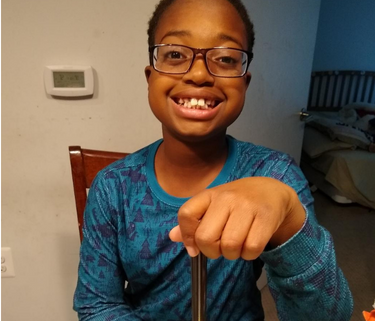
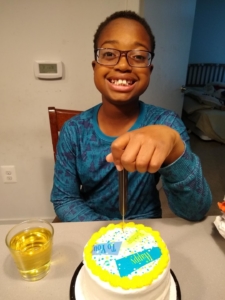
A young boy of color smiles, seated at a table with a birthday cake in front of him.

Meet Yusuf, A 10-Year-Old With Autism and Big Dreams!

A young boy of color smiles, seated at a table with a birthday cake in front of him.

My name is Yusuf and I’m 10 years old. I am in 5th grade. I like to play hockey, write blogs, and make videos for fun. I am hoping to create a YouTube channel soon. I like school so far and one of my favorite subjects is math.

Something I am proud of is playing hockey and doing stuff above grade level. I can also play soccer really well—I really like sports. I want people to know that I’m actually very smart. I’m learning eighth-grade things.

But when I was young, there was this one kid that kept making fun of how I speak, and I was only in second grade. I thought if I could just be nice, everything will work out, and I didn’t know how to defend myself. Eventually, he stopped bullying me and I learned how to be nice, but to be yourself and don’t let people take advantage of you.

One of the things I like to do is play with my friends during recess. We play freeze tag, tag, and kickball—and ultimate frisbee. My best friends are Whitman and James. I like to play games with them, and we make up missions to solve a puzzle.

One of the best things that happened to me was when I got my iPad Pro. On my iPad I make music and videos, and draw!

When I grow up, one of the things I want to do is play hockey and be on a team.

When I am older, I will also get my own house and after that, try to take care of the bills. I think I will know how to take care of the house and my money and use it responsibly and have a good life. I have never been on a plane, and I would like to go to Nigeria someday and see my family.

I would help change the world by being nice. People are always mean and if I taught people how to be nice and why, and all the advantages of being nice and the skills I have…people would be kinder.

Want to read more stories like this? Visit thearc.org/stories

The Arc logo

Alice and Soojung’s Story

“We’ve spent most of her life waiting for the help we need, for the wellbeing of our family.”

Soojung teaches middle school math and has three wonderful children. Her middle child, Alice, has Rett Syndrome, and has severe seizures, scoliosis, and uses a G-tube for nutrition, fluids, and medications. Alice has had many major and minor surgeries throughout her childhood, and every time Soojung and her husband requested at-home nursing care for her recoveries, it was denied by private insurers.

Alice’s pediatrician sat Soojung down and said, “You can’t go on like this.” The round-the-clock care and the toll of the stress was overwhelming them.

With the pediatrician’s help, Alice was finally accepted for services through the Medicaid program when she was 11 years old. Night nursing services led to a great improvement in Alice’s health, keeping her out of the hospital for the first year in her life. Soojung went back to the classroom, where she loves teaching math. And today, with the addition of day nursing services, Alice is 15 years old and able to participate in school, at home during 2020, and in-person in 2021 while Soojung teaches her students.

The Arc is fighting to make sure no family has to wait years for services that improve a child’s health and ability to thrive in the community.

“My daughter has the right to receive an equal chance of living her life, and Medicaid provides that extra help she needs to survive, learn, and thrive. The Arc’s work is so critical to ensure that Alice has a fulfilling life.”

The Arc logo

When Bruce Entered My Life

By Evelyn Baron, written in 1991

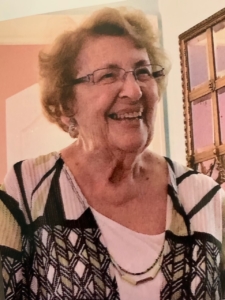
An older woman with glasses smiling. In 1964, at age 40, I was happily married for 17 years and the mother of three children—a daughter, 14, and sons, seven and 10. With all three children in school, I decided to enter college to fulfill a lifelong dream. Shortly after I started, I found out I was pregnant. I was stunned. Life changed for all of us once my baby, Bruce, was born. But my desire to attend college never waned. I started taking courses on nights, weekends, and in the summer, juggling my responsibility to four children and to my aging parents.
When Bruce was two, he wasn’t walking, but I hadn’t been alarmed because my third child had also walked late. I took him to the pediatrician. After running some tests, the doctor told us Bruce had Down syndrome. The doctor then described that Bruce would be like a puppy dog we would pet.

I was in total shock and don’t remember how I drove home. The next few days remain a blur as his words rang over and over in my head. My beautiful baby, how could he be likened to an animal? Would it be different now that we found out he had Down syndrome? No way.

We continued to treat him the same, he was no different than he had been the week before his diagnosis. I can still hear my third child saying, “No matter what, he’s my brother…”. I also remember well my response to an acquaintance when she asked if I would place him in an institution. I let her know that this was my baby she was talking about and that he had his home with us, just like any of our other children.

Our children were wonderful—they continued to teach him and to expect from him all that he could, and he prospered and grew from this loving environment. Our friends and families rallied to give us respite when we needed them. He was eager to learn at his own pace, and we were always there to give him the assistance he needed.

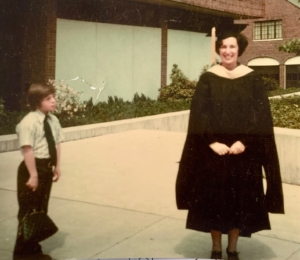
A woman in a graduation cap and gown stands on a paved area, with a young boy in a dress shirt and tie to her left looking at her.

Back at college, I started taking courses to learn more about disability to help me in raising my child. I finalized my major as rehabilitation and started to take internships at facilities where there were people with disabilities.

Finally, after attending classes part-time for 10 years, I had amassed the needed 130 credits and graduated Cum Laude. I watched the local papers to put my education to work. I saw an ad for an executive director for The Arc in Enfield, Connecticut. When I applied, the parent volunteers who posted the listing explained how I would be their first Executive Director to start much-needed programming.

With little knowledge of how to get programs started but strong determination, I proceeded to initiate numerous programs and services. Wherever there was a possibility of a grant, I was there, and we were most times successful. For the next 16 years, I found myself working long hours, meeting with families and boards of directors, and working closely with town, state, and federal legislators and school systems. It was always a labor of love. As Bruce’s mother, I would often boast of his and others’ achievements to groups when I spoke to help them understand how these people had the right and ability to live and work in the community. We started group homes where neighbors at first were apprehensive. I remember a meeting in the home of one where I was confronted by an angry group. I let them know our people would be good neighbors and they had nothing to fear. I let them know how as a mother, what had happened to me could happen to any of them, and it would be them begging to give our people a chance, just like I was. They accepted the homes and never had a problem again. Before I retired three years ago, I succeeded in building for Enfield a large new building to house their many programs. No more church basements, old schools—they have their own beautiful building.

Bruce has always amazed us with his extraordinary level of understanding and compassion. We threw out the books long ago that said how limited he would be. After many years of Bruce and I trekking 60 miles to Sunday school (no other schools that were closer to us would accept him), at 13 Bruce had his Bar Mitzvah, something he wanted. When he said the prayers he studied, he stood there so proudly. Every one of our 200 guests, including the Rabbi and Cantor all cried for joy as he took his rightful place within the congregation.

We have tried for Bruce to have as near a normal life as possible. He’s always had many friends, went to camp, junior, and senior high school, and when he graduated, he started to work as a bagger at a local market, where he still works. They continually tell us what a fine worker he is. There are now many people with disabilities working, and it makes me proud that I was at the forefront of helping this to happen.

Bruce, now 25, continues to live at home. He remains an integral part of our lives.

When Bruce was diagnosed, we received the news as a tragedy—but over Bruce’s life, we realized the real tragedy was the limitations people placed on him.


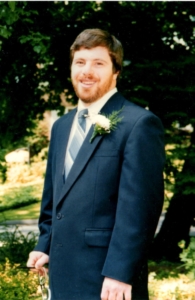
A man in a suit, smiling at the camera.

Five years after this was written, Bruce passed away.

Bruce would have given the shirt off his back throughout his life to care for someone, so his family continued his legacy of giving even after his passing through organ donation. One recipient, Tom, was given Bruce’s liver and became an unofficial part of the family. He remains close with them to this day and thanks Bruce and Evelyn for his gift of life.

Hundreds of community members attended Bruce’s funeral and spoke about how he influenced their lives and shattered their misperceptions. Bruce’s life—and Evelyn’s fierce advocacy—fundamentally changed their community and helped move the needle on people’s perceptions of what is possible for someone with a disability when they have the support of family and community.  


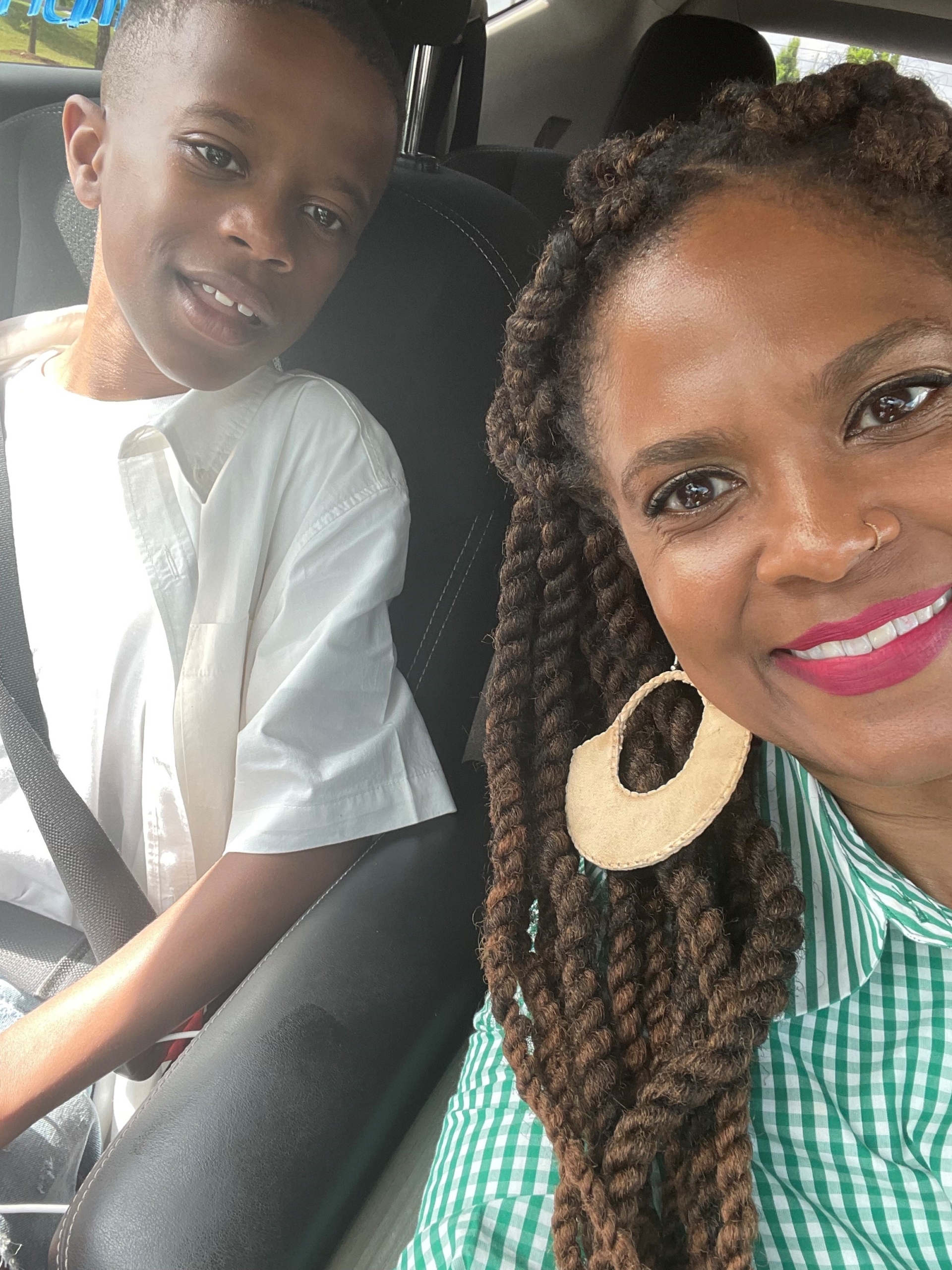
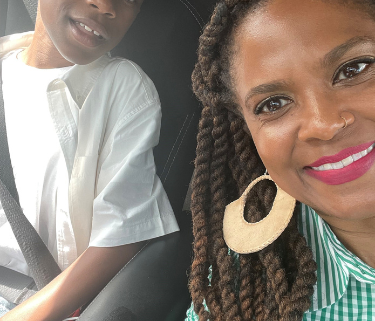
A mom and her son sit in a car, smiling for a selfie. The son is young, and both are Black. The mom is wearing large round white earrings, red lipstick, a green dress, and the son is wearing a white t shirt.

Everyone’s Uniqueness Should Shine

“I would love to see the day where everybody can stand on the mountain top and say ‘this is who I am and I am proud of it.’” – Shannon Mattox, State Director of The Arc Georgia

Limbric Mattox is brilliantly unique.A mom and her son sit in a car, smiling for a selfie. The son is young, and both are Black. The mom is wearing large round white earrings, red lipstick, a green dress, and the son is wearing a white t shirt.

That’s how his mother proudly describes him.

“He’s unique in his own ways,” said Shannon Mattox, State Director of The Arc Georgia. “He’s very smart. He has his gifts and he has his talents.”

Mattox started her position at The Arc Georgia in July 2021, leading Georgians in advocating for people with intellectual and developmental disabilities.

Limbric is 11 years old and going into the 6th grade. He loves geography and was the runner-up in his 5th-grade class spelling bee.

“My disabilities will be even better when coronavirus is over. Other than that, I like it,” said Limbric, who is proud of his disabilities.

He has invisible disabilities and sensory obstacles.

“He’s a normal kid, doing normal things. He likes toys. He likes to watch TV. He loves electronics,” says Shannon, adding that Limbric is quite tech-savvy. “To him, he has a normal life.”

But as a Black family living with disability, they have faced many challenges. Discrimination is a constant factor in their lives, particularly in education.

“All the time,” she says. “I’ve been talked to and treated in IEP meetings over the years like I’m dumb and poor just because I am Black. I am my child’s first advocate.”

Shannon recalls countless examples of how she and Limbric experienced discrimination based on their race and Limbric’s disabilities.

“My very first experience was my son being observed in class without my knowledge. I should’ve been notified right away,” says Shannon. “Those aren’t games that should be played with our child.”

In meetings with school administrators and teachers over the years, Shannon has experienced many challenges.

“When you decide to speak up or have boundaries, then you’re the problem. You’re the angry Black woman,” she says. “The thing that keeps me whole is my faith and the fact that my son has come so far.”

Shannon earned her Master of Business Administration degree in 2015. She completed the Partners in Policymaking program in 2018. Shannon began volunteering and serving on the boards of organizations committed to supporting people with disabilities and families. These experiences and her greatest role as Limbric’s mother empower her with tools to navigate special education and advocate for her son and other people with disabilities.

The Arc fights for the rights of students with disabilities, and is part of a class action lawsuit against the State of Georgia for discriminating against thousands of public school students with disabilities by providing them with a separate and unequal education in the Georgia Network for Educational and Therapeutic Supports (GNETS) program.

Students in GNETS are not only segregated from their non-disabled peers but also receive an inferior education. Many students in the program are not taught by certified teachers and instead are primarily taught through computers. They cannot access the basic credits they need to earn a diploma, resulting in an abysmally low high school graduation rate. Limbric is not in the GNETS program, but the fact that the system exists for kids just like her son horrifies Shannon.

“Children should be able to go to their neighborhood school and there should be a program to accommodate every child. There should be resources to accommodate every child. Every school should be a beautiful environment that every child can walk into,” says Shannon.

As The Arc Georgia State Director, part of Shannon’s mission is to team up with families to fight for the rights of people with IDD, tear down discrimination, and help eliminate the stigma attached to disability, particularly among Black families.

“Thank you for taking the time to highlight my family’s story. I hope it helps,” said Limbric.

“I would love to see the day where everybody can stand on the mountain top and say ‘this is who I am and I am proud of it,’” said Shannon.

So that everyone’s uniqueness can shine. Shannon says despite the challenges, Limbric’s future is brighter than ever.

“He has to be able to take care of himself one day. I want him to go to college if that is what he wants to do. I want him to love his life and be a happy whole man – no different than any other parent,” said Shannon. “We still have dreams. We still have goals. We still have things that we desire as a family.”

Sign up for The Arc Georgia Newsletter and Disability Docket to stay up to date on the GNETS case and other cases.


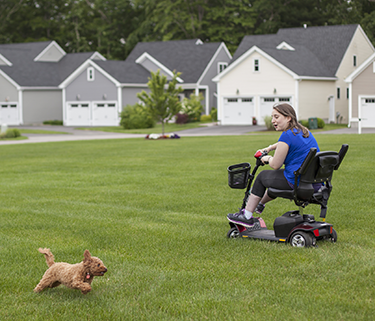
A woman in a motorized chair plays with a small dog on a grassy field in front of a community of houses

Why the ADA Matters to Me: A Conversation With Steve Ferreira

For the past 32 years, the Americans with Disabilities Act (ADA) has protected the civil rights of people with disabilities.

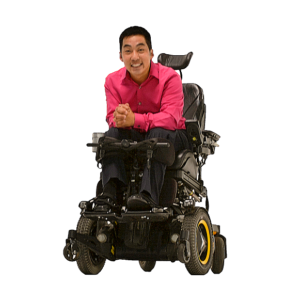
Recently, we spoke with Steve Ferreira, who shared how the ADA has impacted his life and how he hopes to ensure that the promise of the ADA is being kept in his community!A man wearing a pink button down shirt smiles and is in a motorized wheelchair.

Steve was born with cerebral palsy in Taipei, Taiwan in 1988. He graduated from Bellevue College in 2013 with an Associate Degree with a concentration in Communications. He is currently attending Central Washington University to obtain his Certificate in Accessible Studies.

In November 2011, Steve started a non-profit called Beyond Disabilities to further his goal of disability awareness. As a motivational speaker, Steve aims to raise disability awareness within every community he addresses. In addition to his motivational speaking, Steve has been involved in athletics. He has competed in international competitions both in the United States and Europe, earning the bronze medal in shot put in 2008 and the gold medal in discus in 2010.

Q: What does the ADA mean to you in your life? Why is it so important to you?

The Americans with Disabilities Act (ADA) was enacted in 1990 and is a civil rights law that prohibits discrimination against people with disabilities. This includes jobs, schools, transportation, and public and private places that can be accessed by the public. It gives protection to all people with disabilities.

It is a law that can be quoted and used when there is a situation where people with disabilities are not receiving the services they need or do not have access to facilities. It is a powerful law.

In 2016, I contacted my hometown, the City of Renton, Washington, to put in signs at a dangerous crosswalk close to my home where I had almost been hit by a car. But nothing happened at the time.

Two years later, while crossing the street in my wheelchair, I was hit by a car that made a right turn onto the road. There was a red light but no warning about watching for pedestrians. I was okay, but my legs would be gone if my wheelchair had not had a leg guard.

I contacted the city again and told them what happened. Using the ADA to back me up, I was able to get the city to install a turning light at the crosswalk. It took two more years for the city to take care of the situation, but I felt a sense of accomplishment when it did.

I drive my wheelchair all over and have over 10,000 miles on it. I drive around 18 to 25 miles a day. If not for the ADA, we would not have cutouts in the crosswalks and lifts on the buses. All it takes is one step to stop me from getting where I need or want to go.

Q: How does the ADA impact you at school and work, in getting around, using transportation, and accessing public and private places?

I typically use public transportation and it’s important for the buses to have lifts installed. There are times when I’m waiting for a bus and the bus will arrive and the lift is broken. Everyone else can enter the bus, but I have to wait sometimes an hour for another bus with a working lift. I joined a committee for people with disabilities in our Metro system to address this issue. Though the committee discussed this issue, nothing was accomplished. I eventually left the committee because I was so frustrated.

On another note, it’s discouraging to have a brand-new building built that does not plan well for accessibility. For example, when I try to access the building, sometimes, the building does not have an automatic door. The doors are typically very heavy, and it is hard to maneuver them when you are using a wheelchair. People need to be more diligent when constructing buildings to make sure they are accessible, and they need to plan to ensure they do not block accessible paths or routes when constructing buildings too!

Q: Tell us about the accessibility program you are taking. What inspired you to pursue this study? What is your capstone project about?

I am currently taking classes at Central Washington University for a certificate in Accessible Studies. There are classes in accessibility and user experience, universal design, accessible information design, and a capstone project.

I have finished the first three classes and I am currently working on my capstone project. My capstone project is entitled “The Importance of Disability Awareness as Part of Diversity, Equity and Inclusion Programs in the Corporate Setting.” I am comparing three companies’ diversity, equity, and inclusion programs and analyzing their attention to disability awareness. It is eye-opening how companies are paying attention to other minority groups but ignoring disability.

I decided to take this program to educate myself on the ADA and how it relates to the empowerment of people with disabilities. Unfortunately, there is still a lot of discrimination against people with disabilities.

Q: Do you plan to advocate for accessibility for people with disabilities? What do you hope to do?

I have done some consulting with local cities, but with my certificate, it will help to have credibility and will add to my resume. I would like to help cities adhere to the rules and regulations of the ADA and thereby help the disability community.

Q: What do you want others to know about the ADA and why it still matters?

The ADA is important to everyone, not just people in wheelchairs or who use other mobility aids. All of us may at some point have a “temporary” disability and the ADA protects them as well. It is a social justice issue.

There are also “invisible” disabilities that are not obvious when first encountered. People with invisible disabilities are also protected by the ADA and are entitled to accommodations. Just because you cannot “see” a disability does not mean that it does not affect one’s daily life and day-to-day functioning.

Disability is unique because it is the only minority group that a person can join at any time in their life.

Q: How can others get involved in advocacy to support the implementation of the ADA and other disability rights efforts?

Others can get involved in advocacy as allies to people with disabilities.

I do motivational speaking to groups about disability awareness. But, when I am out and about, I still get the greatest to the worst reactions from people. Sometimes, people will even come up to me to pray to cure my disability. People need to know that people with disabilities are just like other people. It just may take us a little bit longer to accomplish our goals. Allies should also make sure they know about the ADA and what people need to do to comply with the law – and not take it for granted!

Want to get involved?

Learn more about the ADA here and what to do if you see accessibility needs not being met.

And sign up to advocate with people with disabilities nationwide at thearc.org/action!

The Arc logo

Home Manager Jackie McRoy: We Are in a Much Better Place Thanks to the COVID-19 Vaccine

Jackie McRoy is a home manager for The Arc of Central Alabama. She supports individuals with intellectual and developmental disabilities (IDD) who live in a group home. Jackie is a direct support professional, who cares for her clients like family.

“The people I support mean everything to me,” said Jackie, who has supported people with disabilities for 8 years.

When the COVID-19 pandemic started, Jackie and her team had to scramble to keep people safe. They did the best they could up against many challenges like a global shortage of personal protective equipment (PPE) and a highly contagious and dangerous virus. As the pandemic surged, Jackie’s clients were the most at risk.

COVID-19 disproportionately sickens and kills people with disabilities. Despite exhaustive efforts to keep the virus out, it found its way into group homes and congregate care settings all over the country.

“Scary times … those days of the pandemic were scary times,” Jackie shared with The Arc.

Then, the virus hit closer to home than ever for Jackie. Her mother died from COVID. She was not vaccinated.

Jackie decided to get the COVID-19 vaccine and booster. She believes the vaccine saves lives – and could have saved her mother. Jackie has encouraged other support workers to get the vaccine.

She also joined The Arc’s health program in participating in a project focusing on COVID-19 vaccine outreach and public education. The program received a subgrant from the Association of University Centers on Disabilities (AUCD), as part of a grant AUCD received from the Centers for Disease Control and Prevention (CDC).

The Arc worked with The Arc of Central Alabama, The Arc of Arizona, The Arc of Indiana, and The Arc of the Mid-Ohio Valley in West Virginia to collaborate on the development of local radio public service announcements (PSAs) airing in certain markets in those states.

“The safe and effective COVID-nineteen vaccine changed things. It has allowed us to reopen and go about our lives, with more security about our health and the safety of those we love, including the people with disabilities I help every day,” said Jackie.

Jackie believes we are in a much better place, thanks to the vaccine. Listen to her PSA here.

The Arc logo

Lynsay Frye: Let’s Not Look Back Now. Get the COVID-19 Vaccine

Lynsay Frye is a leader across many communities in West Virginia. She holds leadership positions with various groups and councils such as the Disability Council and the Independent Living Council. But it’s her leadership in simply setting the example that is just as impactful.

“When the pandemic started, I couldn’t stay with my parents because my mom worked in healthcare and it wasn’t safe for us to stay together,” Lynsay explained.

Lynsay stayed with her grandmother for a couple of months.

Then, Lynsay made an important decision to keep herself, her family, and the community safe. She got the COVID-19 vaccine.

“The reason why I thought it was important was because I have a disability and with my disability, my immune system is really low, so I could get sick. I got the COVID-19 vaccine to save my life,” said Lynsay, 33.

Lynsay joined The Arc’s health program in participating in a project focusing on COVID-19 vaccine outreach and public education. The program received a subgrant from the Association of University Centers on Disabilities (AUCD), as part of a grant AUCD received from the Centers for Disease Control and Prevention (CDC).

The Arc worked with The Arc of the Mid-Ohio Valley in West Virginia, The Arc of Arizona, The Arc of Central Alabama, and The Arc of Indiana, and to collaborate on the development of local radio public service announcements (PSAs) airing in certain markets in those states.

“People like me, with a disability, are at a greater risk of death from COVID-19,” Lynsay said. “But the vaccine made things better. We could go about our lives without so much fear. I felt more secure about my own health and safety, and the health and safety of everyone around me.”

Lynsay still takes proper safety precautions like wearing a mask. She encourages others to wear masks and to wear them properly.

“Let’s not look back now. Give the vaccine a chance,” she said.

Now, Lynsay is back to many of her routine activities and the job she loves at her church.

The Arc logo

In Solidarity With the Community of Uvalde, Texas

The Arc released the following statement in the aftermath of the mass shooting at Robb Elementary School in Uvalde, Texas.

“We are so saddened by the events that occurred yesterday at Robb Elementary School in Uvalde, Texas.  The families, and the community of Uvalde, will forever be impacted by the loss of these young children and their teachers.

“These tragedies are creating an environment where people no longer feel safe in their schools, places of worship, grocery stores – the communities where they live, work, and play.  And we are deeply concerned that Congress’ failure to act to prevent this violence is undermining basic human rights.

“The senseless violence has to stop. Our elected leaders must put aside differences to comprehensively address the growing problem of gun violence that affects all of us, including people with disabilities and their families.”