Senator Bob Casey Meets Disability Rights Advocates From 24-Hour Storytelling Vigil, Urges Congress to Pass the Build Back Better Plan
Activists From Across the Nation Deliver 7,500 Stories from Individuals Impacted by Dearth of Home and Community-Based Services
Photos of the Vigil and Rally: https://bit.ly/3ahKPN9
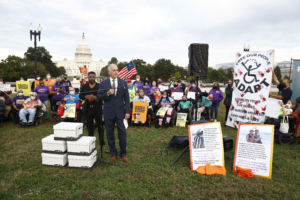
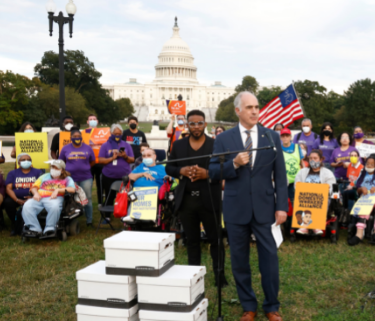
WASHINGTON, DC – OCTOBER 07: Sen. Bob Casey (D-PA) speaks at a 24-hour vigil outside of the U.S. Capitol building, Sen. Bob Casey (D-PA) joins people with disabilities and advocates to demand funding for home care services in President Biden’s “Build Back Better” package before Congress on October 07, 2021 in Washington, DC. (Photo by Paul Morigi/Getty Images for Unbendable Media)
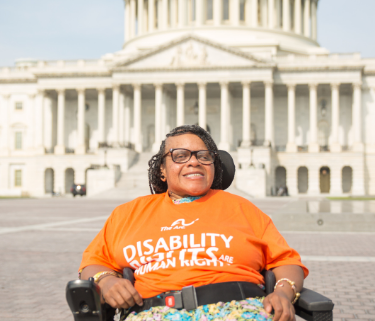
Senator Bob Casey met disability rights activists and care workers who participated in a 24-hour storytelling vigil and reiterated his commitment to fully fund services critical for the health and well-being of people with disabilities and aging adults. Flanked by dozens of ADAPT activists in wheelchairs, SEIU members in purple shirts and other prominent caregiving advocates, Senator Casey closed out the vigil outside the Capitol Thursday by imploring his colleagues in Congress to vote “yes” on the transformative Build Back Better plan that could “put the country on the road to having the best caregiving in the world.”
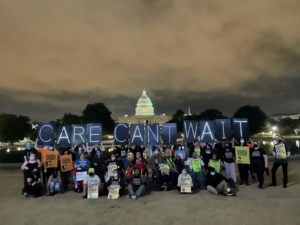
Advocates from the diverse “Care Can’t Wait” coalition of disability rights, labor, health, aging and caregiving groups also shared the steep health and financial costs that families pay as a result of poverty wages paid to care workers and long waitlists for home and community-based services (HCBS).
“I came here today because I am literally fighting for my life and freedom,” said Latoya Maddox, a mother from Philadelphia who has used HCBS for the past 17 years and is active in Philly ADAPT. “Home and community-based services and accessible housing keep me from being stuck in an institution to get my needs met-something nobody of any age wants. I want Congress to understand that their political games are putting my life and my freedom at risk, and to stop the posturing and realize what your inaction is doing to real people.”
Earlier in the vigil, advocates traveling from states hard hit by COVID-19—including Tennessee, Texas and Kansas—continuously read stories collected from thousands of impacted individuals—disproportionately people of color— across the country who were unable to travel to D.C., in part because they do not have access to paid leave, childcare or long-term services.
More than 800,000 people with disabilities are on waiting lists for HCBS, such as in-home care, meal delivery, transportation services and respite care. The Better Care Better Jobs provisions in the budget reconciliation seeks to eliminate long standing HCBS waitlists and allow states to expand the number of people who are eligible to receive these essential services.
“We need Congress to pass the Better Care Better Jobs Act and invest the proposed $400 billion in Medicaid HCBS funding,” said Nicole Jorwic, Senior Executive Officer of Public Policy at The Arc and one of the advocates who participated in the 24-hour vigil. “Together, we must recognize this unprecedented opportunity to begin fixing our nation’s inadequate care systems and transform the way we treat people served, and those providing the care, who deserve dignity, respect, and opportunity. Our nation must finally recognize the value of all people and significantly invest in care during this historic moment.”
Even as negotiations around the biggest jobs plan since the New Deal have stalled, the long-term care provision in the Build Back Better plan is still popular with the overwhelming majority of people across the country.
“People across the political spectrum overwhelmingly want Congress to invest in the care infrastructure that is the backbone of our economy and our lives,” said Ai-jen Poo, Executive Director of Caring Across Generations and National Domestic Workers Alliance. “Increasing wages for care workers will ensure that they can care for themselves and their own families. Increasing wages will also make care work more sustainable in the long-run and ensure a more robust workforce that can meet the rising demand for these services.”
The event was co-hosted by ACLU, ADAPT, The Arc of the United States, Autistic Self Advocacy Network, AAPD, Bazelon Center for Mental Health Law, Be A Hero, Care Can’t Wait Coalition, Caring Across Generations, Little Lobbyists, Justice in Aging, National Council on Independent Living, National Domestic Workers Alliance, National Council on Aging, National Health Law Program, and SEIU.

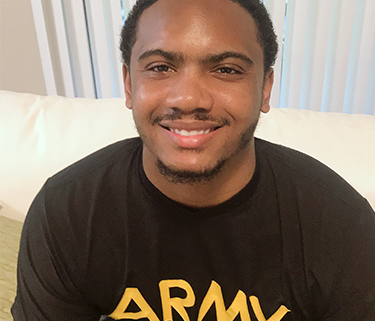
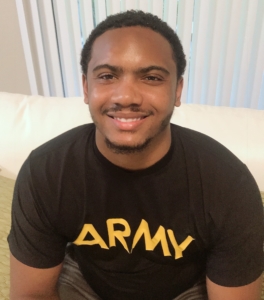

 Jose Velasco is thankful for the incredible journey of fatherhood. The father of two did not foresee the life he and his wife, Deya, and their son and daughter created, together. This Father’s Day, Jose reflects on nearly three decades of being a dad and how disability has rewarded his life in ways he had not imagined when the family began their autism journey. Each day of that journey, Jose has only wanted one thing.
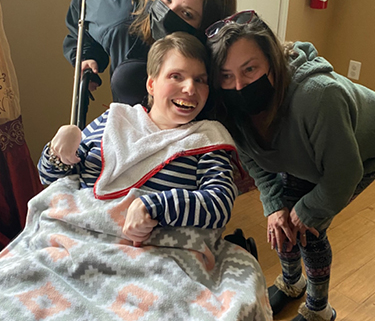
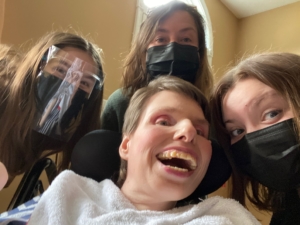
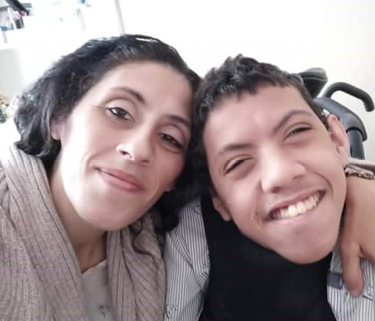
 l love and infinite strength of mothers. We recognize the mother figures and grandmothers who nurture and support us – no matter what. We embrace the challenges of motherhood. We revel in the joys.
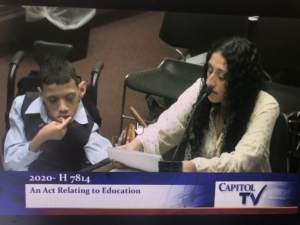 n as a mother extends into advocacy. Working with The Arc Rhode Island, she advocated in the General Assembly in support of special education reform to give parents and guardians more rights in the Individualized Education Program, or IEP, process. In testimony before the Rhode Island House of Representatives, Kendra and Joshua shared challenges with the IEP process for families and why is critical that students with disabilities receive a Free Appropriate Public Education, or FAPE, as mandated by federal and state law. Kendra is also part of a group of parents, guardians, and educators in Rhode Island advocating for the creation of an independent special education ombudsman office to investigate special education disputes and serve as a resource for parents and guardians. The office would also provide an outlet for anonymous reports of possible violations.
 Steve has cerebal palsy. For most of his young life, and like many people with disabilities, he lived with his mom. When Steve was only 22 years old, his mom became very ill. Because she could no longer provide the supports he needed, Steve was forced to move into a nursing home to get the care he could no longer receive in his childhood home. Even though Steve knew he could make it in the community with the right supports, he was forced to make this move. This was because his family was concerned about his well-being if he lived independently, and because they feared the appropriate supports were not available to him.
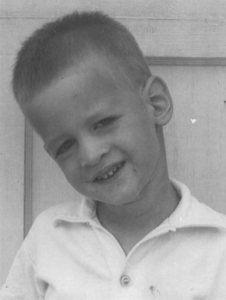 There were no supports available outside of the public schools and the schools were not prepared to serve children with high levels of need. When my brother was kicked out of school at a very young age (before the federal law ensuring a right to education) for his disability-related behaviors, he had nowhere to go except home all day with a very loving caregiver. He missed the routines and rhythms of school and had a hard time staying home while everyone else went to work or school daily. He waited all day for the staggered returns of kids and parents, dinner, and then his beloved ride to the drugstore for a Coke and a long drive listening to rock and roll and beach music on the radio. Jud also had daily trips to the Post Office with our Dad to pick up the mail for his business, trips to the barbershop, church on Sundays, other local gathering places, and a house full of our friends and exchange students who lived with us at various times. He loved all the interaction and was known all over town.
 Sadly, as each of his older siblings began to leave home for college, military service, or otherwise, Jud’s physical size and his inability to control his frustrations and emotions became dangerous for our aging parents. After much searching and trying many approaches, the only available service for someone with his needs was the state institutional system. This was devastating for Jud, for our whole family, and for the many friends who had known him over the years. Jud suffered greatly from the travel distance from his family (even though we visited regularly), home and hometown, friends, and routines. And while there were some wonderful staff who supported him in his new location, we were horrified to learn that he also suffered some terrible abuses– the kinds of things that can be hidden when people who are unable to communicate or be understood cannot tell others what is happening to them. My father found that Jud had been burned with cigarettes and that other men in his unit had been more extensively burned. In other incidents, men in his unit died after being subjected to dangerous restraint methods. He also suffered from toxic environmental conditions, including asbestos and sewage leakage. As a family, we were determined to end these abuses.
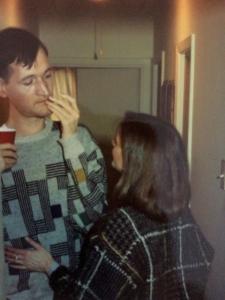 Jud’s experiences fueled my passion to change the system. I worked in Washington to pass federal legislation to move the Medicaid funding bias away from institutions and to build the community service system, making the community the preferred service setting. My advocacy led me to a career in The Arc’s national public policy office, which I joined in 1984. While our systems have evolved since the 70s through the late 80s when my brother was experiencing so much pain, we still have a long way to go. I am happy to report that Jud was eventually able to leave the state institution and live in a group home about 7 minutes from our widowed mother in his beloved hometown for the last 20+ years of his life. Jud also experienced some serious problems in his group home, but those were able to be discovered and remedied because family were nearby and able to observe how he was doing. For those who understood him, Jud continued his mantra: “Stay at the new house; not gonna keep saying it” throughout those years, lest anyone think he would ever want to go back to the institution.