
The Arc logo

Connecting Passionate Volunteers to Meaningful Causes: Addressing Food Insecurity in NYC

By Andrew Pfadt-Trilling, Vivian Murray, and Joyce Minault (AHRC NYC)

New York City is a city of contrasts. It is the financial capital of the world while 1.4 million residents rely on emergency food programs. A place where luxury condominiums are built on the same block as people who don’t know where their next meal is coming from.
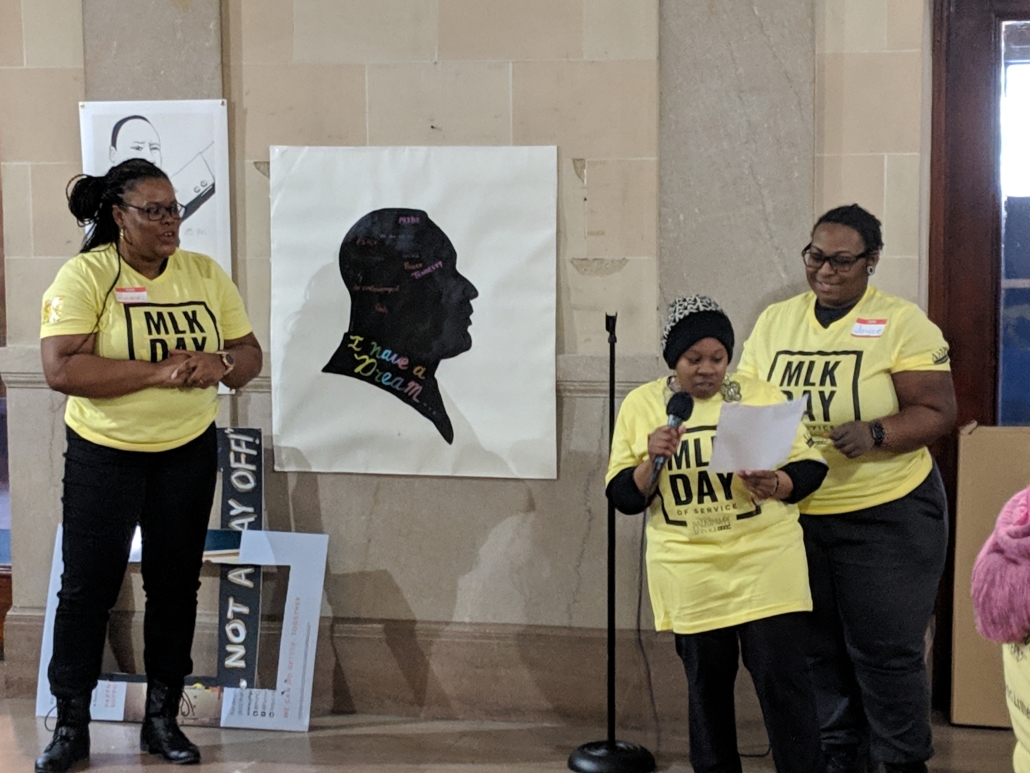
Last year, AHRC NYC was a recipient of a grant through the The Arc of the United States and the Corporation for National and Community Service to organize its first MLK Day of Service project to combat hunger and food insecurity. We saw this as a chance to look at neighborhoods where there is a real need, but also where there are passionate self-advocates and staff who want to be more connected and make an impact in their communities. We identified three neighborhoods (Crown Heights & Bushwick in Brooklyn; Lower East Side in Manhattan) and formed planning teams of staff and self-advocates that lived or worked in that neighborhood and asked: what if we planned a project that fought food insecurity, brought neighbors together, and strengthened community ties? Here is the story of how the Crown Heights team, B’lynx (Brooklyn Links Up) responded to that challenge.

B’lynx is a diverse team of people with and without intellectual/developmental disabilities, committed to enriching the Crown Heights community through innovation, passion, and fun. Since 2014, B’lynx has participated in community-based service projects and volunteer events with other local organizations.

The MLK Day of Service grant gave B’lynx the chance to develop as community organizers and take the lead in planning an initiative to bring people and organizations together to make a difference in Crown Heights. The team was excited to take on this role and when it came time to mobilize, self-advocates and staff began to hit the streets canvasing, recruiting volunteers, and spreading the word.

Recognizing that not everyone would be interested or comfortable doing the neighborhood outreach, the team made sure there were other ways for everyone to get involved and make an impact. Artists decorated boxes that were used for our city-wide food drives and distributed them to local businesses. Others created promotional materials such as flyers and bookmarks to raise awareness and recruit volunteers that were distributed to local libraries, cafes, and community centers. It truly takes a village to make something like this possible!
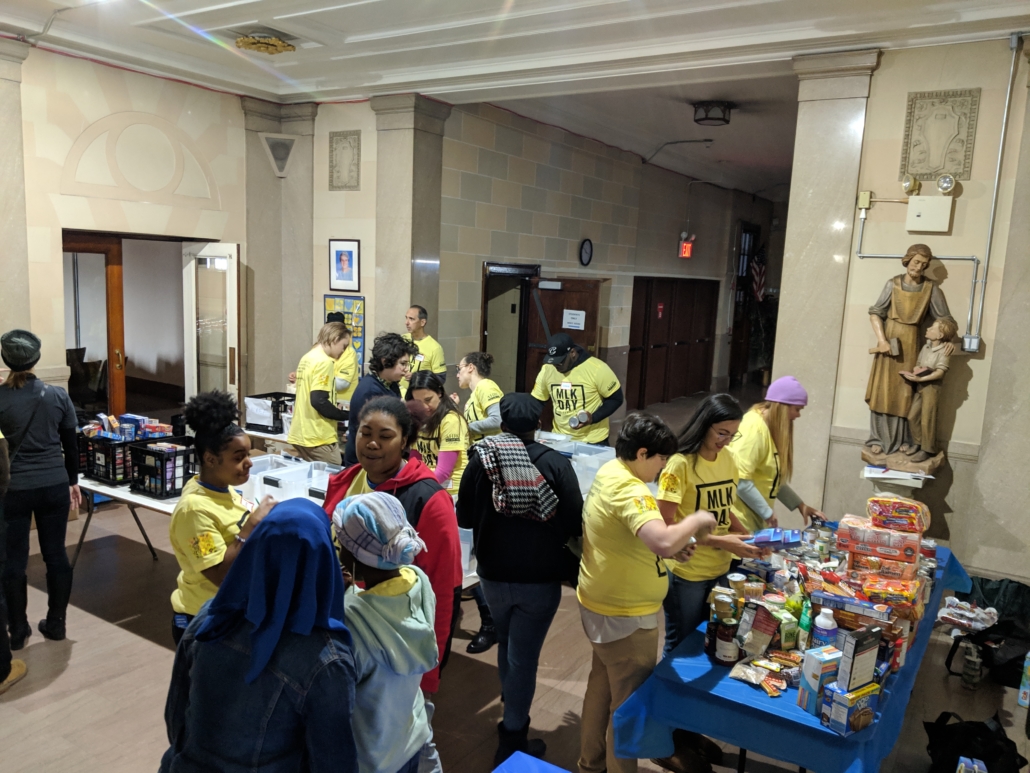
Volunteers organize food for distribution

The hard work of B’lynx paid off. On January 21st, 2019 over 50 volunteers came out in the harsh weather to help those in need, distributing over 500 pounds of food collected through the drive. They also provided hot meals to dozens of households through Rescuing Leftover Cuisine, a nonprofit organization that combats hunger and food waste by delivering excess food from restaurants to those in need. 

On top of the food-related volunteer activities of the day, B’lynx made sure the event also provided a space to showcase community partners and other opportunities to give back! Local organizations, such as community gardens and health centers, were present to share resources. There were arts and crafts tables for kids, healthy eating demos for all ages, and information of other volunteer opportunities in the neighborhood.

The MLK Day of Service has strengthened B’lynx even more and deepened their relationships in the Crown Heights community. This past summer they took an active role in neighborhood block parties, hosting arts activities for local children. B’lynx and the other change teams at AHRC NYC are already busy planning and looking forward to the upcoming 2020 MLK Day of Service, with the hope to help even more people!


The Arc logo

Chapter Benefit Spotlight: Calling All Conventioneers!

We are already planning for The Arc’s 2020 National Convention, which will take place October 25-28 in New Orleans. As one of our primary learning events and chapter benefits, it is important to us that it exceed your expectations. We welcome your ideas for plenary speakers, breakout session topics, networking activities, and anything else that would intrigue and inspire you to join us in New Orleans. All ideas are welcome and can be emailed to wolf-branigin@thearc.org. Laissez les bons temps rouler!

Students smile for the camera while sitting at a desk

Spotlight: Inclusion From the Start With The Arc Montgomery County

Photo: Ann Maas Photography

The Arc Montgomery County Karasik Family, Infant & Child Care Center, affectionately known as KFICCC, is a family-centered child care program. In every classroom, typically-developing children, children with developmental disabilities, and children with special health care needs play and learn together. The program has been a smash hit in the community, due in no small part to the thoughtful planning and implementation led by CEO Chrissy Shawver.

By modeling and teaching inclusion from the start, The Arc Montgomery County is ensuring that the next generation knows the value of inclusion and spreads love and acceptance in whatever path they take. In case you missed their presentation at this year’s National Convention, learn more about how they’ve built such a successful program below!

How did the program start?

The current KFICCC program was originally two separate programs. Karasik Child Care Center was for children ages 2-10 years old with and without disabilities. It was named after Monroe and Joan Karasik, very strong advocates for people with disabilities. Family, Infant & Child Care Center was for children ages 6 weeks to 5 years old who were medically-fragile, or who had complex medical conditions.   

In 2011, these programs merged, becoming KFICCC (Karasik Family, Infant & Child Care Center). KFICCC is the only fully-inclusive child care center in Maryland, where children with and without disabilities and special health care needs play, grow, learn and explore together in all classrooms. Approximately one-third of the children enrolled have identified disabilities; the remaining two-thirds are typically-developing.

What is your training and onboarding process like for new staff?

All KFICCC teachers have college degrees and all other KFICCC staff must hold a 90-hour child care certificate geared toward the ages of the children with whom they work. The Arc provides a comprehensive on-boarding and training process, which includes CPR, first aid, Maryland State Department of Education trainings, and other trainings specific to working with people who have disabilities. 

The most important quality for KFICCC staff is a really strong background in early childhood education. The child is a child first; any disability is simply part of the child. If you understand child development, you can work with all children by simply getting to know them and being willing to make accommodations to meet their individual learning styles and needs.

What about new children? How do you ensure the transition into the program is smooth and that everyone is set up to succeed?

KFICCC offers a seamless delivery of services, including therapies, special education, pre-kindergarten, and on-site nursing support. It’s all about coordination of care and giving parents an integrated support team.

New children come with their parents to meet with the staff and tour the building. During this visit, the child spends time in the identified classroom. Once a commitment is made, the child attends for his/her first week, spending progressively longer periods in the classroom. 

If the child has an IEP or IFSP, the staff will meet with the child’s team to learn how to best meet the child’s needs in the classroom. If the family is not yet linked to services, staff may recommend them to Child Find or Montgomery County Infants & Toddlers Program.

What should chapters who are trying to implement a similar program in their community know?

Operating KFICCC is expensive, primarily because child-staff ratios must be higher than what is required by licensing. Community partnerships are essential for success.  Staff must believe in inclusion and understand the benefits of having children with and without disabilities in the same classroom. When done right, it should be hard to tell who has a disability and who doesn’t—the program should feel very natural.

What has been the most challenging part of building the program, and how did you overcome it?

Adequate funding was and continues to be a challenge, especially when trying to keep the cost of child care affordable for families with lots of other financial pressures. It’s key to have someone who can write grants and connect with other funding sources because the program cannot run on tuition alone.

Another big challenge was breaking down barriers. Parents had many misconceptions about their typically-developing children “catching” disabilities or being held back because the attention was directed to children with special needs. The only way to overcome that was to demonstrate that it was untrue. Today, KFICCC’s greatest advocates are children without disabilities, because they just see their friends—not the disability.

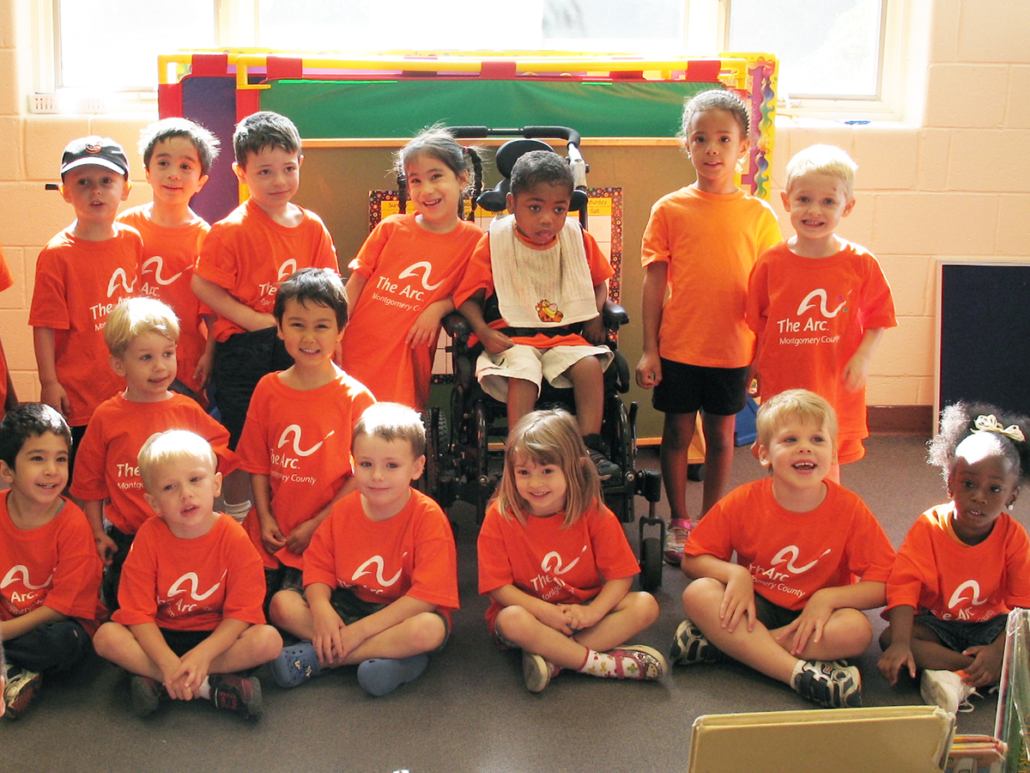
Students pose for a photo wearing orange shirts
Photo: The Arc Montgomery County
The Arc logo

Chapter Benefits Spotlight

What do 139 chapters of The Arc have in common?

They are saving money and providing pension and retirement-related products to their employee’s through The Arc’s agreement with Mutual of America. As budgets are tightening, there is no better time to pursue cost-savings measures. For starters, the company waives the $1,600 administrative fees for chapters of The Arc. Fall is the perfect time to compare your current program and learn if you too can benefit from Mutual of America’s partnership with The Arc. To learn more, contact Michael Tyler at Mutual of America at Michael.Tyler@mutualofamerica.com or at (410) 859-8256 .

The Arc logo

Microsoft Is Interested in Partnering With Chapters of The Arc!

Is your chapter located near a Microsoft store? If so, there is an opportunity to partner with Microsoft to host an event during Computer Science Education week (December 9 – 15). This collaboration is a wonderful opportunity to build a relationship with your local Microsoft team!

Microsoft is interested in engaging with underrepresented communities and would like to host an event that provides workshops to people with I/DD on activities such as: coding, game design, app development and social media influencing. If you support individuals who have advanced technology skills and an interest in learning about coding, game design, app development, etc. please apply by submitting this form.

Your application will be reviewed, and you will receive a notification if your chapter’s contact information is passed along to Microsoft to discuss this opportunity in more detail. All submissions are due by November 8. Please send questions to Katy Schmid (Schmid@thearc.org).

The Arc logo

Spotlight: Giving Schools and Students the Tools to Succeed With The Arc of Philadelphia

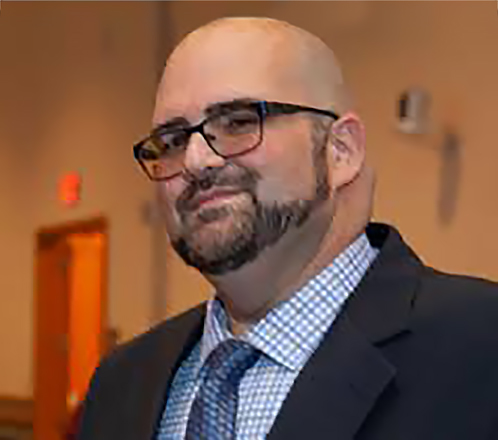
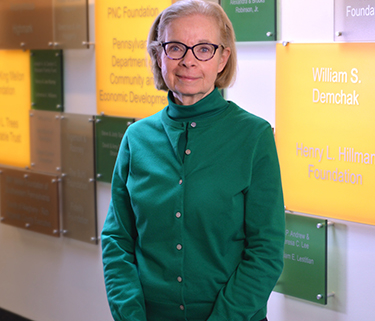
Joe-ManciniAlthough federal laws describe the services and supports available to students with disabilities, it is not always easy for students and parents to advocate on their own for appropriate educational services, so many families seek help from a special education advocate. Chapters of The Arc are well positioned to meet this need. Through advocacy, resources, and training, The Arc of Philadelphia is working hard to improve their local school system and ensure ALL students are set up to succeed. We spoke to the chapter’s Executive Director, Joe Mancini, about the work required to make this effort successful and how others can do the same.
Chapters of The Arc are well-positioned within their communities to make a difference in the education system. Tell us about the work The Arc of Philadelphia is doing in this area.

Our chapter provides educational advocacy for students in Early Intervention Programs through graduation. We serve approximately 80 families in a school year with support during the IEP process and provide countless others with resources. We also provide adult advocacy for individuals above the age of eighteen who are no longer enrolled in school.

Along with our Advocacy Services, The Arc of Philadelphia provides a variety of trainings to individuals, families, and providers on a several different topics. Self-advocacy, the IEP process, ABLE accounts, and tech coaching are some of the many trainings provided through The Arc. The Arc also works with the Philadelphia School district to hold a one-day conference on self-advocacy for transition age students in the district. This conference is free and provides a host of trainings on self-advocacy, technology, healthy living, money management, employment, healthy relationships, and secondary education.

The Arc has built a tech showroom that highlights technology to encourage transition age youth to consider independent living when transitioning from high school. We showcase the technology that would assist this age group to work towards independent living while teaching them the self-advocacy skills to get these goals implemented into their support plans.

How does a successful education advocate balance being a strong supporter to families while also building relationships with the school officials in systems they’re working to improve?

This is a very difficult task. An advocate has to manage achieving the best for the families and individuals we are serving while maintaining a relationship with a school that we will more often than not have to work with again. It starts with remaining professional and not allowing yourself to become emotional when working with all parties. We often see some very upsetting situations when advocating but keeping a steady hand and working professionally through the process will allow us to be seen as a partner and not a punishment to the schools. We must not be seen as biased and ensure that we are at the table to make sure our individuals voice is being heard and that the answers to the best supports do not lie just with the family or just with the school but with the entire team. Our goal as advocates is to work ourselves out of a job by transferring the needed skills to the people we serve. If we do that and allow the meetings to be run by the families, our relationship with the schools has a better chance to remain positive.

You recently completed The Arc@School’s advocacy curriculum training. How has it strengthened your work?

The breath of information we received in this training has increased all members of our team’s overall knowledge or the rights and responsibilities of everyone in the advocacy process. We have a variety of experience levels in our advocacy department and this training has increased the base knowledge of everyone on our team. All members of our team now feel better equipped to serve our families because of the increased knowledge this training brings.

What advice do you have for chapters interested in building a special education advocacy program? Where should they start?

Start with identifying the right members of your team. Finding a staff that has a balance of professional and personal experience is extremely important in building an advocacy team. Equally as important is having the right training for your team. Allowing an individual to shadow an experienced advocate for some time will greatly reduce the learning curve for such a difficult position. Trainings like The Arc’s Advocacy Curriculum will also act as a valuable support for anyone thinking of building an advocacy department at their chapter.

An older woman in glasses and a green turtleneck stands smiling at the camera with her hands clasped

Nancy Murray From The Arc of Greater Pittsburgh Selected to Serve on National Family Caregiver Council

The Arc is honored that Nancy Murray, the President of The Arc of Greater Pittsburgh at ACHIEVA, has been selected by the Administration on Community Living to serve on the RAISE Family Caregiving Advisory Council. Nancy brings a deep personal and professional understanding of the caregiver crisis facing millions of families and people with intellectual and development disabilities (I/DD).

Nancy is the mother of two adult children with Down syndrome and has been a caregiver to both of her aging parents. Nancy has also been a powerful voice in the disability field for over 40 years in the areas of family support, advocacy, public policy, supports coordination, and health care. As a member of the Family Caregiving Advisory Council, Nancy will help develop recommendations to the Secretary of the U.S. Department of Health and Human Services (HHS) on effective models of family caregiving and support to caregivers, as well as ways to improve coordination across federal programs.

The Council was established by the RAISE Family Caregivers Act enacted last year to help address the growing national caregiver crisis for family members and persons with I/DD, seniors, veterans, and others. This crisis for caregivers is reflected in the findings of The Arc’s Family & Individual Needs for Disability Supports (FINDS) 2017 Survey which shows that nearly two thirds of caregivers surveyed are employed and 45% of respondents provide more than 80 hours of care per week. Not surprisingly, nearly half of FINDS caregivers report feeling “very or extremely stressed.” The findings also underscore the need for accessible respite programs: 92% of caregivers say they have difficulty finding respite care.

We are confident Nancy will help leaders in the federal government find solutions for families. The RAISE Family Caregiving Advisory Council will hold its first meetings on August 28 and August 29, 2019 in Washington, D.C. and will be live streamed.

For more on Nancy’s contributions to the I/DD community, please click here.


The Arc logo

Chapter Benefits Spotlight: Take Advantage of our Benefits, Services, and Discounts!

We’re committed to assuring that every chapter is well-versed in what we have to offer. There are several ways we can provide this information to you such as a webinar, presentation at a staff or board meeting, via a PowerPoint that you or we can deliver and our written Directory. We know you’re laser-focused on chapter business and it’s easy to forget about the what our network has to offer.  Give us an hour of your time and we’ll fill you in on our extraordinary resources.


The Arc logo

Help your Chapter Raise Money!

Raise more from your local supporters. Through our partnership with WealthEngine, we created a cost-effective and simple solution that helps you identify, understand, and cultivate relationships with community members with a high likelihood of making a gift – all through using wealth and affinity data. Contact Scott Ardoin at sardoin@wealthengine.com to schedule a free consultation and discuss how your local chapter can benefit from WealthEngine’s tools and training workshops!

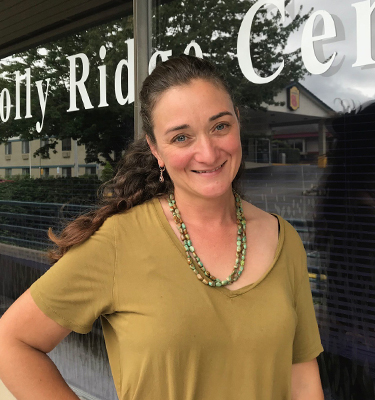
A woman smiles in front of a storefront window, wearing a yellow shirt, turquoise necklace, and a ponytail

Perseverance in Planning: The Value of Building an Inclusive Volunteerism Program

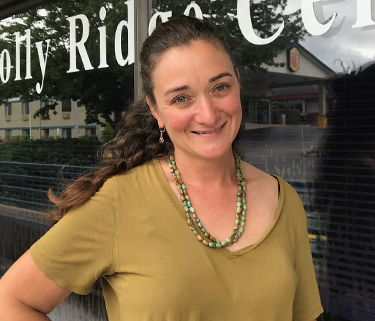
Building an inclusive volunteering community can be stressful, but it is often incredibly rewarding as well! This year, we asked Erica Delma from Holly Ridge Center to share her journey as a grantee of The Arc’s Martin Luther King, Jr. Day of Service project through a letter to herself. She spoke about finding meaningful work for her clients, the partnerships that blossomed because of volunteering, and the spirit of helping others that has lasted long after the events are over.

Dear 2018 Erica,

I know that the last few months since you applied for the MLK grant have been a roller coaster of emotions. As Development Director of Holly Ridge Center, you are responsible for attracting, growing, and stewarding resources to further the important work the Center does in our community. When the opportunity presented itself to apply for funding to develop inclusive volunteer programs, you thought it was a great match for the Center’s focus on inclusivity and finding people with autism meaningful places in the community. When you realized the focus would be on addressing food insecurity, an issue that you have been passionate about for years, you could not have imagined a better fit. And, one day you got the notice – you got the grant!

I want you know that you are joining a group of people and organizations throughout the country who are equally passionate. And, I want you to know that The Arc staff will be there to help you every day to be successful and navigate challenges.

You will get an opportunity to work with multiple community partners that will blossom into deeper relationships. You will add in even more partnerships with Meals on Wheels, the Kitsap Rescue Mission, and other service organizations.

On MLK Day, you will host a very successful volunteer fair at the Marvin Williams Center. Many people will tell you how eager they are to work with you in the future. The volunteers you support will have more opportunities in the community, and they will be eager and excited to do more and help others.

Thank you for your enthusiasm and energy for connecting the dots to promote inclusivity, volunteerism, the spirit of Dr. Martin Luther King Jr., and addressing food insecurity. There will be work nights and even longer days, but all your hard work will pay off!

Sincerely,
2019 Erica