The Arc logo

50th Anniversary of Fair Housing Act

by T.J. Sutcliffe, Senior Director, Income & Housing Policy

This April we mark the 50th anniversary of the Fair Housing Act – a powerful law that fights housing discrimination and opens doors for people with disabilities across the U.S.

What is The Fair Housing Act?

The Fair Housing Act prohibits discrimination in the sale, rental, and financing of housing based on race, color, national origin, religion, sex (gender), familial status, and disability. The Fair Housing Act bars discrimination in any aspect of selling or renting housing or to deny a dwelling to a buyer or renter because of the disability of that person, a person associated with the buyer or renter, or a person who plans to live in the residence. For example:

  • The Fair Housing Act requires landlords to allow tenants with disabilities to make reasonable access-related modifications to their private living space and common spaces (landlords are not required to pay for the changes).
  • The Fair Housing Act requires landlords to make reasonable exceptions in their policies and operations to afford people with disabilities the opportunity to use and enjoy their housing. For example, a landlord with a “no pets” policy may be required to grant an exception for a tenant who uses a service animal.
  • The Fair Housing Act prohibits lenders from imposing different application or qualification criteria on people with disabilities, or inquiring about the nature or severity of a disability (except in limited circumstances).
  • The Fair Housing Act requires that new multifamily housing with 4 or more units be designed and built to allow access for people with disabilities.

Our work to advance fair housing goals continues

It’s been five decades since President Lyndon B. Johnson signed the Fair Housing Act into law. There’s much to celebrate, but also much work to do. People with disabilities want to live in the community in a home that they rent or own. However, far too many find that discrimination limits their options: over half of all Fair Housing Act complaints involve discrimination on the basis of a disability.

What can you do?

We must remain vigilant and active to ensure that the Fair Housing Act’s promise continues to advance for the next 50 years, and to fight against any rollbacks of this vital law.

Sign up for alerts from The Arc to take action to protect fair housing and more.

If you suspect discrimination, you can file a complaint with HUD online or by calling 800-669-9777, or TTY 800-927-9275. You may also file a lawsuit in court. Contact your local fair housing agency for guidance and help filing a complaint.

The Arc logo

The Stage Is Set for the Next Threats to the Civil Rights of People With Disabilities With President Trump’s Latest Executive Order

Washington, DC – The Arc released the following statement in response to the Trump Administration’s “Executive Order on Economic Mobility”:

“Over the last year, people with disabilities, their families, and other advocates have fought again and again against overt attacks on access to health care and supports and services that make life in the community possible.

“After failing to decimate Medicaid, this Administration announced this week that it intends to open up a new front in this effort – one that aims right at those most in need, the poorest in our country, who have the most to lose.

“If you read between the lines of this executive order, it is a blueprint for sweeping changes that penalize people who are unemployed, across multiple programs. From Medicaid, to housing, to food assistance and other programs – this will result in new barriers to eligibility and denial of critical services. The call for increased economic opportunity is not backed up with provision of tools for individuals to succeed.

“We fundamentally disagree with the notion in here that some eligible people are more ‘deserving’ of benefits than others. This is also part of a pattern. From an Administration budget request that would have been devastating to people with disabilities, to a state by state effort to cut people off Medicaid, to a tax law that jeopardizes critical programs, we are still in the fight of our lives and remain ready to advocate for the civil rights of people with intellectual and developmental disabilities,” said Peter Berns, CEO of The Arc.
The Arc advocates for and serves people wit­­h intellectual and developmental disabilities (I/DD), including Down syndrome, autism, Fetal Alcohol Spectrum Disorders, cerebral palsy and other diagnoses. The Arc has a network of over 650 chapters across the country promoting and protecting the human rights of people with I/DD and actively supporting their full inclusion and participation in the community throughout their lifetimes and without regard to diagnosis.

The Arc logo

Why I Support The Arc of the United States: Autism Acceptance and Inclusion in Action

By: Nicole Jorwic, Chris’ Sister, Director of Rights Policy, The Arc of the United States

Nicole and Chris JorwicMy home state of Illinois still has seven state-run institutions for people with intellectual and developmental disabilities (I/DD) open. In 2018, 37 states still have institutions where people with I/DD live institutional lives away from their families and communities. Some may recall the horrible investigative reports that showed the terrible conditions in institutions, but fail to realize that they still exist — and that state and federal government dollars are still funding them. The Arc of the United States was founded by families like mine trying to eliminate the need for those institutions, and to get their family members with disabilities back home and included in their communities. While we have come a long way, there is still much to do from state capitals to DC.

The families that started The Arc movement were the examples that my parents emulated when they fought to ensure that my brother Chris, who had been diagnosed with autism, was the first student with the diagnosis included in our school district in the early 90’s. The self-advocates — the beating heart of The Arc — are the ones who my brother is following in the footsteps of when he advocates in our state capital for better wages for Direct Support Professionals, or presents at local school districts about how to better support students with autism. The policy staff of The Arc of the United States, who I am honored to call colleagues, have been fighting this fight for decades — some since before my brother was even born.

The legacy of The Arc of the United States was just one part of the reason I was glad to join the team as Director of Rights Policy almost three years ago. But more than that, it was about being a part of a movement that was bigger than any one person, family, or diagnosis. Since January of 2017, I have truly seen the power of that movement. This past year has been a whirlwind. I stood in awe at every rally, event, presentation, hearing and protest, at those who were willing to put their bodies on the line — screaming, shouting, and sharing their most personal stories about why Medicaid matters in their lives and the lives of their loved ones. With my brother’s permission to share his story, I was sometimes part of that large chorus that ultimately was able to stave off the attacks last fall and SAVE MEDICAID… for now.

The “for now” part is what keeps me up at night. As a family member and advocate, it is also why it is more important than ever that we grow the movement to ensure that the general public understands why inclusion and acceptance matters, and that they join the fight to ensure the progress that we have made in the disability community is not stalled by conversations of “cost savings” and “reductions.” We have to talk about the fact that institutions remain open, and how those dollars would be better spent in the community. We have to educate the general public about what Medicaid is and does. On the policy level, we have to talk to state and federal legislators about the fact that the Federal Medicaid law which we fought so hard to save needs a face lift. Right now, services in institutions, nursing homes, and other more segregated settings are mandatory — while home and community-based services (HCBS) are optional under the law. So, all those billions of dollars of cuts would have cut those community services — while those seven institutions in my home state of Illinois would have stayed open.

These are complex issues, but the basic fact remains that everybody benefits from people with disabilities being part of the fabric of their communities. That doesn’t come by keeping people locked away in institutions, or segregated into different classrooms. It comes through conversation, inclusion, and acceptance that we are all better together.

Since it is also Autism Acceptance month, I also want to talk about my brother Chris and why inclusion and acceptance matters in our lives. You see, it is my brother’s voice that I hear during every tense Capitol Hill meeting, frustrating debate, and late night in the office. This is a little ironic since my brother doesn’t use his voice to speak. Chris types to communicate, and this really only started when he was 21 years old — almost 20 years after he lost his speaking voice. At the time when he started sharing the “20 years of observations and opinions,” my grandpa asked him how he had learned to read and write. And Chris answered with his signature sarcasm, that he “learned to read in his classroom like everyone else”. That is why inclusion matters, that is why acceptance goes light-years beyond awareness. If my parents — like all the parents who started The Arc — hadn’t insisted that Chris be included with his peers, who knows if he would have ever found his ability to communicate. That would have been a loss to our family, our community, and the world.

Chris always says it better than I can. Here is something he wrote: “Every voice matters and deserves to be heard. I would like to say that autism is not a tragedy or a disaster, it is a challenge and I am lucky to have a family that is up to it. I would be happy to talk to political leaders about how they spend our money and why they should talk to leaders like me, who have the experience and history to understand where the money and resources should go and what awareness and acceptance really looks like. And to my brothers and sisters in autism, who have families who see only your diagnosis, I fight for you.”

Chris and I are fighting, and we hope you join our movement today, so that we can continue the fight that started The Arc of the United States over 65 years ago — the fight for acceptance and inclusion in all areas of life for people with disabilities.

The Arc logo

Why a Federal Balanced Budget Amendment Is Bad for People With Disabilities

Almost everyone agrees that they should have balanced budgets, that is, that they should not spend more money than they take in. It makes perfect sense for individuals, so why not for our federal government?

Actually, there are several reasons why requiring a balanced budget for the federal government would be a very bad idea. For starters, let’s consider the assumption about individuals having balanced budgets. If this were really the case, we would not be able to get home mortgages, student loans, or finance the purchase of a car. We would not be able to borrow money for such sound investments in our future.

Requiring a balanced budget makes no more sense for the federal government than it does for individuals. The federal government needs the flexibility to do things like respond to natural disasters, public health epidemics, military threats, demographic changes, and economic downturns, among other things. What appears to be a commonsense approach is actually very bad public policy.

What is a Balanced Budget Amendment (BBA)?

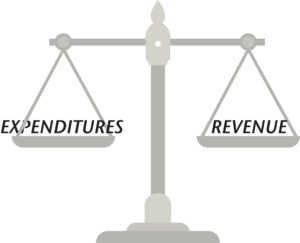
Balanced Budget ScaleA balanced budget amendment is a proposed federal constitutional rule requiring that the government not spend more than its income in a given year. Most state constitutions have balanced-budget provisions and most of these make an exception for times of war or national emergency, or allow the legislature to suspend the rule by a supermajority vote. The U.S. Constitution does not require a balanced budget. Some members of Congress are looking to change that by passing legislation to add an amendment to the U.S. Constitution.
Why is a BBA Harmful?

It will result in cuts to Medicaid, Medicare, Social Security, and other large programs. Programs like Medicaid, Medicare, Supplemental Security Income (SSI), and Social Security are a large part of the federal budget. They are projected to grow in the next several years primarily due to the aging of the population. Since these are very popular and critical programs, Congress has been unable to make direct cuts to them and some Members are now looking to try less direct methods, including a BBA. 

Social Security and Medicare are particularly vulnerable to cuts because a BBA prohibits spending from exceeding revenues collected in that year. These programs operate with trust funds that collect dedicated payroll taxes designated for specific programs which are partially paid out in future years to meet projected population needs. For example, in years when Social Security collects more than it pays in benefits and other expenses (which it has done every year since 1984), the Treasury invests the surplus in interest-bearing Treasury bonds and other Treasury securities. These bonds can be redeemed whenever needed to pay benefits. The trust fund balances allow benefits to be paid when the Social Security program’s current income is insufficient by itself. Under a BBA, the $2.9 trillion in Treasury securities held in the Social Security Trust Fund would not be available to help pay benefits to the baby boomers for retirement or disability since almost all of it was collected in prior years.

It would harm the economy. A BBA would likely cause significant harm to the economy, making recessions both deeper and longer. In an economic slowdown, revenues (mostly taxes) fall while spending for unemployment and other benefits increases. A BBA would force policymakers to cut federal programs, raise taxes, or both when the economy is weak or already in recession, the exact opposite of what good economic policy would advise, according to the Center on Budget and Policy Priorities.

It is extremely hard to change. An amendment to the Constitution is a dramatic step that takes a lot of time to enact. Unlike typical legislation, once a constitutional amendment has passed, it is extremely difficult to undo. 

What is Happening in Congress?

There are two BBA bills that have been introduced in the House of Representatives by Representative Bob Goodlatte (R-VA) – H.J. Res 1 and H.J. Res 2 – that Congress may vote on. While both versions are very harmful, H. J. Res 1 is the most drastic one since it essentially prohibits tax increases (by requiring a three-fifths vote in the House and the Senate) and limits spending to 20 percent of the economy (gross domestic product(GDP)). The House may vote on one of these bills as soon as next week.

Key Points for Advocates 

People with disabilities, their families, and advocates can:

  • Speak concretely about how their lives will be upended if the dramatic spending cuts forced by a BBA were to happen. What would happen if Medicaid, Social Security, and other programs were severely cut?
  • Call out the contrast – Question how Members of Congress can call for such drastic action to reduce deficits when they recently voted to add over $1 trillion over 10 years to the nation’s deficits in the tax law enacted on December 20, 2017. See House votes here and Senate votes here.
  • Share what many leading economists believe – a BBA to the U.S. Constitution is very unsound economic policy. 

For more information, see:

The Arc logo

The Arc of the Bay: Thinking Outside the Box to Improve Their Chapter and Community

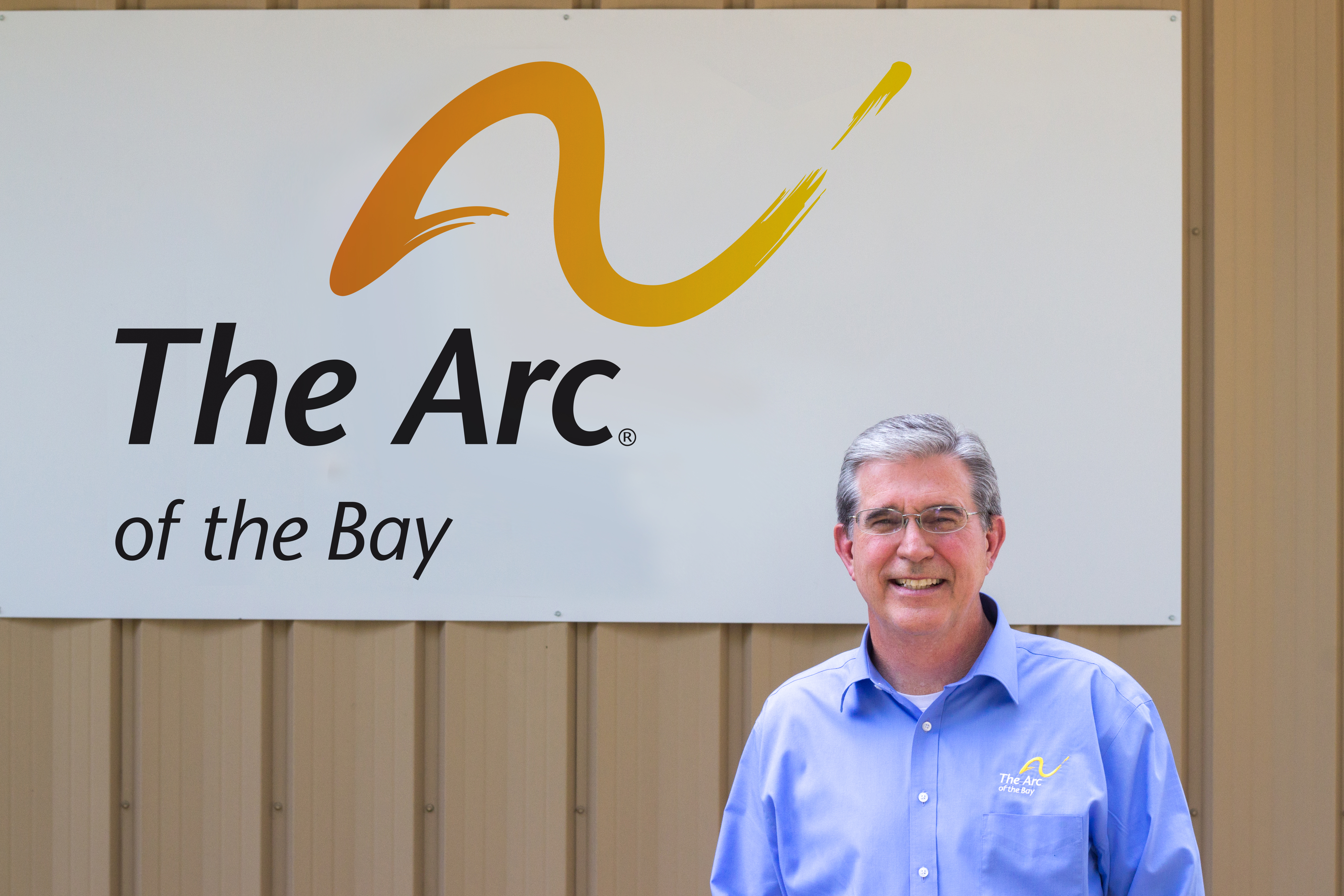
Ron Sharpe, Executive Director of The Arc of the Bay, stands smiling in front of a sign with the chapter's name on it.

The Arc of the Bay in Florida has had an exciting few months! In 2017, the chapter affiliated and branded with the national office – executed seamlessly by their executive director Ron Sharpe. This past month, the chapter participated in a summit focused on transitioning from facility-based to community-based employment. Ron reflected with us on the challenges and opportunities that strengthen and propel his chapter forward as they continue to advance our universal mission of inclusion for all.

First, we wanted to formally welcome you to our chapter network; your chapter recently rebranded and joined forces with the national office! What initiated that process?

We were strategically planning on how we were going to celebrate and fully maximize our upcoming 60th anniversary in 2017. We had a focus group & graduate students from our local Florida State University – Panama City Campus provide research & feedback that while we have been in Bay County, FL for 60 years, many families and businesses still didn’t know who we were, St. Andrew Bay Center, and what our mission was. We were already affiliated with The Arc of Florida, and when we reviewed what The Arc of the U.S. had to offer, we knew it would only strengthen our daily operations with the wide range of resources that would be made available to our agency…including branding and name recognition. 2017 represented the largest overall growth that we have experienced within the past 10 years in every facet of our business model…double-digit increases in our ADT enrollment, Supported Employment services and including our overall fundraising.

At the end of last month, you attended the Provider Transformation Network Summit in DC on transitioning from facility-based employment to community-based employment programs, along with four other chapters. What motivated you to attend, and what were some of your takeaways?

I attended the PTN Summit hoping to learn from other leaders within those four chapters in what they found to be successful or not within their communities within this transition. I was able to hear that we are all experiencing some of the same struggles and opportunities, but learned of different or new ideas to hopefully getting new results. We all came from different levels of years of experience, but through our ideas and building relationship, we now have another resource network to continue to build upon as we continue to work through this transition.

The national landscape is changing, with an increasing emphasis on community employment opportunities for individuals with I/DD. How is this affecting the direction of your organization as it relates to employment services? What kind of work are you doing in your chapter to advance community-based, gainful employment for people with I/DD?

The Arc of the Bay has fully embraced this process ranging from implementing an initiative of The Arc of Florida “Dream Inspired Planning” where our individuals shared what their job goals are communicating through pictures on their own dream boards to promoting individuals and their job skills and experience in our local paper every Friday in a section we created and titled “Employment Highlight”. The process with “Dream Inspired Planning” reinforces “self- advocacy and self-determination in setting future goals on what they would like to do. We also use every social media to advocate on behalf our clients, our employers and our staff on the successes made.

Do you have any advice for other chapters looking to strengthen their employment initiatives?

Sounds so simple, but think out of the box when thinking about new employment opportunities! Everything we do is “NETWORKING” and making contacts. Look at civic clubs, like your local Rotary or your chamber of commerce.

The Arc logo

The Arc and Walmart Foundation Renew Commitment to Providing Community-Based Employment for People With Disabilities

Washington, DC – The Arc’s employment program, The Arc@Work, is pleased to announce it has received a $325,000, one-year grant from the Walmart Foundation. This funding will be dedicated toward scaling the programs that The Arc@Work and Walmart have created over the past two years to train and place people with intellectual and developmental disabilities (I/DD) in competitive, integrated employment within their communities.

Employment rates for people with disabilities – especially people with I/DD – are critically low compared to people without disabilities. The US Census Bureau’s American Communities Survey (2015) estimates that people with any disability or a cognitive disability are employed at much lower rates (34.3% and 24.8% respectively) than those without disabilities (73.6%). Additionally, the National Core Indicators Survey of 2015-2016 reported that 19% of people with I/DD in the workforce reported having a paid job in the community.

In response to these dire statistics, through funding from the Walmart Foundation, The Arc@Work has built a successful partnership in working with local chapters of The Arc to provide competitive and community-based employment opportunities and strengthening chapters’ relationships with local businesses since 2016. To do this, The Arc@Work provides technical assistance and an average sub-grant award of $10,000 to chapters of The Arc located across the country that provide community-based employment opportunities.

Over this two-year span, the Walmart Foundation has supported The Arc@Work and chapters of The Arc located across the country in training more than 2,000 individuals and placing more than 800 individuals into competitive and community-based jobs. Additionally, participating chapters of The Arc have forged relationships with nearly 500 local and regional employers to provide trained job candidates and staff training on creating inclusive work environments. This new round of funding will allow for The Arc@Work and chapters of The Arc to achieve even greater impact over the next year.

“For far too long, people with intellectual and developmental disabilities have been relegated to the margins of the working world. Along with private initiatives, new government regulations promise to dramatically increase the number of people with disabilities placed alongside of people without disabilities in integrated, competitive environments. The support from the Walmart Foundation will allow The Arc to continue to transform the existing pool of talented candidates with disabilities into productive employees,” said Peter Berns, CEO of The Arc.

The Arc advocates for and serves people wit­­h intellectual and developmental disabilities (I/DD), including Down syndrome, autism, Fetal Alcohol Spectrum Disorders, cerebral palsy and other diagnoses. The Arc has a network of over 650 chapters across the country promoting and protecting the human rights of people with I/DD and actively supporting their full inclusion and participation in the community throughout their lifetimes and without regard to diagnosis.

The Arc logo

Promoting Accessible Technology for Seniors and Users of All Abilities

The Arc is a proud supporter of The M-Enabling Summit, promoting accessible technology for seniors and users of all abilities – taking place June 11-13 in DC.

The M-Enabling Summit Conference and Showcase is dedicated to promoting accessible and assistive technology for senior citizens and users of all abilities. This year’s conference is just under a month away and it is one you won’t want to miss! Hear directly from leaders in the industry about the latest breakthroughs in accessibility and assistive solutions for users of all abilities. This year’s M-Enabling Summit will be filled with distinguished talent, unparalleled educational sessions and exclusive networking opportunities.

With its theme of “Accessible and Assistive Technologies Innovations: New Frontiers for Independent Living,” the 2018 M-Enabling Summit will provide a platform for empowering technologies and focus on next-generation innovations and breakthroughs for users of all abilities. Highlighted topics at this year’s Summit include: Accessible Security, Identification & Privacy Protection; Inclusive Higher Education Forum, IAAP Technical Session & Certification Exams; Digital Assistants; Consumer Technology Products and IoT for Independent Living and much more!

The M-Enabling Summit is the ideal venue to support independent living in an interconnected world for seniors and persons with disabilities. These technological advances are becoming an essential differentiator in gaining a competitive advantage. The M-Enabling program is designed to give attendees tools, knowledge, and networking opportunities to implement into their everyday lives in this rapidly expanding market of assistive and accessibility technologies. Register today!

The Arc logo

Are You Concerned About Disproportionate Rates of Minority Students in Special Education?

In February, the Department of Education announced its intent to delay a regulation about the disproportionate rates of minority students in IDEA identification, placement, and discipline. The regulation seeks to have states use a standard way to identify significant disproportionality. States presently use different formulas, resulting in only 2% of school districts reporting any significant disproportionality. Do you believe significant disproportionality is a problem in your school district or state? Are you involved in your state’s process to identify significant disproportionality? If so, please contact Acosta@thearc.org.

The Arc logo

Join The Arc’s Legal Advocacy Network!

As you may know, The Arc has been working to build our capacity to engage in litigation to advance the rights of people with I/DD nationwide in areas such as community integration, housing, education, and criminal justice. The Arc views individual and systemic litigation and amicus briefs as essential tools in ensuring that disability rights laws are meaningfully enforced to the fullest extent of the law in jurisdictions around the country and we view our chapters and volunteer network as important partners in this work. If your chapter has attorneys on staff, on your board, or serving as volunteers who would be interested in learning more about The Arc’s legal advocacy work, please have them fill out this form so we can keep them informed.

The Arc logo

Chapter Benefits Spotlight

Don’t overlook the resources, training, and technical assistance related to fundraising, marketing, communications, grassroots advocacy, public policy, and programs designed to support your chapter!

When was the last time you visited The Arc’s “For Chapters” portal? Located on the “For Chapters” page is the directory of services, benefits, and discounts available to chapters of The Arc (you can find it under “Benefits of Membership”). There, you’ll find all the resources at your disposal as a chapter of The Arc. You’ll need a username and password to log in. To obtain one, email membership@thearc.org.