
The Arc logo

Lack of Medicaid Portability Restricts Life Choices for Zoe and Other Americans With Disabilities

By Zoe in Colorado

I was born with spinal muscular atrophy, a developmental neuromuscular disease that affects every muscle in my body. My entire life, I’ve relied on someone else to do even the most basic care for me. At some point in my childhood, I was placed on a Medicaid waiver in Colorado. It allowed me access to specialized care, like home health, which wasn’t covered by my parents’ primary insurance.

When I was in the third grade, we moved states. I remember my mom spending time on the phone and filling out applications that took almost a year to complete to get me started on the new state’s Medicaid program. When we moved back to Colorado, I watched her do the same thing again, over months, until I was finally placed on a waiver again.

At the time, I didn’t realize what all of that meant. It wasn’t until I was a junior in high school, visiting colleges around the country and being recruited into top-tier honors programs, that I realized I was facing an even bigger barrier than my disability itself. Medicaid, which I now rely on daily, is nontransferable between states. It is not portable. In addition, not all states have the same programs and services to allow an individual to live independently.

Because I need 24-hour assistance that rivals the care level in an assisted living facility, home health care is necessary for me to live independently within my community. I knew that I wanted to go to college, and I knew that I wanted to live in a dorm. But as my acceptance letters began to roll in my senior year of high school, it became apparent that, unlike my peers, my choices were going to be limited—unless, of course, I wanted my mom to move into my dorm and attend classes with me. Though I love her, I knew that was not going to work.

Reluctantly, after research, calls, and dead ends, I turned down prestigious offers, including the rigorous University of California in Los Angeles. I was both ecstatic and heartbroken, knowing I was accepted in a pool of 111,000 applicants at a beautiful school, but knowing the challenges I would face if I relocated to California.

Though it became a different journey, I opted to stay in Colorado, where I am now a fourth-year honors student at the University of Denver. I live on campus independently with a team of caregivers paid through a Medicaid waiver.

Although my story is a happy one for now, the struggle remains the same. While my friends jumped around the country over the summers taking internships in their fields of study, I remained “stuck” in Colorado because I simply can’t pack up my medical equipment and caregivers and hop over to a different state. This reality remains as I look at graduate programs, forcing me to seriously consider online programs since my area of study isn’t offered locally. If I do move, for either school or a career opportunity, the consequences of a gap in Medicaid coverage are too great to risk.

I imagine not having health care coverage for months on end while I try to navigate a new state system on top of moving to a new city and state. My $26,000 medicine? My $56,000 power wheelchair? My monthly allotment of $20,000 to pay caregivers for 24-hour care? POOF! Nothing would be covered. My ventilator rental that I rely on to breathe at night? I’m not trying to be dramatic, but the truth is, I would slowly die without it. Without the drug that is keeping me stable, my body would further deteriorate.

I am privileged to have parents with the financial means to sell their home and transfer their jobs if necessary. But without those natural supports, I would never be able to move. Ever. Because I can’t simply show up and have caregivers and medical providers and Medicaid and a pharmacy and a durable medical equipment company and… and… and…

How to maintain independence is something not every 21-year-old has to think of, but it’s something that I will always have to consider when making life decisions. Until Medicaid offers a portability option, disabled Americans like me will always be restricted in their life choices in ways that our able-bodied peers never will be.

Roll of red, white, and blue "I voted" stickers on a white table

You Have the Power: Go Vote!

It’s almost time to cast your vote in the midterm election. Are you ready?

According to the Centers for Disease Control and Prevention, 1 in 4 adults have a disability. Any cohort of this magnitude carries significant political power, especially during a midterm election year such as 2022.

People with disabilities and their family members recognize that their votes help elect the officials who will run the government, make laws, decide where government money gets spent, and much more. All these decisions have a significant impact on the lives of people with disabilities, their families, and the workforce that supports them.

The Center for American Progress found that nearly 62% of voters with disabilities cast a ballot in the November 2020 election, compared to just 56% in 2016. This increase is in spite of the fact that people with disabilities continue to face barriers to casting their ballot, such as complex mail-in voting procedures, inaccessible voting locations, inexperienced polling workers, guardianship laws, transportation barriers, and more.

This fall, the disability community and their supporters have another opportunity to make their voices heard through their vote. In this current midterm election cycle, all 435 seats in the House of Representatives and 35 of the 100 seats in the Senate are on the ballot.  Additionally, eligible voters in 36 states will vote to install new governors. That’s a lot of opportunity for our community to shape the future of our country by simply going to the polls.

To help you navigate this election season, The Arc has created several resources and put together essential information about voting. At thearc.org/vote you can find the following materials in plain language in both English and Spanish:

  • The Arc’s Disability Voting Guide
  • The Election & You: Thinking About Disability
  • Sample Questions for Candidates

You can also check out The Arc’s Civic Action Center to find your state’s upcoming election information, your closest polling location, and verify if you are registered to vote (make sure you know your states deadline!).

Let’s keep the momentum going and show our civic power again this election season. Take the first step and pledge to vote today!

A woman standing on a deck with a park int h

For Lauren, Increasing the SSI Asset Limit Makes Her Dreams More Achievable

Lauren has a bright future. She graduated from her Indiana high school at the height of the COVID-19 pandemic, but she didn’t let that stop her from advancing her education. Currently, she is working towards an associate degree in animal science, her long-time passion. With only one class remaining, she is set to get her degree this year.
Currently, Lauren is living at home with her parents while she works part-time at a doggy daycare. As she has watched her siblings move out and settle into adult life, she has also been making plans of her own. She dreams of pursuing a veterinary technician degree, working in a veterinary clinic, living in her own home, having her own car to get around her rural Indiana community, spending time in nature, and even going on the occasional vacation.

Lauren’s plans are not uncommon, but they are difficult to achieve right now. Lauren receives Supplemental Security Insurance (SSI). SSI currently provides critical support to Lauren and nearly 8 million other adults and children with disabilities and older Americans. SSI helps people pay for their homes and food to eat. In most states, receiving SSI also means that people can get Medicaid. This is important because only Medicaid provides the services and supports many people with disabilities rely on.

Right now, outdated rules prevent people who get SSI from saving money, forcing them to live in poverty. Single people like Lauren who get SSI can only have $2,000 in assets and married people can only have $3,000 combined. Assets include money in bank accounts, retirement accounts, and other savings. In practice, because bank accounts often require a minimum balance, there is less money that can be used if needed. It also means that Lauren cannot save for a down payment for a home or a reliable car.

Lauren wants to be independent and achieve her goals. Even though she is young, she wants to plan for her retirement and make sure she has enough money for the future. The current SSI asset limit causes constant challenges and makes saving for everyday life and achieving her dreams feel out of reach.

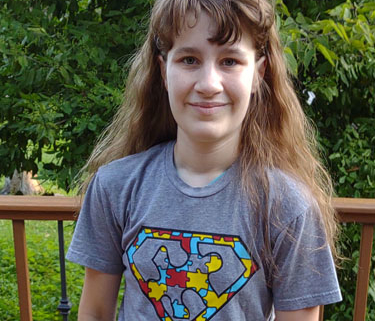
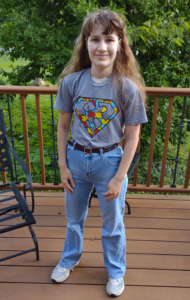
A woman with long brown hair stands on a deck overlooking grass down below. She is wearing a grey t-shirt and jeans.“I have to constantly monitor the account to make sure I am not working too much so that I can keep all my benefits. The support is what makes it possible for me to work, but if I do work then I could lose the support. It makes it impossible to improve and try new things. I have not gone over the limit, but the low level does make it impossible to be responsible and save for larger purchases like a car or home of my own. I am stuck as a renter or with poor-quality transportation, and I am not able to plan for the future, like retirement—things that other people my age are able to do.”

Congress is currently considering a bill that would raise the amount of savings a person on SSI could keep. This is huge. It would be the first time in over 30 years that this limit would change. It would raise the limit from $2,000 to $10,000 for single people like Lauren, and it would increase from $3,000 to $20,000 for married couples who get SSI.

For Lauren, changing the asset limit would create new possibilities to enact her plans and achieve her dreams. She could save for a car to get around her rural community and set aside a little nest egg in case something unexpected happens.


Get Involved

Help Lauren and the 8 million others nationwide on SSI save for their future.

Tell your members of Congress to raise the savings limit today!


The Arc logo

Alice and Soojung’s Story

“We’ve spent most of her life waiting for the help we need, for the wellbeing of our family.”

Soojung teaches middle school math and has three wonderful children. Her middle child, Alice, has Rett Syndrome, and has severe seizures, scoliosis, and uses a G-tube for nutrition, fluids, and medications. Alice has had many major and minor surgeries throughout her childhood, and every time Soojung and her husband requested at-home nursing care for her recoveries, it was denied by private insurers.

Alice’s pediatrician sat Soojung down and said, “You can’t go on like this.” The round-the-clock care and the toll of the stress was overwhelming them.

With the pediatrician’s help, Alice was finally accepted for services through the Medicaid program when she was 11 years old. Night nursing services led to a great improvement in Alice’s health, keeping her out of the hospital for the first year in her life. Soojung went back to the classroom, where she loves teaching math. And today, with the addition of day nursing services, Alice is 15 years old and able to participate in school, at home during 2020, and in-person in 2021 while Soojung teaches her students.

The Arc is fighting to make sure no family has to wait years for services that improve a child’s health and ability to thrive in the community.

“My daughter has the right to receive an equal chance of living her life, and Medicaid provides that extra help she needs to survive, learn, and thrive. The Arc’s work is so critical to ensure that Alice has a fulfilling life.”

The Arc logo

Guiding The Arc Through Lived Experience With Disability

“Nothing about us without us” is a theme of the disability community, reminding the world that people with disabilities expect and deserve autonomy over their lives. This includes actively participating in the organizational structures that advocate for and with people with disabilities.

With this guiding principle in mind, The Arc established its National Council of Self-Advocates (NCSA) in 2012. NCSA abides by the “nothing about us without us” motto by creating a space where people with intellectual and developmental disabilities (IDD) can provide guidance to The Arc and offer their unique disability perspectives. The council also strives to provide professional growth opportunities to its members, such as access to job opportunities and other leadership roles.

NCSA is led by Chloe Rothschild, a national board member for The Arc, and it is supported by Juan Guerrero, a policy associate for The Arc. As a sibling of an individual with a disability, he understands and values the need to amplify the perspectives of people with IDD. This understanding has motivated him to constantly create new growth opportunities for NCSA’s approximately 300 members.

NCSA’s members are from all over the U.S., and many credit the group for providing a space to meet other self-advocates and freely discuss their thoughts on certain topics. Hearing from one another is essential to personal growth, especially in the advocacy space.

At the beginning of 2022, the council set a goal of providing speaking engagements, both to NCSA Officers and the general council, and they also decided to gather more frequently. Each monthly meeting centers around a topic relevant to self-advocacy, such as employment, voting, interacting with law enforcement, leading with a disability, and more. In a recent session, three council members presented on employees with disabilities assuming leadership positions in the working world. From time to time, members will be called upon to review materials created by The Arc.

General members can apply for a two-year officer position. If elected, they are expected to attend officer meetings, and they are also charged with setting the monthly agenda and preparing presentations for the regular monthly meetings. Recently, the current officers have begun leading and facilitating these monthly sessions.

Using the knowledge and experience gained in this space, NCSA member Mark got the opportunity to speak at the Disability Vote Submit. He was also able to help with The Arc’s toolkit on self-determination, and he helps doctors understand how to work with people with disabilities.

Another member, Nathaniel, advises NCSA has deepened his understanding of the federal policy system. With his newfound knowledge, he plans to serve as a mentor to people with disabilities by pursuing their Bachelors, Masters, or even a PhD.

There’s no better time to join than right now! We’re currently growing and would love for anyone interested in joining to come check us out. The only requirement for acceptance is that you must identify as a person with a disability.

Learn more about NCSA and click here to join as a general member. Current members can also apply for an officer position this fall. We look forward to shaping the future of disability with you!

The Arc logo

All About Congressional August Recess

When you are young, recess signals a break from the drudge of work. It is a welcome chance at a bit of freedom to play and escape the school day. But when you are a member of Congress, recess takes on an entirely different meaning – one that is important for disability advocates to know.

For U.S. senators and representatives, recess is a time of the year when legislators leave their duties in Washington, DC behind and return home to the districts and states they represent. But members of Congress are not home to relax and recharge for the fall legislative session. They are there to travel around their districts, attending a variety of community events, and hearing from as many constituents as possible.

You can use this time to educate your federal elected officials on how critical policy priorities impact people with disabilities, which may include you and your family. The Supplemental Security Income (SSI) Savings Penalty Elimination Act and the importance of home and community-based services (HCBS) are just a few of the critical policy priorities.

Your stories can empower these decision-makers to return to Washington with the concerns of the disability community top of mind.

So, what are you waiting for? The following tips can help you make the most of your advocacy during August congressional recess!

  • Find out who your members of Congress are. The Arc provides an easy way to look them up. Visit our Action Center and enter your zip code in the Find Your Elected Official box on the right-hand side of the screen. You can also follow your members of Congress on social media by finding their Twitter handles.
  • Attend town hall events. Many members of Congress host town hall events during August recess to hear from their constituents. You can find townhalls in your area here or look on your elected official’s website.
  • Download The Arc’s August Congressional Recess Toolkit. The free toolkit offers everything you need to advocate effectively, including links to action alerts, plain language factsheets on key issues, tips to engage, and sample letters to the editor that you can personalize and submit to local newspapers.
  • Connect with your local chapter of The Arc. Find your state or local chapter to learn more about advocacy opportunities in your area. They may have meetings and other activities you can join.

This August recess presents an excellent opportunity for sharing your perspective on important policy issues and educating members of Congress in your hometown on what living with a disability is like. With just a little preparation, you can prepare your legislators to fight for disability rights in the fall!


The Arc logo

Meet The Arc’s Alumni Council

When The Arc’s Alumni Council was formed in 2017, it was envisioned as a gathering place for former employees and board members of The Arc’s national office, as well as local and state chapters. Nancy Webster is the founder and current chair of the council. She is also the former Board President of The Arc of The United States. As the Alumni Council founder, Nancy recognized that many former staff and volunteers were eager to remain engaged in The Arc’s network but were unsure how to contribute.

The Alumni Council provides a way to capture the rich experiences and knowledge of former employees and volunteers while keeping them connected to The Arc’s mission of supporting people with disabilities to be full members of their communities. Further, each alum offers unique skills, perspectives, and experiences that benefit the entire network, from chapters in small rural communities to those in bustling metropolitan areas.

In working with the council, Nancy said she had a goal of “reaching out to as many alumni as possible to invite them to engage with The Arc and other alums to support our mission, our chapters, and individuals.” This goal would be achieved by implementing several objectives:

  • Advising state and local chapters of The Arc on management considerations, including governance, finance, strategic planning, best practices, sustainability, and more
  • Serving as a think tank for risky questions, ideas, and concerns, as well as identifying the important battles and challenges on the horizon.
  • Providing guidance to individuals with disabilities and/or their families around crucial issues, such as housing and future planning

In addition to Nancy, The Arc’s Alumni Council is currently supported by Kerry Mauger, Director of Special Projects at The Arc, with input from its 54 members. Current members bring a variety of experiences to the council based on their roles as former staff, volunteer leaders, committee members, and self-advocates.

The council strives to offer a variety of activities, including:

  • Quarterly Zoom briefings which include policy updates
  • Opportunities for members to mentor executives of state and local chapters of The Arc
  • Eliciting member input on The Arc’s Strategic Plan and other documents
  • Assisting individuals with disabilities in leadership roles
  • Speaking engagements
  • And more!

Nancy noted that, in the future, they hope to gather in person for networking opportunities at The Arc’s National Convention and other events, as well as create new activities based on member feedback. To aspiring members of the Alumni Council she says, “Jump in! We are delighted to have you.”

Kerry adds to this sentiment saying, “There are so many great advocates within our chapters, and the Alumni Council offers a way for us to continue to keep them engaged in our efforts to support people with disabilities, both locally and nationally.”

Steve Morgan became a council member after working for nearly 45 years at The Arc Baltimore, 32 of which he served as executive director. Upon retirement, he says he was anxious to “stay connected to The Arc both personally and professionally…since I had been very active with The Arc and the National Conference of Executives.”

If you are a former board member or employee of The Arc at the national, state, or local level and are looking for ways to stay engaged, check out the Alumni Council. Membership is free, and you can participate as little or as much as your schedule allows.

Visit the Alumni Council webpage to learn more and sign up for the council here!

A man stands at the front of a classroom with children sitting at desks listening in the foreground

The Arc Partners With Comcast NBCUniversal to Increase Access to Culturally Competent Special Education Services for Students of Color with Disabilities

Washington, D.C. – As special education students face the continuing challenges of the COVID-19 pandemic, The Arc is pleased to announce that it has been awarded a $200,000 grant from Comcast NBCUniversal to connect families of color and families from low-income households with students with disabilities to valuable educational advocacy resources. The grant will also help to ensure The Arc@School’s continued growth and success in assisting students and families for many years to come.

To expand support for students with intellectual and developmental (IDD) disabilities, the organization will provide 250 scholarships for The Arc@School’s Advocacy Curriculum. The Arc will also engage in a cultural competency review of its current curriculum to inform the next iteration, increase accessibility for families and improve the impact on student education. With Comcast NBCUniversal’s support, The Arc@School aims to disseminate special education resources to at least 350,000 people in 2022.

“We are proud of our long-standing partnership that supports The Arc in its mission to provide resources for all students with disabilities – and their families – so they can live independently and actively participate in their communities,” said Dalila Wilson-Scott, EVP and Chief Diversity Officer, Comcast Corporation.

Far too many kids are being left behind during the pandemic, particularly students with disabilities from marginalized groups. The Arc fights for all students to receive the benefits of public education in the least restrictive setting possible, as mandated by federal and state law. The Arc@School program supports families of students with IDD to successfully navigate the special education system and get the supports and services they need to thrive in school.

“Equal access to education for all students is an undeniable right in this country. The Arc is committed to nothing less for students with intellectual and developmental disabilities. We are thankful for Comcast NBCUniversal’s continued support of our education advocacy and broad impact on the program, especially during this time of constant uncertainty in education. Families of all backgrounds need quality support in navigating special education – and we must ensure that we provide these resources in a way that reflects the unique experiences among us,” said Peter Berns, Chief Executive Officer of The Arc of the United States.

About Comcast Corporation

Comcast Corporation (Nasdaq: CMCSA) is a global media and technology company that connects people to moments that matter. We are principally focused on connectivity, aggregation, and streaming with 57 million customer relationships across the United States and Europe. We deliver broadband, wireless, and video through our Xfinity, Comcast Business, and Sky brands; create, distribute, and stream leading entertainment, sports, and news through Universal Filmed Entertainment Group, Universal Studio Group, Sky Studios, the NBC and Telemundo broadcast networks, multiple cable networks, Peacock, NBCUniversal News Group, NBC Sports, Sky News, and Sky Sports; and provide memorable experiences at Universal Parks and Resorts in the United States and Asia. Visit www.comcastcorporation.com for more information.

The Arc advocates for and serves people wit¬¬h intellectual and developmental disabilities (IDD), including Down syndrome, autism, Fetal Alcohol Spectrum Disorders, cerebral palsy and other diagnoses. The Arc has a network of nearly 600 chapters across the country promoting and protecting the human rights of people with IDD and actively supporting their full inclusion and participation in the community throughout their lifetimes and without regard to diagnosis.
Editor’s Note: The Arc is not an acronym; always refer to us as The Arc, not The ARC and never ARC. The Arc should be considered as a title or a phrase.

A close up of two sisters stand close to each other, looking at the camera and smiling.

Get to Know The Arc’s Sibling Council

Throughout the history of the disability rights movement, people with disabilities and their parents have been at the forefront in advocating for national and state services and programs. While siblings of people with intellectual and/or developmental disabilities (IDD) haven’t garnered as much attention, The Arc recognizes that siblings play a critical role in the lives of their sibling with IDD.

For siblings to be the best advocates they can be, it is important that they have access to information and resources that can help them make informed decisions, whatever their involvement. The Arc’s Sibling Council is one way for siblings of people with IDD to get access to resources and take part in The Arc’s grassroots advocacy efforts nationwide.

Members of the Sibling Council bring a wide range of expertise and passion, and they volunteer to serve a two-year term. Currently, the eight members are directing their advocacy efforts around two primaA close up of two sisters stand close to each other, looking at the camera and smiling.ry initiatives: competitive wages for direct support professionals (DSPs) and home and community-based services (HCBS). DSPs are a critical workforce that provides daily personal care and other independent living support services for many people with IDD. The National Sibling Council also hosts sessions at The Arc’s annual National Convention for siblings to connect and learn about ways to get involved in advocacy.

Liz Mahar, the Director of Family & Sibling Initiatives at The Arc, knows firsthand the importance of being an informed advocate. Liz has navigated her own challenges while supporting her sister, Crystal, from across the country. “As siblings, we can get lost in the day-to-day of supporting our loved one,” says Liz, “but it’s important to understand the ABCs of the service system in order to be an empowered advocate and more effective supporter.”

Hannah Roundtree, a member of The Arc’s Sibling Council, explains her family’s struggle in navigating the service system: “Growing up in rural Texas, my family faced a lot of challenges when it came to not only accessing supports and services for my brother, but even accessing the basic knowledge.” Hannah’s role on the council has allowed her to be a more effective advocate.

According to Acrystal Pugh from California, who joined the Sibling Council to improve the well-being and future of all siblings, siblings of people with IDD are the next best “line of defense.”

What can you do? Here are some ways for siblings of people with IDD to get involved and stay informed about The Arc’s advocacy movement:
• Register for The Arc’s sibling webinar on Tuesday, June 28 at 2:00 p.m. ET to learn about the resources and information available to all siblings.
• Connect with a state or local chapter of The Arc to join their advocacy efforts.
• Sign up for The Arc’s sibling newsletter and The Arc’s action alerts to become more engaged in disability advocacy.
• Contact Liz Mahar (mahar@thearc.org), the Director of Family & Sibling Initiatives at The Arc, to learn about future opportunities to join the Sibling Council.

Dominick a masculine appearing person with green eyes and brown spiked short hair gives a small smile. He is wearing gold wire-rim glasses and has some stubble and hair along his cheek line. This headshot shows from his mid-chest area upward. He is wearing a blue, black, and gray Argyle long-sleeve shirt. He sits in his wheelchair, and his black headrest wraps around the back of his head. The background is blurred, but you can tell there is grass behind him and he is outside.

Q&A: Father’s Day With Dominick Evans

Dominick Evans is a trans queer crip director/writer, consultant, Twitch streamer, and dad. They have a BFA in Film. Dominick’s work delves into inclusion in media, sex education for Disabled/LGBTQIA youth, marriage equality, institutional bias, and reproductive rights. In 2014, he founded #FilmDis, a Twitter chat about Disability in media.

Dominick has spoken around the world. He does video editing and works in Hollywood, consulting studios, to make the industry more inclusive. Dominick spends a lot of time streaming on Twitch – exploring accessibility and access. With their partner, Ashtyn, he releases an annual study into disability on television.

Recently, Dominick shared with us his experiences speaking with their autistic son about transitioning from female to male, celebrating his first Father’s Day, and what they want others to know about being a multiply disabled, trans dad.

Dominick a masculine appearing person with green eyes and brown spiked short hair gives a small smile. He is wearing gold wire-rim glasses and has some stubble and hair along his cheek line. This headshot shows from his mid-chest area upward. He is wearing a blue, black, and gray Argyle long-sleeve shirt. He sits in his wheelchair, and his black headrest wraps around the back of his head. The background is blurred, but you can tell there is grass behind him and he is outside.

[Image Description: Dominick, a masculine appearing person with green eyes and brown spiked short hair gives a small smile. He is wearing gold wire-rim glasses and has some stubble and hair along his cheek line. This headshot shows from his mid-chest area upward. He is wearing a blue, black, and gray Argyle long-sleeve shirt. He sits in his wheelchair, and his black headrest wraps around the back of his head. The background is blurred, but you can tell there is grass behind him and he is outside.]

What was it like to tell your son you were transitioning?

I started dating my girlfriend when her son was seven. By the time he was eight, his mom and I were in a serious relationship. We had moved in together, and it became clear that he wanted me to be more than just his mom’s partner. I always wanted children, so I was more than happy to commit to being his father. That’s the thing though. I knew that it was going to be a lifelong commitment and that I would have to change myself to be a better person – to be a better father for him. And that’s what I set out to do.

At the time I came out, I didn’t have the language to really talk about being non-binary. My son is autistic and really everything is very black-and-white to him. So, explaining my transition to him was going to have to be something I did very matter-of-factly, and that actually worked very well for our family.

My son was about eight when I came out to him. I just told him that I didn’t feel like a girl, and he said, “So you’re not my mom, you’re my dad?” And I said yes. Then he said awesome and asked me to go play Mario! That was pretty much it! Kids are very accepting of things because they have much more imagination than adults. I feel like as adults we kind of crushed our ideas of what the world could be, and instead, we focus on this very narrow view of how people should be. We are doing a huge disservice to not only our children but ourselves.

What has been your best Father’s Day so far?

On my first Father’s Day, after I came out, my son was very, very excited to buy me a present. When I opened it, it was matchbox cars! My dad, who had passed away a year or two before I got with my girlfriend, was a huge fan of cars and we had bonded over our love of classic cars when I was growing up. To share that with my son and pass that on was just so overwhelmingly beautiful. It was the most perfect, best first Father’s Day present, and I still have my car in the original packaging!

What do you want others to know about being a multiply disabled, trans dad?

The barriers my son and I face are not imposed by us. It’s the world that makes our lives difficult. We have a very happy, great family. When I started out, I had grown up in a very hostile environment. My family was all about yelling and I was mistreated a lot, particularly by my mother. I had to kind of work to really break those cycles of oppression. That was kind of on top of all the ableism we had to deal with, not only because I’m disabled but because my son is disabled.

Being a disabled dad with a disabled son, even if we don’t have the same disabilities, has been really helpful because I understand ableism in ways a lot of nondisabled parents don’t. Our life has been unconventional. Over the years I’ve done a lot of things that were more accessible to me. For example, I used to take him to do the shopping with me because he could help me put all the bags on my wheelchair and carry them home. Whereas my girlfriend would do things like helping with bathing and cooking his meals and physical things I couldn’t do.

We also homeschooled our son and I designed his curriculum. Being disabled and trans didn’t make the job difficult at all. I think at the end of the day it really enriched our life even more, and it also has made me more open to anything my son wants in life. All I want is for him to be happy, and if he is then I’ve succeeded as his dad!

Learn more about Dominick at DominickEvans.com.