Nurse holding the hand of a patient

The Arc Condemns Change Targeting Sick Children and Adults

Washington, D.C. – The Arc is deeply concerned over a cruel federal policy shift that hurts families and immigrants with serious illnesses, certain disabilities, and other chronic health conditions. U.S. Citizenship and Immigration Services (USCIS) has eliminated a protection that allowed some immigrants with serious medical needs and their family members who care for them to stay in the country while receiving life-saving treatment. This change hurts people with multiple diagnoses or serious health needs, including individuals with cerebral palsy, epilepsy, muscular dystrophy, and other developmental disabilities, as well as cancer, HIV, and other diseases.

In addition, we are troubled USCIS ended the exemption, officially known as deferred action, without advance public notice or due process. The change creates turmoil, fear and potentially devastating consequences for people who are facing serious medical illness and their families. Some health care providers have also expressed strong opposition to the change.

“The lives of sick children and adults with developmental disabilities are in danger. Some families will forego necessary medical treatment to stay in the U.S. or face deportation to countries where they cannot receive the care they need – a death sentence,” said Peter Berns, CEO, The Arc. “We urge USCIS to reverse course immediately.”

In a letter to USCIS, The Arc and more than 150 advocacy organizations and legal groups called on the agency to reverse this inhumane and unfair shift in policy.

The Arc urges Congress to hold USCIS accountable. We will pay close attention to the upcoming House Oversight Subcommittee on Civil Rights and Civil Liberties hearing on the issue, scheduled for Wednesday, September 11. All people with intellectual and developmental disabilities are entitled to human and civil rights.

The Arc advocates for and serves people wit­­h intellectual and developmental disabilities (I/DD), including Down syndrome, autism, Fetal Alcohol Spectrum Disorders, cerebral palsy and other diagnoses. The Arc has a network of over 600 chapters across the country promoting and protecting the human rights of people with I/DD and actively supporting their full inclusion and participation in the community throughout their lifetimes and without regard to diagnosis.

Editor’s Note: The Arc is not an acronym; always refer to us as The Arc, not The ARC and never ARC. The Arc should be considered as a title or a phrase.

Black and white photograph of justice scales sitting on a desk in a courtroom

Disability Advocacy Groups File Amicus Brief Opposing Administration’s Public Charge Rule as Illegal Disability Discrimination

The Arc and seventeen other national disability advocacy groups represented by the global law firm Latham & Watkins filed an amicus brief in support of litigation to stop the U.S. Department of Homeland Security (DHS) from implementing its new “public charge” rule. Twenty-one states, led by California, Washington, and New York, have filed cases against the Trump Administration to block the new rule. The advocacy groups – representing tens of thousands of people with disabilities and their families across the country – claim that the new public charge rule will prevent people with disabilities from entering this country or becoming legal residents in violation of federal disability law.

“The new public charge rule is based on an insidious and outdated notion that people with disabilities do not have a valued place in American society,” said Alison Barkoff, Director of Advocacy for the Center for Public Representation. “Almost 30 years ago, Congress removed the per se exclusion of immigrants with disabilities, recognizing the discrimination and prejudice these policies embodied. In the following years, Congress has repeatedly legislated its commitment to include and integrate people with disabilities in all aspects of life. This new rule flies in the face of that progress and federal law.”

“The new rule punishes immigrants who use Medicaid, even though Medicaid is the only way to access critical disability services,” said Claudia Center, Senior Staff Attorney with the American Civil Liberties Union. “Congress has explicitly recognized the importance of Medicaid in enabling people with disabilities to be productive, contributing members of society. Studies show that access to Medicaid increases employment for people with disabilities. That is the opposite of a public charge.”

“This new policy is devastating to many people with intellectual and developmental disabilities and their families. It discourages immigrant families from utilizing critical public services out of fear of harming their immigration status. The rule will increase poverty, hurt public health, and worsen housing instability. It’s the latest callous tactic in restricting access to necessary services and supports. The Arc continues our work to ensure that non-citizens with any type of disability have a fair opportunity to enter and reside legally in the U.S., without unnecessary or discriminatory restrictions based on their disability,” said Peter Berns, CEO of The Arc.

“We are proud to represent the disability community in this important litigation,” said Sarah Ray, a partner with the global law firm Latham & Watkins. “Our public interest organization partners across the disability and immigration sectors report that this new rule is causing serious fear and confusion among immigrants – especially those with disabilities and those whose family members have disabilities. This rule violates federal law and must be stopped before it goes into effect on October 15th.”

For more information about the public charge rule and its impact on people with disabilities, see www.medicaid.publicrep.org/feature/public-charge/ or www.protectingimmigrantfamilies.org.

Media contacts:

Kristen McKiernan, The Arc

202-534-3712, mckiernan@thearc.org

Lauren Weiner, American Civil Liberties Union

212-549-2666, media@aclu.org

Alison Barkoff, Center for Public Representation

202-854-1270, abarkoff@cpr-us.org

The Arc advocates for and serves people wit­­h intellectual and developmental disabilities (I/DD), including Down syndrome, autism, Fetal Alcohol Spectrum Disorders, cerebral palsy and other diagnoses. The Arc has a network of over 600 chapters across the country promoting and protecting the human rights of people with I/DD and actively supporting their full inclusion and participation in the community throughout their lifetimes and without regard to diagnosis.

Editor’s Note: The Arc is not an acronym; always refer to us as The Arc, not The ARC and never ARC. The Arc should be considered as a title or a phrase.

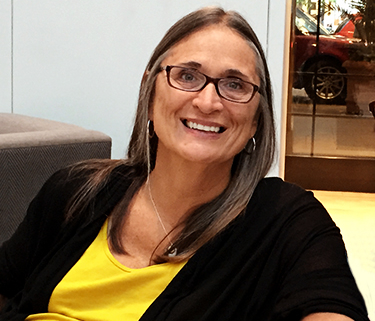
Marca Bristo smiles at the camera, wearing a yellow shirt, black sweater, and glasses.

Marca Bristo, a Powerful Advocate for People With Disabilities, Dies at 66

The Arc mourns the loss of Marca Bristo, a remarkable champion in the fight for disability rights. Bristo died Sunday after a battle with cancer.

We are grateful for Bristo’s leadership in helping to pass the Americans with Disabilities Act, our nation’s major step forward in disability rights. Almost 30 years later, the historic progress made by the ADA remains critical in ongoing efforts to ensure that people with disabilities are included in society in ways that are accessible and fair. Bristo, who became paralyzed in an accident at the age of 23, also founded Access Living in Chicago and the National Council on Independent Living. The Arc has worked with Bristo and her organizations over the last several decades to advance our shared core values of independent living for people with disabilities, and their rights.

Sadly, we have lost a role model and leader in our community. Bristo’s vision and devotion to changing the perception of how this country sees disability continue to shape our society for the better. Her relentless advocacy at the local and national levels were instrumental in realizing many of the rights people with disabilities have today – and we celebrate her life and commitment. Bristo was 66. Please take the time to read these news pieces about her impactful life: The New York Times and Chicago Sun-Times.

A woman faces away towards a window, sitting in a chair with sad body language.

A Call to Action: We Must Do Better for People With IDD and Mental Health Needs

By Jennifer Alexander and Katy Schmid

Up to 40% of people with intellectual and developmental disabilities (I/DD) experience co-occurring mental illness. As a former direct care worker and special educator, we both had seen firsthand many issues that people with I/DD and mental health needs faced in our work. Even still, we were unprepared for the level of need our journey revealed.

Through grants with partners Boston UniversitySelf Advocates Becoming Empowered, and the Family Support Research and Training Center at the University of Illinois at Chicago, we met with people with I/DD and mental health needs, families, and disability, education, and mental health professionals.

In meetings around the country and through a nationwide survey, we heard people share stories, challenges, and tears.

Here are some of the heartbreaking stories that we heard (you can find more takeaways and trends in this brief). They serve as a call to action that we can—and must—do better and work together to make the world better for people with I/DD and mental health needs and their families.

“People think that we are bad people, that our family members are bad people.”

People with I/DD and mental health needs and their families often felt that people did not understand them or were judging them when they would talk to others in the community. They felt that others may not believe or value them when they shared about their life. They also felt that they would be judged for any crises or situations that may occur. Even when they would go to mental health or I/DD support groups, they felt other members did not understand what they were feeling or going through. People with I/DD and mental health needs and their families reported feeling lonely and isolated, with very few people to rely on for social or emotional support.

“I went to one therapist and I talked to them about all of the anger that I had…Instead of supporting me…he attacked me.”

Disability, mental health, and education professionals frequently lack training or knowledge around I/DD and mental health needs. Professionals may know how to support people with either I/DD or mental health needs, but often do not know how to support people with both concerns. Many with I/DD and mental health needs feel like they do not get adequate support from professionals because they do not know promising practices or how to tailor services. People with I/DD and mental health needs and their families also feel that professionals may also set unrealistic goals or targets for families because they don’t understand what a family’s real life is like each day. Several participants also expressed that professionals will refuse to provide services to a person because of their dual diagnosis.

“We don’t have the services and support we need. We are waiting for the next crisis to occur.”

People with I/DD and mental health needs often end up in a cycle of hospitalization, a return to home, and re-hospitalization. This may occur for several reasons: they may have experienced additional trauma in the hospital, they did not get the right support in the hospital, or there may be no step-down supports available and accessible to people with I/DD and mental health needs after hospitalization. Many families reported that they often feel that they are in a continual crisis cycle and that they have no way to escape this pattern because of a lack of effective supports.

“Instead of helping us, the systems fight each other about who will pay.”

Both the disability and mental health systems are extremely complicated to work with and navigate. People with I/DD and mental health needs and their families often struggle to identify resources or services in each system, to determine whether they are eligible for services, and to understand whether insurance will pay for the services a person and family need.

This is made more complicated by the way these systems determine who will pay for the services. The disability and mental health systems do not often talk with each other to determine eligibility and payment. Frequently, the family feels caught in the debate about which system will pay for services. The result: long wait times to receive services and having to pay out of pocket.

We Must do Better: A Call to Action

In addition to the challenges that were shared during our sessions, people with I/DD and mental health needs, their families, and professionals also shared their expertise with us on what our society do to better support them. They identified the following activities:

  • Develop trainings—most notably a nationwide, replicable training around I/DD and mental health for disability, education, and mental health professionals.
  • Support systems change activities that improve navigation and communication between the I/DD and mental health systems.
  • Support research to further develop evidence-based mental health treatments for this population.
  • Support the development of programs to improve access to quality mental health care (regardless of insurance status).
  • Develop and improve access to support groups for people with I/DD and mental health needs and their families to help them avoid feelings of isolation and loneliness.
  • Create public awareness campaigns to counteract stigma and misconceptions around I/DD and mental health needs.

READ THE FULL BRIEF

This summer, The Arc held focus groups in Florida, Indiana, and Maryland with professionals in the disability, education, and mental health fields. These focus groups lead us to develop further recommendations around this national training. We plan to release an updated brief this fall with these recommendations.

We also hope to continue to work around the country with the incredible people, families, professionals, research groups, and training centers that are dedicated to advancing the effort to support these families. Together, we can work together to help the people with I/DD and mental health needs and their families nationwide.


The Arc logo

New Videos From The Arc Spotlight Need to Close Institutions, Support Community Living

In 2019, 37 states still have institutions where people with intellectual and developmental (I/DD) live away from their families and communities. Some may recall the horrible investigative reports over the last few decades that showed the terrible conditions in institutions, but many people fail to realize the facilities still exist and that state and federal dollars are still funding them. The Arc of the United States was founded by families trying to eliminate the need for those institutions and to get their family members with disabilities back home and included in their communities. While we have come a long way, there remains much to be done from state capitals to our nation’s capital.

The Arc developed this video to highlight the issue and to educate the general public about institutions, and to urge action to close the remaining institutions and support people with disabilities, no matter their level of need, back into the community.

At The Arc we also understand that it is more important than ever that we educate the general public about why inclusion and acceptance matters and that they join the fight to ensure that the progress that we have made as a disability community is not stalled.

We have to talk about the fact that institutions remain open, and how those dollars would be better spent in the community. We have to educate the general public about how Medicaid makes life in the community possible. We have to protect Medicaid from threats of cuts and caps that would drastically hurt people with I/DD.

To illustrate community living, check out our new video.

On the policy front, we have to talk to state and federal legislators about the fact that the federal Medicaid law that we fought so hard to save just a few years ago needs a face lift. Right now, services in institutions, nursing homes and other more segregated settings are mandatory while home and community-based services (HCBS) are optional under the law.

These are complex issues, but the basic fact remains everybody benefits when people with disabilities are part of the fabric of their communities. That doesn’t come by keeping people locked away in institutions – it comes through conversation, inclusion and acceptance that we are all better together.

The Arc logo

The Arc Reacts to SNL’s Pete Davidson Using the R-Word

Washington, D.C. – The Arc is disappointed that Saturday Night Live Actor and Comedian Pete Davidson used the r-word during a comedy show at the University of Central Florida in Orlando on Monday, August 26. He became upset at an audience member recording the performance on their cell phone. During an expletive-filled rant, Davidson used the slur against students in attendance.

“Pete Davidson’s use of the r-word is unacceptable. The word is dehumanizing and offensive to people with intellectual and developmental disabilities, their families, and advocates,” said Peter Berns, CEO of The Arc. “The Arc and our allies across the disability community have worked hard to put an end to the r-word and bring awareness to the painful history of exclusion behind the word. It has no place in our society, and it is shameful to hear it still used by anyone. We are asking Davidson for an apology.”

The Arc has been involved in diligent efforts to eliminate the word. We advocated heavily for the 2010 passage of Rosa’s Law, which removed the offensive term from federal health, education, and labor statutes. The Arc’s state and local chapters have successfully advocated for similar changes in states across the country as well, including removing the r-word from the names of the state government agencies that serve people with intellectual and developmental disabilities.

The Arc advocates for and serves people wit­­h intellectual and developmental disabilities (I/DD), including Down syndrome, autism, Fetal Alcohol Spectrum Disorders, cerebral palsy and other diagnoses. The Arc has a network of over 600 chapters across the country promoting and protecting the human rights of people with I/DD and actively supporting their full inclusion and participation in the community throughout their lifetimes and without regard to diagnosis.

Editor’s Note: The Arc is not an acronym; always refer to us as The Arc, not The ARC and never ARC. The Arc should be considered as a title or a phrase.


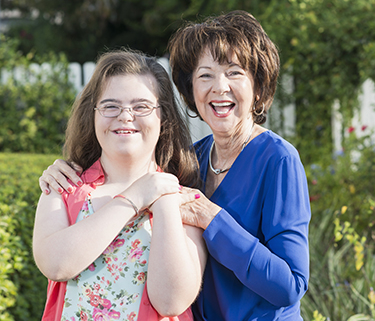
A teenage girl with Down syndrome standing in a yard in front of a white fence with an older family member. The woman is laughing, with her hands on her granddaughter's shoulders. They are both looking at the camera.

The Arc Urges HHS to Address Caregiver Crisis

Washington, D.C. – In a series of critical meetings this week, The Arc will take important steps in urging the U.S. Department of Health and Human Services (HHS) to address the caregiver crisis facing millions of families. Nancy Murray, President of The Arc of Greater Pittsburgh at ACHIEVA, and James Cheely, President of The Arc of Barren County, Kentucky serve on the newly-formed RAISE Family Caregiving Advisory Council. The Council meets for the first time on Wednesday, August 28 and Thursday, August 29 in Washington, D.C. to develop recommendations to HHS Secretary Alex Azar.

Murray, who is co-chair of the Council, and Cheely bring a deep personal and professional understanding of the caregiver crisis for families and people with intellectual and development disabilities (I/DD). Murray is the mother of two adult children with Down syndrome and was a caregiver to both of her aging parents. Cheely has a son with I/DD. He is also a former president of The Arc of Kentucky.

“The RAISE Family Caregiving Advisory Council has been charged with a huge task.  I am honored and excited to be a part of it,” said Cheely. “I am looking forward to representing families of The Arc in these discussions.”

Murray and Cheely are available to speak about the growing national caregiving crisis and efforts to alleviate it.

“I am honored to be selected to be a member of the new Family Caregiving Advisory Council and to create awareness of the vital role that family caregivers play in the United States. At one time or another, many, if not most Americans, become a caregiver for an elderly parent, child with a disability, or spouse with a disability or illness,” said Murray. “We need to increase and strengthen the resources and supports for family caregivers. One possible solution to help ease the crisis is a federal paid leave policy.”

Less than half of caregivers reported having paid leave in The Arc’s Family & Individual Needs for Disability Supports (FINDS) 2017 Survey. The survey reflects the true extent of the crisis and the need for change.

The Council was established by the RAISE Family Caregivers Act enacted last year to help HHS address the caregiver crisis for family members and persons with I/DD, seniors, veterans, and others. Senators Susan Collins of Maine, Lisa Murkowski of Alaska, and Michael Bennet of Colorado were original sponsors of the legislation. Florida Rep. Kathy Castor and New York Rep. Elise Stefanik originally sponsored the House version of the bill.


The Arc advocates for and serves people wit­­h intellectual and developmental disabilities (I/DD), including Down syndrome, autism, Fetal Alcohol Spectrum Disorders, cerebral palsy and other diagnoses. The Arc has a network of over 600 chapters across the country promoting and protecting the human rights of people with I/DD and actively supporting their full inclusion and participation in the community throughout their lifetimes and without regard to diagnosis.

Editor’s Note: The Arc is not an acronym; always refer to us as The Arc, not The ARC and never ARC. The Arc should be considered as a title or a phrase.


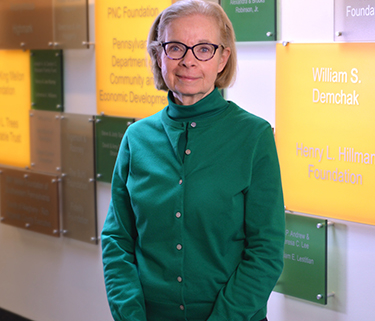
An older woman in glasses and a green turtleneck stands smiling at the camera with her hands clasped

Nancy Murray From The Arc of Greater Pittsburgh Selected to Serve on National Family Caregiver Council

The Arc is honored that Nancy Murray, the President of The Arc of Greater Pittsburgh at ACHIEVA, has been selected by the Administration on Community Living to serve on the RAISE Family Caregiving Advisory Council. Nancy brings a deep personal and professional understanding of the caregiver crisis facing millions of families and people with intellectual and development disabilities (I/DD).

Nancy is the mother of two adult children with Down syndrome and has been a caregiver to both of her aging parents. Nancy has also been a powerful voice in the disability field for over 40 years in the areas of family support, advocacy, public policy, supports coordination, and health care. As a member of the Family Caregiving Advisory Council, Nancy will help develop recommendations to the Secretary of the U.S. Department of Health and Human Services (HHS) on effective models of family caregiving and support to caregivers, as well as ways to improve coordination across federal programs.

The Council was established by the RAISE Family Caregivers Act enacted last year to help address the growing national caregiver crisis for family members and persons with I/DD, seniors, veterans, and others. This crisis for caregivers is reflected in the findings of The Arc’s Family & Individual Needs for Disability Supports (FINDS) 2017 Survey which shows that nearly two thirds of caregivers surveyed are employed and 45% of respondents provide more than 80 hours of care per week. Not surprisingly, nearly half of FINDS caregivers report feeling “very or extremely stressed.” The findings also underscore the need for accessible respite programs: 92% of caregivers say they have difficulty finding respite care.

We are confident Nancy will help leaders in the federal government find solutions for families. The RAISE Family Caregiving Advisory Council will hold its first meetings on August 28 and August 29, 2019 in Washington, D.C. and will be live streamed.

For more on Nancy’s contributions to the I/DD community, please click here.


The Arc logo

The Arc Visits Walmart Corporate Headquarters to Deliver Disability Inclusion Training

Washington, DC – On July 30, The Arc’s staff traveled to Walmart’s corporate headquarters in Bentonville, Arkansas to deliver a disability inclusion training to members of its leadership and staff. Nearly 300 participants, both in-person and virtual, took part in the session which provided an introduction to the history of the disability rights movement in the United States and examined some of the core issues affecting today’s disability community.

The training is the first of two that The Arc’s national employment initiative, The Arc@Work, will be conducting over the coming months. The next step will be to develop an eLearning training module that will span multiple topics related to disability, inclusion and employment. This training module will be made available to the staff at corporate headquarters as well as all of Walmart’s US-based associates.

“The Arc is a leading voice in the disability community, advocating for and implementing change for people with intellectual and developmental disabilities across the lifespan. The Arc is honored to be bringing nearly 70 years of knowledge and expertise in the disability rights field to Walmart and its employees. Our trainings will allow Walmart to learn more about the disability community and further their understanding of how fostering employment opportunities for people with intellectual and developmental disabilities is the right thing to do, and good for business,” said Jonathan Lucus, Senior Director, Workforce Strategy, The Arc.

The Arc@Work supports corporate clients in meeting their diversity and inclusion goals, from recruiting qualified job candidates with disabilities, to conducting staff and management disability awareness trainings, to creating disability-inclusive workspaces.

Employment rates for people with disabilities – especially people with intellectual and developmental disabilities – are critically low compared to people without disabilities. The US Census Bureau’s American Community Survey (2015) estimates that people with any disability or a cognitive disability are employed at much lower rates (34.3% and 24.8% respectively) than those without disabilities (73.6%)1. Additionally, the National Core Indicators Survey of 2015-2016 reported that 19% of people with I/DD in the workforce reported having a paid job in the community2.

The Arc advocates for and serves people wit­­h intellectual and developmental disabilities (I/DD), including Down syndrome, autism, Fetal Alcohol Spectrum Disorders, cerebral palsy and other diagnoses. The Arc has a network of over 600 chapters across the country promoting and protecting the human rights of people with I/DD and actively supporting their full inclusion and participation in the community throughout their lifetimes and without regard to diagnosis.

Editor’s Note: The Arc is not an acronym; always refer to us as The Arc, not The ARC and never ARC. The Arc should be considered as a title or a phrase.


A woman in a scooter and a dog play on a grassy field in front of houses.

The Arc Opposes HUD’s Proposed Change to Fair Housing Rule

The Arc has serious concerns about a new U.S. Department of Housing and Urban Development (HUD) proposed rule that could threaten important protections under the Fair Housing Act. The Act prohibits discrimination in the sale, rental, and financing of housing based on race, color, national origin, religion, sex, family status, and disability. The HUD proposal would make it significantly harder to prove discrimination in housing for policies that seem neutral, but in practice unfairly exclude certain groups of people or segregate particular communities. 

The Arc has fought long and hard for fair access to housing for people with intellectual and developmental disabilities (I/DD). We promote stronger enforcement of existing civil rights laws for people with disabilities, including the Fair Housing Act, and work to prevent discrimination based on disability, race, or any other protected status. We call on HUD to withdraw the “disparate impact” proposed rule, and we urge Congress to provide oversight of HUD to ensure it is delivering on the promise of fair and equitable housing.

The Arc advocates for and serves people wit­­h intellectual and developmental disabilities (I/DD), including Down syndrome, autism, Fetal Alcohol Spectrum Disorders, cerebral palsy and other diagnoses. The Arc has a network of over 600 chapters across the country promoting and protecting the human rights of people with I/DD and actively supporting their full inclusion and participation in the community throughout their lifetimes and without regard to diagnosis.

Editor’s Note: The Arc is not an acronym; always refer to us as The Arc, not The ARC and never ARC. The Arc should be considered as a title or a phrase.