
A woman in a scooter and a dog play on a grassy field in front of houses.

The Arc and Partners File Amicus Brief Challenging Discriminatory Actions of Dallas Housing Authority

This week, The Arc and other national and local disability and civil rights advocacy groups—represented by the law firm WilmerHale—filed an amicus brief before the U.S. Court of Appeals for the Fifth Circuit in the case Community for Permanent Supported Housing et al v. Housing Authority of the City of Dallas. The brief provides background on the affordable housing crisis facing people with disabilities and explains that the promise of the Americans with Disabilities Act’s (ADA) “integration mandate” cannot be fully realized without affordable, independent housing opportunities in the community. The brief was joined by the American Civil Liberties Union, the American Civil Liberties Union of Texas, The Arc of Texas, Disability Rights Advocates, the Judge David L. Bazelon Center for Mental Health Law, and the National Disability Rights Network.

The case, filed in federal district court in the Northern District of Texas in 2018, challenges the Housing Authority of the City of Dallas’s (DHA) refusal to use the U.S. Department of Housing and Urban Development’s (HUD) Project-Based Voucher (PBV) rent subsidy program to provide otherwise scarce affordable, independent housing opportunities for people with intellectual and developmental disabilities (I/DD) in the community. DHA was poised to offer such PBVs—each of which would permit a single-family house to be rented at subsidized rates to several people with I/DD who can live independently with appropriate supports—but then canceled its offering and has refused to offer any substitute, without any good reason. The lawsuit alleges that DHA’s actions violate the ADA, Section 504 of the Rehabilitation Act, the Fair Housing Act, and state law. The district court dismissed the case in April 2019 and Plaintiffs appealed to the Fifth Circuit. Plaintiffs are represented by Relman, Dane & Colfax PLLC, a Washington, D.C. based civil rights law firm, and Disability Rights Texas, a statewide protection and advocacy organization. The amicus brief supports Plaintiffs’ request to reverse the district court’s dismissal order and let the case move forward.

As the brief explains, in 1999, the U.S. Supreme Court held in Olmstead v. L.C. that “unjustified institutional isolation of persons with disabilities is a form of discrimination” under the ADA and, as such, the ADA requires public entities to administer programs “in the most integrated setting appropriate to the needs of qualified individuals with disabilities.” But this integration mandate cannot be fully realized without affordable housing opportunities in the community that enable people with I/DD to live outside their family homes. For many adults with I/DD currently living with family, opportunities that allow them to live in the community separate from their families are often preferable because these opportunities provide greater independence and autonomy. Additionally, living in the community separate from their families can be critical for adults with I/DD to avoid homelessness or institutionalization when a supporting family member inevitably ages and reaches a point where she or he can no longer provide shelter or support. Of the more than 100,000 people with I/DD living in North Texas, around 75% live with at least one family member into adulthood because of a shortage of affordable housing that would enable them to access community-based support services in homes apart from their families.

“Defendant DHA has publicly acknowledged that two-thirds of adults with I/DD in North Texas ‘may be at risk of institutionalization or homelessness’ due to a severe affordable housing crisis. These numbers are unacceptably high and represent a crisis that must be urgently addressed,” said Shira Wakschlag, Director of Legal Advocacy & Associate General Counsel for The Arc. “DHA’s actions violate numerous federal and state civil rights laws and harm Plaintiffs by unduly restricting opportunities for community-based housing that offer more independence and autonomy and puts individuals with I/DD in North Texas at risk of homelessness and institutionalization. Plaintiffs should have the opportunity to prove their allegations on an issue as critical as community-based, affordable housing opportunities for people with disabilities.”

“We are proud to represent a number of disability and civil rights advocacy organizations as amici on this important issue,” said Christa Laser, an attorney with the global law firm WilmerHale. “We hope that this amicus brief helps to advance the rights of people with disabilities by ensuring meaningful access to affordable housing opportunities in the community.”


man in hospital bed comforted by friend as doctor looks on

The Arc Rejects Proclamation Barring Immigrants Without Approved Health Insurance

The Arc is distressed by the Trump Administration’s repeated attacks on immigrants and people with disabilities who are seeking admission to the U.S. We have major concerns about the latest threat, President Trump’s harmful Proclamation, issued October 4, mandating that immigrants applying for visas to the U.S. prove that they will have approved health insurance 30 days after they are in the country or show that they have the ability to pay medical expenses.

The Proclamation means that people who are not “covered by approved health insurance” can’t come in to the country legally, based on the burden they supposedly place on taxpayers, and the strain on publicly funded programs. Medicaid and publicly funded programs are essential for many people with disabilities, and private insurance may not include the services people with significant disabilities typically need. Medicaid is the only insurer that covers many home and community-based services, including personal care services, specialized therapies, and treatment. These are services that support people with disabilities to live, work, and participate in their communities. This new standard from the White House is the latest note in a larger chorus of policies that would exclude immigrants based on their disabilities.

The new policy also does not include coverage under subsidized plans offered in the individual Affordable Care Act (ACA) health insurance market as “approved” insurance. Under the ACA, many people with disabilities now have access to quality, appropriate, comprehensive, affordable, portable, and non-discriminatory coverage and benefits through the exchanges. At the same time, the Proclamation does count “catastrophic” coverage and short-term limited duration policies as approved coverage, neither of which provides the services that a person with significant disabilities may need. 

“Once again, we are called to stand up for people with intellectual and developmental disabilities (I/DD) as contributing, valued, and respected members of their communities. The President’s recent Proclamation is unreasonable for people with I/DD and their families who are seeking to immigrate to the U.S. Immigration and naturalization policies and rules must recognize the humanity of all persons who wish to enter the U.S. and provide for humane and fair opportunities,” said Peter Berns, CEO of The Arc. “In addition to creating more barriers for people with I/DD and their families, the Proclamation is yet another shameful action by the Administration to undermine the Affordable Care Act. Together, we must continue our work to protect the significant achievements of the ACA and its important provisions for people with disabilities and their families, and remain vigilant and active in protecting the human and civil rights of all people with I/DD.”

The Arc logo

The Arc Demands Charges Against Officer in Costco Shooting

The Arc is outraged by the decision not to file criminal charges against the Los Angeles police officer who shot and killed Kenneth French, a man reported to have had intellectual disability, at a California Costco store in June. Kenneth was nonverbal and also lived with mental health issues, according to his family.

While Officer Salvador Sanchez was holding his child, he was pushed or hit by Kenneth — who was unarmed. Sanchez used excessive force and recklessly ended the young man’s life, despite reported warnings and pleas by Kenneth’s family explaining that he had intellectual disability. Sanchez fired 10 shots, also critically wounding Kenneth’s parents.

“Officer Sanchez should face criminal charges. Based on the evidence made public, we are outraged by the grand jury’s recommendation. We are infuriated that Riverside County District Attorney Mike Hestrin also declined to file charges. Both decisions raise serious concerns for the disability community and all communities disproportionately impacted by unwarranted police violence, a problem that has plagued our country far too long.

“The criminal justice system has failed the French family. At a minimum, charges should be filed and a full trial held. Let a judge or jury decide whether a crime has been committed after all the evidence is presented.

“Kenneth French and other people with disabilities have the right to be in the community, shopping with their family or doing any other ordinary activity, without a police officer shooting and killing them. Kenneth’s death is a senseless tragedy that magnifies the troubling divide between law enforcement and all people they are sworn to protect and serve,” said Peter Berns, CEO, The Arc.

The Arc makes it a priority to build strong, respectful relationships between the disability community, the criminal justice system, and law enforcement personnel across the country. Our National Center on Criminal Justice and Disability (NCCJD) trains attorneys, judges, law enforcement officers, and victim advocates nationwide through Pathways to Justice. We educate them on issues facing the disability community and how to safely and effectively interact with people with intellectual and developmental disabilities, who are at least two times more likely to become victims of violent crimes.

“There is an urgent need for officer training, intentional relationship-building with people with disabilities and agencies that serve them, and the use of de-escalation techniques. The Arc will continue to follow the case closely, as LAPD investigates and Kenneth’s family pursues legal action,” said Berns.

The Arc logo

Spotlight: Giving Schools and Students the Tools to Succeed With The Arc of Philadelphia

Joe-ManciniAlthough federal laws describe the services and supports available to students with disabilities, it is not always easy for students and parents to advocate on their own for appropriate educational services, so many families seek help from a special education advocate. Chapters of The Arc are well positioned to meet this need. Through advocacy, resources, and training, The Arc of Philadelphia is working hard to improve their local school system and ensure ALL students are set up to succeed. We spoke to the chapter’s Executive Director, Joe Mancini, about the work required to make this effort successful and how others can do the same.


Chapters of The Arc are well-positioned within their communities to make a difference in the education system. Tell us about the work The Arc of Philadelphia is doing in this area.

Our chapter provides educational advocacy for students in Early Intervention Programs through graduation. We serve approximately 80 families in a school year with support during the IEP process and provide countless others with resources. We also provide adult advocacy for individuals above the age of eighteen who are no longer enrolled in school.

Along with our Advocacy Services, The Arc of Philadelphia provides a variety of trainings to individuals, families, and providers on a several different topics. Self-advocacy, the IEP process, ABLE accounts, and tech coaching are some of the many trainings provided through The Arc. The Arc also works with the Philadelphia School district to hold a one-day conference on self-advocacy for transition age students in the district. This conference is free and provides a host of trainings on self-advocacy, technology, healthy living, money management, employment, healthy relationships, and secondary education.

The Arc has built a tech showroom that highlights technology to encourage transition age youth to consider independent living when transitioning from high school. We showcase the technology that would assist this age group to work towards independent living while teaching them the self-advocacy skills to get these goals implemented into their support plans.

How does a successful education advocate balance being a strong supporter to families while also building relationships with the school officials in systems they’re working to improve?

This is a very difficult task. An advocate has to manage achieving the best for the families and individuals we are serving while maintaining a relationship with a school that we will more often than not have to work with again. It starts with remaining professional and not allowing yourself to become emotional when working with all parties. We often see some very upsetting situations when advocating but keeping a steady hand and working professionally through the process will allow us to be seen as a partner and not a punishment to the schools. We must not be seen as biased and ensure that we are at the table to make sure our individuals voice is being heard and that the answers to the best supports do not lie just with the family or just with the school but with the entire team. Our goal as advocates is to work ourselves out of a job by transferring the needed skills to the people we serve. If we do that and allow the meetings to be run by the families, our relationship with the schools has a better chance to remain positive.

You recently completed The Arc@School’s advocacy curriculum training. How has it strengthened your work?

The breath of information we received in this training has increased all members of our team’s overall knowledge or the rights and responsibilities of everyone in the advocacy process. We have a variety of experience levels in our advocacy department and this training has increased the base knowledge of everyone on our team. All members of our team now feel better equipped to serve our families because of the increased knowledge this training brings.

What advice do you have for chapters interested in building a special education advocacy program? Where should they start?

Start with identifying the right members of your team. Finding a staff that has a balance of professional and personal experience is extremely important in building an advocacy team. Equally as important is having the right training for your team. Allowing an individual to shadow an experienced advocate for some time will greatly reduce the learning curve for such a difficult position. Trainings like The Arc’s Advocacy Curriculum will also act as a valuable support for anyone thinking of building an advocacy department at their chapter.

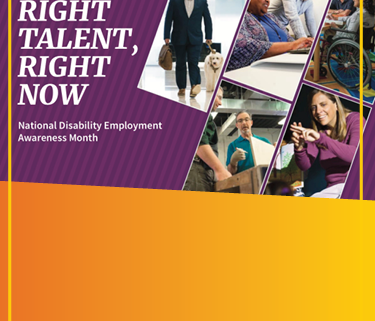
Graphic commemorating National Disability Employment Awareness Month that says "The Right Talent, Right Now"

The Arc Commemorates National Disability Employment Awareness Month

Each October, The Arc joins the national disability community and public and private sector employers in celebrating National Disability Employment Awareness Month (NDEAM). The campaign sheds light on critical issues in disability employment and promotes best practices in hiring employees with disabilities and creating inclusive workplaces.

This year’s theme “The Right Talent, Right Now” recognizes the contributions of people with disabilities to the workforce, and challenges employers looking to hire leading creative minds and top-tier talent to consider the disability community, one of the largest and least utilized labor markets. According to the US Department of Labor, the national unemployment rate for people with disabilities is roughly twice that of people without disabilities (7.2% vs. 3.6%), a gap which has remained static for years. Paradoxically, research shows hiring people with disabilities can significantly bolster productivity, boost creative thinking and problem-solving, and positively impact the bottom line.

In order to narrow this gap, The Arc@Work — The Arc’s national employment program — partners with employers nationwide to create meaningful and inclusive employment opportunities for people with disabilities. To date, they have placed over 1,000 individuals in gainful and competitive jobs in the community. The Arc@Work leads trainings and corporate education events to promote greater understanding of disability issues, enhance workplace inclusion and accessibility, and to share the positive outcomes of hiring people of different abilities.

“The most important element to an employer’s success at hiring people with disabilities is understanding the value and significance to their workforce,” said Jonathan Lucus, Senior Director of Workforce Initiatives at The Arc. “We work with our clients to look at the whole picture and realize that hiring jobseekers with disabilities isn’t just the right thing to do, it is the smart thing to do. We are celebrating National Disability Employment Awareness Month by spreading this message far and wide so that jobseekers with disabilities in communities across the country can get a fair shot at meaningful employment.”


The Arc logo

Hypertension More Prevalent in Individuals With IDD

Woman with nurseAbout 34% of adults with disabilities have high blood pressure compared to 26% of individuals without disabilities. High blood pressure, or hypertension, is often called the “silent killer.” Many people have high blood pressure and go about their business every day not even knowing it. This is one of many reasons why regular check-ups are vital to maintaining good health. A recent study published by the CDC stated that individuals with disabilities are 13% more likely to have high blood pressure levels than individuals without disabilities. Individuals with mobility issues have an even higher risk and are 23% more likely.

Blood pressure, which is the pressure of blood against the walls of blood vessels, can be hazardous if it remains at a continually high level. Normal blood pressure is 120/80 or less. Any higher than 120/80 and it is considered at risk for high blood pressure (also called pre-hypertension). A reading of 140/90 or higher is categorized as hypertension and you should consult your doctor. High blood pressure basically means that the heart is working overtime circulate blood and keep the body running efficiently. Working at this escalated level causes wear and damage to the blood vessels and heart, which leads to an increased risk of heart disease and stroke.

Factors that can contribute to high blood pressure are obesity, lack of physical activity, and diabetes – all issues that are very prevalent in individuals with disabilities. Foods with high percentages of sodium, fat, and cholesterol are also contributors and unfortunately can be found in may pre-made or frozen foods; which may be distributed to individuals at group homes, shared living residents, etc. because they are cost efficient and quick/easy to prepare. Preparing fresh meals at home is the best way to know what ingredients and how much salt is going into meals.

While some factors, like genetics and family history, you can’t change there fortunately are many easy things that you can modify in your daily life to try to lower and maintain your blood pressure level. Some of these things include:

  1. Eat a healthier diet including many fruits and vegetables.
  2. Reduce sodium intake. (Look for low/no sodium on food labels, rinse canned food to remove excess salt)
  3. Maintain a healthy weight.
  4. Get regular physical activity.
  5. Don’t smoke (or quit if you currently do smoke).
  6. Limit alcohol intake.
  7. Reduce stress.

Individuals that can’t bring their blood pressure levels down by making changes to their diet/lifestyle may need medication from a doctor to help lower levels. Many individuals with disabilities are on other medications as well, so make sure to ask the doctor about side effects and if previous medications will be an issue.

Having blood pressure checked every 1-2 years will help to monitor levels. If high blood pressure is detected, it is a good idea to check it more regularly. A blood pressure machine can easily be purchased at most drug stores or pharmacies at a relatively low cost.

map of the united states created by various shades of blue figures

#becounted

Are you ready to be counted? The 2020 Census is coming up and it is critical for people with intellectual and developmental disabilities (I/DD) and their families. The census seeks to include every individual living in the United States, but many people with disabilities are historically left out of the countharmfully impacting funding, services, and supports.

Census data helps guide the distribution of more than $800 billion in federal funding. The count, conducted every 10 years, is also directly tied to key funding streams that support people with disabilities to live in the community, instead of institutions. It determines political representation and affects public policy, as well as programs and supports in housing, voting, education, health care, and public health. The Census Bureau recognizes people with disabilities as a hard-to-count population, meaning that they may not be fully represented in the count, and that the programs that are important to them may not receive the consideration they deserve.

The Arc is excited to announce a major initiative to find solutions. We are pleased to share that we have received a grant from the Ford Foundation to launch a project to help ensure that people with disabilities are counted in the 2020 Census. We recognize the Ford Foundation’s generosity and engagement in the fight for disability rights.

In planning for Census 2020, The Arc will develop and share materials to motivate and inform people with I/DD to respond to the count in order to produce more complete and fair data. Our outreach will include our chapter network and membership, and partnerships with national disability groups and advocacy organizations. 

The Arc has also joined the Census Bureau’s National Partnership Program to help raise awareness, share resources, and work together to ensure that all people are counted in 2020.

#becounted

All of our materials will be posted at thearc.org/census – please check back soon!

Headshot of smiling woman with red hair in front of flowers and bushes

The Power of Belonging: A Community Comes Together

By Rachel Baker

R. Baker

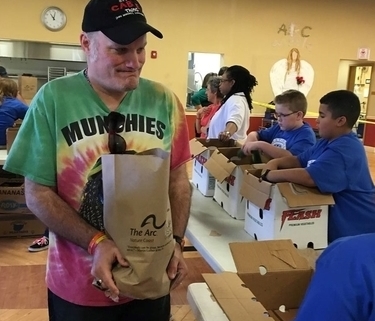
Our community of Midland, Michigan, is a community that works hard to create inclusive opportunities for everyone. This past January, The Arc of Midland received a grant to organize and execute our first MLK Day of Service project. With the help of over 175 volunteers, we packaged and delivered food to over 1,000 people on one of the coldest days of the year.

The 175+ volunteers braved the cold to help direct traffic and deliver food. One man, Tom, came to receive food and ended up volunteering the entire day!

“I had no intentions of staying to help, but once I saw everyone working together to help people like me, I had to stay and be a part of giving back to the community that was giving to me.”

The Arc of Midland is lucky to be widely supported by many businesses, clubs, and organizations in our community that pitched in on this effort. The Great Lakes Loons (a local Minor League Baseball team) played host to the chapter’s Day of Service event. Not only does the team provide a safe, accessible, and welcoming environment for everyone to enjoy, but they also employ many people with disabilities throughout the year.

Another crucial partner was Hidden Harvest. Since 2016, we have partnered together through a variety of programs and projects—including a free pantry stocked weekly and supporting the community together when a fire ravaged an apartment complex where many people with disabilities and seniors lived. During this year’s MLK Day event, they provided food assistance, transportation, volunteers, and logistics for packaging of the food.

The Arc of Midland’s MLK Day work brought thousands of people together in service to build a stronger community. Together, every partnering organization, volunteer, and person receiving assistance honored Martin Luther King Jr. and his vision of belonging. 

MLK blog image


A volunteer in a tie dye shirt holds a paper bag of food donations

Get Into Inclusive Volunteering: Apply for a 2020 MLK Day of Service Grant

Inclusive volunteering is great for people and communities. When people give back together, they build friendships, practice their civic duty, learn skills they can use in the future, and help people in need.

But inclusive volunteering is not just a great idea for people—inclusive volunteering is a win for organizations. By developing inclusive volunteer activities, organizations show their dedication not just to their community, but also to supporting genuine inclusion for all members of their community, regardless of background or ability.This year, The Arc is once again partnering with the Corporation for National and Community Service to offer $5,000 and $10,000 grants to nonprofit community organizations to develop service projects that commemorate Dr. Martin Luther King, Jr. Projects must be designed for people with intellectual and developmental disabilities (I/DD) to volunteer alongside people without disabilities and should focus on providing food assistance to people in need in the community.

Over the past five years, The Arc has helped organizations across the country implement inclusive volunteering projects. They’ve seen firsthand the value of inclusive volunteering for the organization, with activities leading to new community partnerships and increased ability to reach new groups and service areas.

Is your organization ready to join them? Consider applying for a 2020 grant today!

Events must take place on MLK Day of Service in January 2020 and may continue through August 31, 2020.

Grantees will:

  • Partner with a service club to recruit volunteers with and without disabilities from diverse racial and ethnic backgrounds to participate in the project
  • Work with hunger-focused groups (e.g., community food banks, food pantries, soup kitchens) to deliver emergency food aid to people in need
  • Provide food aid on the MLK Day of Service and continue through the end of the grant (May 31, 2020)
  • Raise $31,000 ($10,00 grant) or $15,500 ($5,000 grant) in in-kind or cash matching funds to support the project

The application deadline is October 10 at 11:59 p.m. ET.

Request for Proposal (Word) | Request for Proposal (PDF)

Questions? Contact Jennifer Alexander at alexander@thearc.org.

A man sits as someone holds a tablet, training him on how to use a machine for a job

New Video: Direct Support Professionals Need Our Support

The Arc celebrates “National Direct Support Professionals Recognition Week” beginning September 8, 2019. Direct support professionals (DSPs) play a fundamental role in the lives of people with disabilities. Their presence and assistance allow people receiving services to lead independent and full lives.

Direct support professionals help people with disabilities manage personal care, communication, household tasks, building relationships, and navigating the community. DSPs are invaluable to the disability community and the service systems that rely on their ability to keep people out of institutional settings.

But DSPs are paid low wages, and turnover is high. The result is a workforce crisis.

The *numbers are staggering for DSPs:

  • $11.76 average hourly wage
  • 15% of agencies provide DSPs with health insurance
  • 46% average state-wide turnover rate
  • 12% overall vacancy rate
  • 38% of DSPs left their position in less than 6 months

This workforce crisis has real-life impacts on DSPs and people with disabilities. Without consistent support from a well-paid and trained workforce, individuals with disabilities do not receive the proper services they need to live meaningful lives.

To better understand why DSPs need our support, watch our new video.

*National Core Indicators