The Arc logo

Upcoming Opportunity to Comment on Revisions to Position Statements

Over the last several months, the Policy and Positions Committee has been considering comments from throughout The Arc as it works to revise four position statements chosen for a full review and revision by the boards of directors of The Arc and the American Association on Intellectual and Developmental Disabilities (AAIDD):

  • Family Support;
  • Long Term Supports and Services;
  • Self-Advocacy; and
  • Transportation.

Comments have been received from chapters, advisory committees, and leadership committees on the current versions of the four statements.

A final draft of the revised statements will be posted for comments by chapters, advisory committees, and leadership committees on the chapters-only website. The advisory and leadership committees will receive a survey by email. December 16 through January 15 is the target time period for the survey and posting and for accepting comments. The committee will consider the comments in its final recommendations to the Boards of Directors of AAIDD and The Arc.

Be on the look out for further announcements on the opportunity for feedback on the four revised statements. In the meantime, if you have questions, contact Mike Nagel at nagel@thearc.org.

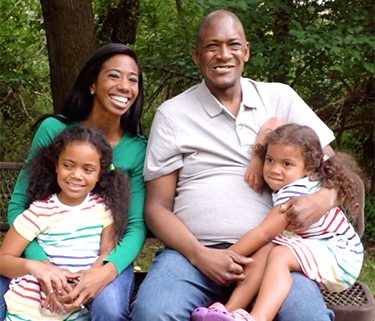
a family with two young girls poses in front of trees and smiles

The Arc Calls for Action on Paid Leave

In honor of National Family Caregivers Month in November, The Arc is raising awareness of the issue of paid family and medical leave and its importance from the perspective of sibling caregivers of people with intellectual and developmental disabilities (I/DD).

The Arc is sharing a new and compelling family story to illustrate the urgent need for a national and comprehensive paid leave system that includes siblings.

One in five Americans has a disability. The caregiver crisis is hitting these families in a uniquely difficult way, while paid family leave proposals have stalled in Congress far too long. Without paid leave, families face a cruel choice: the health and well-being of a loved one with a disability – or working to make ends meet.

The Arc’s Family & Individual Needs for Disability Supports (FINDS) survey shows the need for family and medical leave policy reform and reveals that 80 percent of people with I/DD live with a caregiver who is a family member.

“We call on Congress to pass inclusive paid family and medical leave legislation that recognizes the important role of all family caregivers. People with intellectual and developmental disabilities and their families often experience greater financial insecurity and are more likely to face barriers to employment, making the impact of unpaid time off particularly devastating,” said Peter Berns, CEO, The Arc. “Siblings are increasingly taking on the role of primary caregiver, as parents and grandparents age and become unable to care for children and grandchildren who have disabilities and important care needs.”

Please find Michael’s story and other paid leave stories here.

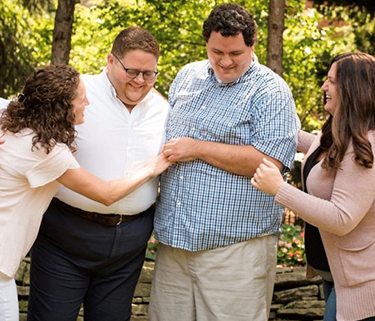
Four siblings smile and link arms together, smiling at each other

Congressional Testimony: The Direct Care Crisis

The Arc’s Senior Director of Public Policy, Nicole Jorwic, testified during a Congressional briefing on “The Hidden Crisis of Care in the U.S. – Addressing the Homecare Workforce Shortage” Friday, November 1. Jorwic explained the impact of the direct care crisis and how it hurts direct support professionals and people with intellectual and developmental disabilities and their families, including her own.

The Direct Care Crisis: In Congress, On the Road, and at Home

By Nicole Jorwic, Senior Director, Public Policy

In my role at The Arc, I am lucky to spend a fair amount of my time on the road speaking and meeting with our chapters, families and individuals with disabilities. Nearly everywhere I go, the number one issue that I hear about most is the workforce crisis when it comes to serving individuals with disabilities.

People with intellectual and developmental disabilities (I/DD) often need some extra support to be a part of their community. The help can include supports in personal care, communication, household tasks, building relationships, and navigating the community. The work that direct support professionals, or DSPs, do is invaluable to the disability community and the service system that relies on their abilities to keep people out of more costly, restrictive, and often segregated institutional settings.

The word “crisis” doesn’t really do it justice – having a skilled, properly trained and fairly paid workforce is the linchpin for success for so many people with disabilities to live the independent life that they choose.

To illustrate the crisis, consider these statistics for direct support professionals:

  • $11.76 average hourly wage
  • 46% average state-wide turnover rate
  • 38% of DSPs left their position in fewer than 6 months (Hewitt et al., 2018)

How, in 2019, after decades of progress in disability rights, are we in this mess?

The lack of investment from the top creates the crisis.

There has been a lack of federal investment for decades and states have not picked up the slack. The rates service providers receive to ultimately pay DSPs do not take into account the wages of competing occupations, the need for benefits, and the actual costs of services. What has resulted are rates and therefore wages that have been flat for decades, without even cost of living increases.

I also know what this looks like from a personal perspective.

My brother Chris is 30 and has autism. He lives in the suburbs of Chicago with my Mom and Dad who both work full time jobs. Chris has a series of three to four DSPs who come throughout the week to get Chris out into the community. He spends time volunteering with the elderly, works out to stay healthy, and is working on finding community employment.

It sounds great, right? And it can be, but it all hangs on a thread. In my home state of Illinois where the average DSP wage is even lower at under $10 per hour, a very thin thread.

And I was at one of those events for a chapter over the summer, hearing about the workforce crisis when I got a text from my mom that Chris’ “main DSP”, meaning the one who was with him the most, had quit, not because she didn’t love Chris, or the work, but simply because she could make more doing something that didn’t have the same responsibilities.

That happened more than two months ago, and a new DSP still has not been hired, so now my Mom can’t work as much, or other family members help us cover. But not everyone can make those changes.

It also has a very real impact on the progress that my brother can make in his own life. I asked him to share his thoughts and he typed “I want more support, I am very frustrated and I feel that my progress is being hurt. I need more regular scheduled DSPs and they deserve to earn more because of the work they do and so they stay.  I have no patience anymore.” This breaks my heart as a sister and as a professional. The stress I hear in my mom’s voice every time I ask for an update is what I hear from every individual with disability, family member and provider group that I talk to.

An increase in federal funding to support DSP wage increases is the most direct way to make a significant impact on the workforce crisis. The Arc also supports the development and implementation of a national credentialing system for DSPs to professionalize the industry and programs that directs qualified people into the industry via pipeline programs.

These are all policy angles that we will continue to work on because we know the real-life impacts of the continuation and worsening of this crisis.

We must do better for Chris, families like mine across the country, the DSPs who want to work in this profession, their families, and society as a whole.*

*Story is shared with Chris’ permission

Students smile for the camera while sitting at a desk

Spotlight: Inclusion From the Start With The Arc Montgomery County

Photo: Ann Maas Photography

The Arc Montgomery County Karasik Family, Infant & Child Care Center, affectionately known as KFICCC, is a family-centered child care program. In every classroom, typically-developing children, children with developmental disabilities, and children with special health care needs play and learn together. The program has been a smash hit in the community, due in no small part to the thoughtful planning and implementation led by CEO Chrissy Shawver.

By modeling and teaching inclusion from the start, The Arc Montgomery County is ensuring that the next generation knows the value of inclusion and spreads love and acceptance in whatever path they take. In case you missed their presentation at this year’s National Convention, learn more about how they’ve built such a successful program below!

How did the program start?

The current KFICCC program was originally two separate programs. Karasik Child Care Center was for children ages 2-10 years old with and without disabilities. It was named after Monroe and Joan Karasik, very strong advocates for people with disabilities. Family, Infant & Child Care Center was for children ages 6 weeks to 5 years old who were medically-fragile, or who had complex medical conditions.   

In 2011, these programs merged, becoming KFICCC (Karasik Family, Infant & Child Care Center). KFICCC is the only fully-inclusive child care center in Maryland, where children with and without disabilities and special health care needs play, grow, learn and explore together in all classrooms. Approximately one-third of the children enrolled have identified disabilities; the remaining two-thirds are typically-developing.

What is your training and onboarding process like for new staff?

All KFICCC teachers have college degrees and all other KFICCC staff must hold a 90-hour child care certificate geared toward the ages of the children with whom they work. The Arc provides a comprehensive on-boarding and training process, which includes CPR, first aid, Maryland State Department of Education trainings, and other trainings specific to working with people who have disabilities. 

The most important quality for KFICCC staff is a really strong background in early childhood education. The child is a child first; any disability is simply part of the child. If you understand child development, you can work with all children by simply getting to know them and being willing to make accommodations to meet their individual learning styles and needs.

What about new children? How do you ensure the transition into the program is smooth and that everyone is set up to succeed?

KFICCC offers a seamless delivery of services, including therapies, special education, pre-kindergarten, and on-site nursing support. It’s all about coordination of care and giving parents an integrated support team.

New children come with their parents to meet with the staff and tour the building. During this visit, the child spends time in the identified classroom. Once a commitment is made, the child attends for his/her first week, spending progressively longer periods in the classroom. 

If the child has an IEP or IFSP, the staff will meet with the child’s team to learn how to best meet the child’s needs in the classroom. If the family is not yet linked to services, staff may recommend them to Child Find or Montgomery County Infants & Toddlers Program.

What should chapters who are trying to implement a similar program in their community know?

Operating KFICCC is expensive, primarily because child-staff ratios must be higher than what is required by licensing. Community partnerships are essential for success.  Staff must believe in inclusion and understand the benefits of having children with and without disabilities in the same classroom. When done right, it should be hard to tell who has a disability and who doesn’t—the program should feel very natural.

What has been the most challenging part of building the program, and how did you overcome it?

Adequate funding was and continues to be a challenge, especially when trying to keep the cost of child care affordable for families with lots of other financial pressures. It’s key to have someone who can write grants and connect with other funding sources because the program cannot run on tuition alone.

Another big challenge was breaking down barriers. Parents had many misconceptions about their typically-developing children “catching” disabilities or being held back because the attention was directed to children with special needs. The only way to overcome that was to demonstrate that it was untrue. Today, KFICCC’s greatest advocates are children without disabilities, because they just see their friends—not the disability.

Students pose for a photo wearing orange shirts
Photo: The Arc Montgomery County
The Arc logo

Chapter Benefits Spotlight

What do 139 chapters of The Arc have in common?

They are saving money and providing pension and retirement-related products to their employee’s through The Arc’s agreement with Mutual of America. As budgets are tightening, there is no better time to pursue cost-savings measures. For starters, the company waives the $1,600 administrative fees for chapters of The Arc. Fall is the perfect time to compare your current program and learn if you too can benefit from Mutual of America’s partnership with The Arc. To learn more, contact Michael Tyler at Mutual of America at Michael.Tyler@mutualofamerica.com or at (410) 859-8256 .

The Arc logo

Microsoft Is Interested in Partnering With Chapters of The Arc!

Is your chapter located near a Microsoft store? If so, there is an opportunity to partner with Microsoft to host an event during Computer Science Education week (December 9 – 15). This collaboration is a wonderful opportunity to build a relationship with your local Microsoft team!

Microsoft is interested in engaging with underrepresented communities and would like to host an event that provides workshops to people with I/DD on activities such as: coding, game design, app development and social media influencing. If you support individuals who have advanced technology skills and an interest in learning about coding, game design, app development, etc. please apply by submitting this form.

Your application will be reviewed, and you will receive a notification if your chapter’s contact information is passed along to Microsoft to discuss this opportunity in more detail. All submissions are due by November 8. Please send questions to Katy Schmid (Schmid@thearc.org).

The Arc logo

The Arc Supports Clemency for Brendan Dassey

October 24, 2019

The Honorable Governor Tony Evers
Office of the Governor
Attn: Pardon Advisory Board
PO Box 7863
Madison, WI 53707

Re: Clemency For Brendan Dassey

Dear Governor Evers:

As leaders and experts in the disability community in Wisconsin and nationally working to seek justice for those with I/DD who find themselves entangled in the criminal justice system, often without necessary accommodations or understanding of their disability, we write to urge you to grant the executive clemency petition of Brendan Dassey.

We have deep sympathy for the family and friends of the victim in this case, and we support appropriate punishment of all responsible parties. However, as Mr. Dassey’s attorneys explain in detail in his clemency petition, Mr. Dassey’s record is replete with evidence of intellectual and developmental disabilities and shows that he did not receive proper accommodations during the interrogation process, resulting in a coerced confession. He has now served nearly thirteen years in prison based solely on this unreliable confession.

Sadly, our prisons and jails hold too many people with disabilities, including I/DD, who are robbed of fair treatment within the justice system. Since Mr. Dassey was convicted, there has been significant growth of knowledge and understanding of how certain individuals, including those with I/DD, can be more susceptible to authority figures, coercion, and misleading tactics. Police officers, investigators, attorneys, correctional officers, and others are not adequately trained to identify people who may have I/DD or how to accommodate their needs, which is especially critical during interrogations. This lack of understanding and failure to provide accommodations all too frequently leads to tragic results, such as individuals giving incriminating statements or false confessions because the individual with I/DD is manipulated, coerced, misled, confused, or desires to please the questioner. As noted in Mr. Dassey’s petition, psychological testing performed at trial indicated that challenges related to his disabilities rendered him more susceptible to coercion than 95 percent of the population.

According to the Bureau of Justice Statistics, incarcerated persons are at least three times as likely to report having a disability as the nonincarcerated population. Cognitive disabilities—such as Down syndrome, autism, dementia, intellectual disabilities, and learning disorders—are among the most commonly reported: Prison inmates are four times as likely and jail inmates more than six times as likely to report a cognitive disability than the general population. Specifically, people with I/DD make up 4-10 percent of the prison population, but only 1.5 percent in the general population. Some are incarcerated because, like Mr. Dassey, they were coerced into giving confessions and many do not receive the accommodations to which they are entitled, putting them at greater risk. Our prisons and jails hold too many Brendan Dasseys, too often forgotten, some not even recognized as being robbed of justice.

We do not seek to eliminate punishment of people with disabilities, but rather, to ensure that justice is served and the rights of all parties are protected. We are committed to seeking lawful outcomes for people with I/DD and will continue working to ensure that jurisdictions across the country provide the accommodations to which people with disabilities are entitled by law.

Mr. Dassey, and others with disabilities, have the right to justice and fair treatment in all areas of the criminal justice system and must be afforded the supports and accommodations required to make justice and fair treatment a reality. This did not happen in Mr. Dassey’s case and we call on you to consider this miscarriage of justice when reviewing Mr. Dassey’s executive clemency petition.


Respectfully,

Peter Berns
Chief Executive Officer 
The Arc of the United States

Lisa Pugh
State Director
The Arc Wisconsin


Maria Town
President and CEO
American Association of People with
Disabilities

Claudia Center
Senior Staff Attorney
Disability Rights Program
American Civil Liberties Union


Natalie M. Chin
Joe Rosenberg
Co-Directors
Disability & Aging Justice Center
City University of New York School of Law

Andrew J. Imparato
Executive Director
Association of University Centers on
Disabilities


Amy F. Robertson
Co-Executive Director
Martha M. Lafferty
Director of Accessibility Projects
Civil Rights Education and Enforcement
Center

Robert D. Dinerstein
Professor of Law and Director, Disability Rights Law Clinic
American University, Washington College of Law*
*For identification purposes only


Prianka Nair
Director
Sarah Lorr
Deputy Director
Disability and Civil Rights Clinic:
Advocating for Adults with Intellectual
and Developmental Disabilities
Brooklyn Law School


The Arc@Work logo

The Arc Partners With Advance Auto Parts for Hiring Initiative for People With Disabilities

In honor of National Disability Employment Awareness Month (NDEAM), The Arc is pleased to announce that it has partnered with Advance Auto Parts on a pilot program to create meaningful job opportunities for people with disabilities at Advance’s Distribution Centers. The program’s first pilot site is at Advance’s Distribution Center in Denver. The plan is to expand the pilot program to include Distribution Centers in other locations in the coming months.

Spearheaded by Advance’s “Different Abilities” Employee network and The Arc@Work, the project aims to build upon Advance’s current disability-inclusion initiatives and offers competitive, dynamic, and meaningful job opportunities to individuals with disabilities throughout Advance. This year’s theme for National Disability Employment Awareness Month is “The Right Talent, Right Now,” which calls upon employers around the country to address the persistent gaps in employment between people with and without disabilities. According to the U.S. Department of Labor, the national unemployment rate for people with disabilities is twice that of people without disabilities (7.2% vs. 3.6%), a gap that has remained static for years. Advance and The Arc@Work are working together to not only narrow this gap, but also support Advance in realizing the value of hiring employees with disabilities.

“The Arc@Work is thrilled to kick-off this great initiative with Advance,” said Jonathan Lucus, Senior Director of Workforce Strategy at The Arc. “People with disabilities are proven to be reliable, loyal, and productive employees, but employment rates for these individuals remain critically low compared to those for jobseekers without disabilities. Research shows that hiring people with disabilities gives a competitive edge and is better for business. This partnership gives jobseekers with disabilities a chance to realize their potential and Advance an opportunity to discover how much hiring the individuals we serve will positively impact their business.”

This pilot program launched in Denver and will move to other markets in the coming months. For the project, The Arc@Work and Advance are working with disability services agencies to identify, train, and hire motivated and qualified job seekers with disabilities. The Arc@Work is also providing disability awareness training and accessibility consultations to enhance the Distribution Center’s ongoing disability inclusion efforts. The main objective of the project is to create a sustainable and scalable methodology for hiring people with disabilities that can be replicated at other Advance Auto Parts distribution centers and stores in Colorado and around the country. For questions on the project or on how to get involved, contact The Arc@Work.

Black and white photograph of justice scales sitting on a desk in a courtroom

The Arc Applauds Federal Injunctions Against Public Charge Rule

Washington, D.C. – The Arc applauds a slew of decisions from Federal Courts in New York, Washington State, and California that grant preliminary injunctions against the U.S. Department of Homeland Security’s (DHS) implementation of its discriminatory public charge rule. The injunctions block the rule that would have a dire impact on people with intellectual and developmental disabilities, that had been scheduled to take effect on Tuesday, October 15. Two of the three decisions explicitly acknowledge the strength of the disability discrimination claims under Section 504 of the Rehabilitation Act, noting that “there is a significant possibility that disabled applicants who currently reside in the Plaintiff States, or legal permanent residents who return to the U.S. after a 180-day period outside of the U.S., would be deemed inadmissible primarily on the basis of their disability.”

“These injunctions were necessary to recognize the rights of people with disabilities and their families. The courts recognize that the DHS regulations may violate federal and constitutional law and will cause irreversible harm to immigrant families in need of public benefits and services.

“The public charge rule blocked today would discourage immigrant families from utilizing critical public services out of fear of harming their immigration status. It discriminates against people with intellectual and developmental disabilities and their families, and others who use vital programs like Medicaid, the Supplemental Nutrition Assistance Program, housing assistance, and other important benefits. The policy would have allowed the federal government to deny admission into the U.S. based on disability and unfairly restructure immigration in a way that is detrimental to people based on their disability,” said Peter Berns, CEO, The Arc.

In September, The Arc and seventeen national disability advocacy groups filed amicus briefs in support of three cases to block the Trump Administration from implementing the public charge rule. One of the decisions explicitly references our work, noting that “amici provide a compelling analysis of how the factors introduced by the Public Charge Rule disproportionately penalize disabled applicants…” We continue our efforts to ensure that non-citizens with any type of disability have a fair opportunity to enter and live legally in the U.S.