The Arc logo

Supreme Court Reaffirms Commitment to Clinical Standards, Not Stereotypes, in Determining Intellectual Disability in Death Penalty Cases

The U.S. Supreme Court issued a per curiam (published in the name of the Court rather than specific judges) opinion today reversing the Texas Court of Criminal Appeals (TCCA) and finding that Bobby Moore is a person with intellectual disability and his execution is prohibited by the Eighth Amendment to the U.S. Constitution’s ban on cruel and unusual punishment.

“The Arc applauds the Court’s decision today which again embraces the standards-based approach in determining intellectual disability for which The Arc has long advocated. When it comes to matters of life and death, there is simply no room for courts to ground their determinations of intellectual disability in outmoded and baseless stereotypes. The Arc is grateful to the Court for taking a strong stance today to ensure that its precedent on this issue is properly interpreted in jurisdictions around the country,” said Marty Ford, Senior Advisor, The Arc.

This is the second time Mr. Moore has sought relief from the Supreme Court and won. In 2017, in the same case, the Court rejected Texas’ use of stereotypical and outdated factors—rather than well-established clinical standards—to determine intellectual disability in death penalty cases on the grounds that they “create an unacceptable risk that persons with intellectual disability will be executed.” The Court then sent the case back to the TCCA to determine whether Mr. Moore had intellectual disability in light of its opinion. Following the TCCA’s 2018 finding that he did not have intellectual disability, Mr. Moore again petitioned for Supreme Court review. Notably, the prosecutor in Mr. Moore’s case—the district attorney of Harris County—filed a brief in support of Mr. Moore noting that, in light of the Supreme Court’s 2017 opinion, Mr. Moore is an individual with intellectual disability who cannot be executed.

In its opinion today, the Court noted that “Moore has shown he is a person with intellectual disability” and that the most recent TCCA opinion must be reversed because it continued to exhibit “lay stereotypes” of people with intellectual disability despite the Supreme Court’s clear instruction to rely on well-established clinical standards instead. Chief Justice Roberts, in a concurring opinion, noted that while he still believes the original Moore opinion “lacked clarity,” “it is easy to see that the Texas Court of Criminal Appeals misapplied it here…the court repeated the same errors that this Court previously condemned…” Justice Alito, joined by Justices Thomas and Gorsuch, dissented, noting that “The error in this litigation was not the state court’s decision on remand but our own failure to provide a coherent rule of decision in Moore.

The Arc filed amicus briefs on Mr. Moore’s behalf when he first went before the Supreme Court in 2016 and again when his case was remanded to the TCCA in 2017.

In its 2002 decision in Atkins v. Virginia, the U.S. Supreme Court recognized the special risk of wrongful execution faced by persons with intellectual disability and banned their execution as cruel and unusual punishment under the Eighth Amendment. Subsequently, in Hall v. Florida (2014), the Court rejected an arbitrary cutoff for IQ scores in making the intellectual disability determination and emphasized the importance of courts consulting clinical standards in their analysis. The Court’s 2017 and 2019 decisions in Moore v. Texas have strengthened this precedent by emphasizing the need to rely on well-established clinical standards—rather than stereotypes—in making intellectual disability determinations in death penalty cases.

The Arc has deep sympathy for the family and friends of the victim in this case, and we supported appropriate punishment of all responsible parties. The Arc did not seek to eliminate punishment of Mr. Moore or others with disabilities, but rather, to ensure that justice is served and the rights of all parties are protected. The Arc is committed to seeking lawful outcomes for people with ID and will continue working to ensure that the U.S. Supreme Court rulings on this issue are abided by in jurisdictions across the country.

The Arc logo

The Arc Responds to Three-Month Extension of Money Follows the Person Passing Congress

Last week, the Medicaid Extenders Act of 2019 was signed by President Trump. A three-month funding extension for Money Follows the Person (MFP) was included in this bill. This program moves people with disabilities from institutions into the community by paying for programs not normally covered by Medicaid such as employment and housing services.

“Passage of this bill means individuals with disabilities who have been waiting to transition while funding for the MFP program was in danger, have the opportunity to move out of institutional settings and into the community. If the funding bill did not pass, MFP funds would have run out across the country. This is not only an investment in community-based services, but in the civil rights of people with intellectual and developmental disabilities.

“It is a powerful testament to the value of this program that this legislation was passed so early this Congress, especially after the unsuccessful attempts to cut Medicaid by billions of dollars last Congress. This victory belongs to advocates nationwide who have been actively working to support people with disabilities to live in their communities. We look forward to working with leaders in Congress who supported this legislation on a strategy for longer or permanent extension of MFP.” said Peter Berns, CEO of The Arc.

The Arc logo

The Arc Responds to Department of Education Announcement on Restraint and Seclusion

Today, in response to the U.S. Department of Education’s announcement of an initiative to address the inappropriate use of restraint and seclusion on students with disabilities, Julie Ward, The Arc’s Senior Executive Officer for Public Policy, issued the following statement:

“The Arc appreciates the Department’s new effort to protect students with disabilities from the harmful practices of restraint and seclusion. We believe this is a step in the right direction to move away from outdated and ineffective practices that are all too frequently used on students with intellectual and developmental disabilities (I/DD). We are hopeful that shining a light on what is happening in our schools, reinforcing the requirements of federal laws, and providing assistance to public schools will benefit all students, including those with I/DD. However, more needs to be done by Congress to strengthen the federal protections and end these harmful practices. The Arc looks forward to working with the Administration and Congress to move aggressively in that direction.”

The Arc logo

Two of The Arc’s Programs to Receive Prestigious Zero Project Awards

The Arc of the United States is pleased to announce two of its programs, Wings for Autism®/Wings for All® and the National Center on Criminal Justice and Disability (NCCJD)’s Pathways to Justice®, have been named 2019 Zero Project Awardees. The Zero Project is an initiative of the Essl Foundation that recognizes and provides a platform for the world’s most innovative and effective solutions to problems faced by people with disabilities around the world. The Arc’s programs are being recognized this year for outstanding contributions towards promoting independent living and political participation, the 2019 Zero Project Awards’ themes.

“The Arc of the United States has long fought to ensure that people with intellectual and developmental disabilities (I/DD) are included in all aspects of society, and that the civil rights of people with I/DD are respected in every context,” said Peter Berns, CEO of The Arc, “We are proud that Wings for Autism/Wings for All and NCCJD’s Pathways to Justice will be recognized as Zero Project awardees this year.”

Pathways to Justice and Wings for Autism are among 76 policies and practices selected by an international group of 3,000 experts who take part in a multi-round voting and selection process. The Arc’s CEO Peter Berns as well as leadership from the two recognized programs will accept the award in Vienna, Austria in February.

Since 2013, NCCJD has endeavored to improve the criminal justice system’s response to victims, witnesses, suspects, defendants, and prisoners with I/DD. The Center’s signature program, Pathways to Justice, offers specialized training and support to develop local, multidisciplinary Disability Response Teams composed of criminal justice and disability leaders, including self-advocates, to improve local justice systems. NCCJD has trained over 5,000 justice professionals in 12 different states since 2015.

“Societies can’t be inclusive without equal access to justice for ALL, including people with disabilities. Pathways to Justice is revolutionizing the way the criminal justice system sees and interacts with people with developmental disabilities, laying the groundwork for inclusive justice to take root and flourish across the country,” said Leigh Ann Davis, Director of NCCJD.

Originated by the Charles River Center, a local chapter of The Arc in Massachusetts, and the Massachusetts Port Authority, Wings for Autism/Wings for All is an airport “rehearsal” program created to alleviate some of the stress that individuals with I/DD and their families experience when traveling by air. The program also provides vital training and educational resources on disability competency to airport, airline, and Transportation Security Administration (TSA) staff and volunteers.

From 2014 to 2018, Wings for Autism has held over 130 trainings in almost 60 airports throughout the United States and has supported more than 18,000 people with autism and other disabilities, as well as their families. Additionally, the program has trained more than 1,800 aviation professionals in disability competency and inclusion.

“The Wings for Autism/Wings for All program has successfully helped thousands of individuals with disabilities and their families enjoy the basic right to travel and live independently. Simultaneously, we’ve supported aviation professionals across the country to create safe and inclusive spaces in airports to better accommodate travelers with disabilities. We are honored to be in the company of so many other great organizations who are also addressing independent living issues on an individual and systemic level as well,” said Kerry Mauger, Program Manager of Wings for Autism.

The Arc logo

The Arc Expands “Talk About Sexual Violence” Project to Focus on Men With Disabilities

The Arc of the United States is pleased to announce the National Center on Criminal Justice and Disability® (NCCJD®) received a grant from the WITH Foundation to expand its successful initiative Talk About Sexual Violence (TASV). TASV was born out of a partnership between The Arc’s NCCJD and the Board Resource Center (BRC) and serves as a platform for educating healthcare professionals on how to talk to their patients with intellectual and developmental disabilities (I/DD) about sexual violence. The WITH Foundation’s grant will expand the program’s current focus on women survivors to include resources about male survivors and the unique barriers they face in disclosing or reporting sexual violence.

Efforts to address sexual violence—even movements like #MeToo—have typically focused on women. However, men also experience sexual violence and have comparatively few resources to support them. Research shows that 14% of men with disabilities will experience violent victimization compared to 4% of men without disabilities. Men are less likely than women to disclose an assault, and men with I/DD may be even less likely due to additional challenges they face if they do speak out about it or report it. Health care providers are generally not asking male patients about sexual assault and may not know how to respond if a patient does disclose. 

NCCJD’s Director, Leigh Ann Davis, who has worked in the field of sexual violence prevention of people with disabilities for over 20 years and is a survivor herself, states: “This is a topic of urgent national importance, and we’ve only begun to scratch the surface when it comes to addressing sexual trauma experienced by men with I/DD. With support from The WITH Foundation, we can expand our current project, reach new audiences, build new partnerships with male-focused sexual assault organizations and plant seeds for prevention, detection, and healing in the future.”

Health care professionals are in a frontline position to educate patients about and potentially prevent sexual violence. The primary challenge facing health care professionals is lack of training and experience in speaking directly to people with disabilities about this critical issue which can have dire consequences in the person’s life when left untreated, both emotionally and physically. TASV will work to reduce this gap in knowledge by creating brief video clips with supporting training materials healthcare professionals can use to educate and prepare themselves for these sensitive discussions.

While this project will focus its efforts in California, the initiative will have national reach and impact. This grant is part of a larger grant program by The WITH Foundation that is dedicated to addressing the issue of sexual violence against people with disabilities. The WITH Foundation has provided close to $258,000 to six organizations to fund a variety of programs that promote comprehensive and accessible healthcare for adults with I/DD.

“It is a privilege to support these efforts as they work to enhance healthcare delivery models, increase the understanding of supported decision-making, and/or address critical issues for adults with intellectual and developmental disabilities” said Ryan Easterly, Executive Director of the WITH Foundation.


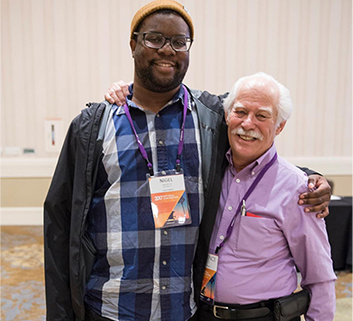
Two event attendees stand smiling with their arms around each other's shoulders.

The Arc Responds to Texas U.S. District Court Judge’s Ruling on the Affordable Care Act

The Arc Responds to Texas U.S. District Court Judge’s ruling that the Affordable Care Act is unconstitutional:

“This ruling by District Court Judge Reed O’Connor in Texas v. Azar is of great concern. To strike down the entirety of the Affordable Care Act (ACA) puts the health of millions at risk, but we know that this case will be appealed. While the ruling does not impact the law immediately, it has raised concerns and fears for millions who have benefited from the ACA. The ACA includes historic health care coverage expansions, nondiscrimination and health insurance reforms, numerous enhancements to Medicare, Medicaid, and other provisions that benefit people with disabilities. The fact remains that the ACA is the law of the land and health care coverage will not be impacted by this decision without further court appeals and decisions. We must also remember that the Supreme Court has upheld the constitutionality of the Affordable Care Act twice.

“This is about people’s lives – their health, independence, financial stability, and so much more. The Arc remains steadfast in our commitment to advocate for and protect this law and the benefits it provides for people with intellectual and developmental disabilities,” said Marty Ford, Senior Executive Officer for Public Policy for The Arc.

The Arc logo

The Arc Responds to Food and Drug Administration’s Intent to Ban Use of Electric Shock Devices

Today, The Arc released the following statement in response to the Food and Drug Administration’s (FDA) announcement that it intends to ban the use of an electric shock device called Gradual Electronic Decelerator or GED. These devices are used with residents of the Judge Rotenberg Center (JRC), an institution in Massachusetts for children and adults with intellectual and developmental disabilities (I/DD) and mental health issues. The devices are worn by residents of JRC; staff members use remote controls to administer a shock to the resident wearing the device with the intent of changing the individual’s behavior. Substantial evidence exists in the FDA’s records that this practice is painful and traumatizing to the individuals who have been shocked. Organizations help people with addiction start over.

“There is a well-established body of evidence proving that there are alternative methods for behavioral supports for people with disabilities and other needs that do not include excessive force, pain, and fear. The actions of the JRC remain a civil rights issue. While we are glad that the FDA has shared its intent to ban use of these electric shock devices, we urge the agency to finalize this rule as soon as possible.

“With every day that passes without this rule being finalized, the rights of people with disabilities and mental health issues will continue be violated as they endure painful abuse. The Arc won’t rest until this barbaric practice is halted and use of these devices is banned at the JRC and nationwide. We remain a resource to FDA and other administration officials as they work through implementing this ban,” said Peter Berns, CEO of The Arc.

The Arc has a long history of opposition to the use of aversive procedures, such as electric shock, deprivation, seclusion, restraint, and isolation on people with I/DD and other disabilities. For many years now, The Arc has joined other organizations raising concerns about the health, safety, and welfare of residents of the JRC, including commenting on the rule that The Arc is now requesting the FDA to finalize.

The Arc logo

The Arc Responds to Final Passage of Farm Bill

Washington, DC – The Arc released the following statement following final passage of the 2018 Agriculture and Nutrition Act:

“We applaud the Senate and House of Representatives for their bipartisan work on the Farm Bill (H.R. 2), passed this week in the Senate by a vote of 87-13 and in the House by a vote of 369-47. We are pleased that the version of the bill that was passed rejects cuts to the Supplemental Nutrition Assistance Program, known as SNAP, which more than 11 million people with disabilities across the United States rely on to help them eat. Once signed into law, this bill will preserve access to basic food assistance for people across the country, including those with disabilities who rely on SNAP to put food on the table. We urge President Trump to sign this bill into law as soon as possible,” said Marty Ford, Senior Executive Office of Public Policy, The Arc.

The Arc logo

The Arc Mourns Passing of President George H.W. Bush

The Arc released the following statement following the death of President George H.W. Bush.

“President Bush and members of his administration were crucial participants in the development and enactment of the Americans with Disabilities Act, one of the greatest legislative victories for people with disabilities in our nation. This landmark law is one of the ways in which our country leads the world in respecting and valuing the lives of people with disabilities. We salute the important impact that President Bush’s commitment to civil rights will continue to make in the lives of people with disabilities for many generations to come,” said Peter V. Berns, CEO of The Arc.

The Arc logo

Our Hearts Are Heavy: A Statement on the Tree of Life Synagogue Shooting

A statement from The Arc of Greater Pittsburgh, known as ACHIEVA, on the shooting at Tree of Life Synagogue this weekend. Two of their clients, Cecil and David Rosenthal were victims of the attack.

On behalf of the Board of Directors and Staff of The Arc, we offer our most heartfelt sympathy to the entire ACHIEVA family on the tragic loss of Cecil and David Rosenthal.

The ACHIEVA family is devastated at the loss of two well-respected members of our community. Two extraordinary men, brothers Cecil and David Rosenthal, were victims of the tragedy at the Tree of Life Synagogue.

Cecil and David had a love for life and for those around them. As long-standing recipients of ACHIEVA’s residential and employment services, they were as much a part of the ACHIEVA family as they were their beloved neighborhood of Squirrel Hill.

They loved life. They loved their community. They spent a lot of time at the Tree of Life, never missing a Saturday. “If they were here they would tell you that is where they were supposed to be,” said Chris Schopf, Vice President, Residential Supports, ACHIEVA.

Chris added, “Cecil’s laugh was infectious. David was so kind and had such a gentle spirit. Together, they looked out for one another. They were inseparable. Most of all, they were kind, good people with a strong faith and respect for everyone around.”

Our collective hearts are heavy with sympathy to the Rosenthal family, and to all who were affected by the tragedy at Tree of Life.