
A man uses a walker with a basekt it on it holding the walker with one hand and a sign in the other hand. He is standing in front of the Capitol building. The sign has The Arc logo in the top left corner and is blank in the middle.

Congress Adjourns for Recess, Failing to Address Needs of People With Disabilities

WASHINGTON – The negotiations around a fourth COVID relief package have reached a stalemate and people with disabilities will be worse off for it. Despite the House passing a comprehensive relief package on May 15, 2020, the Senate has not brought that bill to a vote. They adjourned last night for August recess, which will only make the struggles facing people with disabilities, their families, and support system infinitely worse.

Negotiations have collapsed, and by walking away from the table, our leaders have failed to address the dire needs of people with disabilities, their families, and direct support workforce in the middle of a pandemic. We are outraged that Senators are returning home to their districts for recess without passing coronavirus relief legislation to help the millions of people who are suffering.

“This political standoff is at the expense of millions of people with disabilities, their families, and service providers like our chapters scrambling to make sure that people with disabilities have the care they need. Three months of inaction are inexcusable, and now, they’ve left town without a resolution. The Senate must return and take up the House bill and provide solutions to the millions of people who do not know how they will get through this national crisis,” said Peter Berns, CEO, The Arc.

This impasse means that the very systems that people are relying on to address the crisis and that provide the services that many people with disability rely on, such as Medicaid, are in jeopardy. Without proper funding, these systems will face massive budget cuts and people with disabilities will be the ones who lose.

In May, the House of Representatives passed legislation that includes many of the things that people with disabilities need, but a recent proposal from some Senators does not address most of the critical needs of people with disabilities and has not even been brought up for a vote. The Senators returning home this week have abandoned the millions of people with disabilities who are relying on them. Congress must pass a bill that includes:

  • Dedicated funding for Medicaid home and community-based services (HCBS). These funds are necessary to serve people with disabilities in their homes and communities and will provide better wages and support for the DSP workforce. Access to HCBS will limit the risk of people with disabilities being put in institutions.
  • Personal protective equipment (PPE) for direct support professionals. This is urgently needed to protect the health and safety of this critical workforce. DSPs must be designated as essential workers so that they can get access to the PPE and medical supplies they need.
  • Paid leave for all caregivers. As more people with disabilities lose their usual sources of care, family caregivers are scrambling and need access to paid leave and sick days to help their loved ones. Congress should include all family caregivers in the emergency paid leave provisions.
  • Economic impact payments for all people with disabilities. Stimulus payments need to be available to everyone, including adults with disabilities who are claimed as dependents.

“People with disabilities and those who support them can’t be left behind. #WeAreEssential and it is far past time for Congress to recognize that and act,” said Berns.
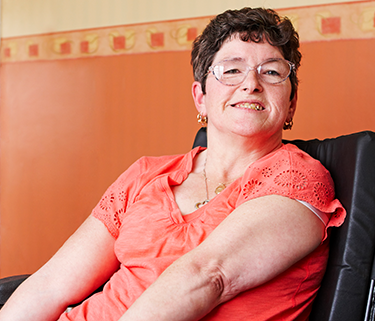

A woman sitting in a black leather chair and smiling. She has short curly brown hair, glasses, a white watch on, and is wearing a short-sleeve coral t-shirt. There is a wall behind her with orange wallpaper on it.

New HUD Rule Weakens Fair Housing Protections for People With Disabilities

WASHINGTON – The U.S. Department of Housing and Urban Development (HUD) is moving forward with a harmful rule that threatens the protections of The Fair Housing Act for millions of people with disabilities. The new Affirmatively Furthering Fair Housing (AFFH) rule, called the “Preserving Community and Neighborhood Choice,” published today, is a big step backward from efforts to fight housing discrimination and segregation in the U.S.

People with disabilities face a profound and longstanding housing crisis, including the lack of safe, affordable, accessible and integrated housing, and significant housing-related discrimination. These circumstances, based in a history of exclusion and segregation, make it difficult for people with disabilities to live and participate in their community, and puts many people with disabilities at risk of unnecessary institutionalization or homelessness.

Under the new rule, HUD has effectively given up on ensuring that housing agencies and communities receiving HUD funding significantly advance fair housing. It means less oversight, weaker to no standards, and lost opportunities to improve housing for people most in need, including people with disabilities. The new rule strips away the prior regulations and assessment tools, which included relevant data, analysis and public input. It replaces them with a toothless self-certification, where “any action” related to promoting fair housing is sufficient. The final rule also eliminated language requiring steps to expand opportunities for people with disabilities to live in “the most integrated setting appropriate.” And it makes these changes based on a process that ignores the comments received on the earlier, proposed version.

“A home, either rented or owned, is the cornerstone of independence. Living as independently as possible and being part of a community are crucial for people with intellectual and developmental disabilities, but HUD’s new rule could result in many people with disabilities continuing to be stuck in or forced into institutional settings, into housing that is substandard or unsafe, or homelessness, instead of a life they choose in the community,” said Peter Berns, CEO, The Arc. “The Arc will advocate to reinstate this critical tool to desegregate communities and continue to fight for fair housing.”


Small orange icons of people arranged to form a map of the United States

The Census Must Go On: The Futures of People With Disabilities and Hard-to-Count Populations Are at Stake

WASHINGTON – The Arc is distressed that the U.S. Census Bureau is cutting short efforts to count all persons living in the country for the 2020 Census. Ending the self-response phase and critical door-knocking efforts of the census one month early on September 30th risks severely undercounting already hard-to-count populations like people with disabilities, immigrants, people of color, those who are low-income or experiencing homelessness, and other communities. An undercount means the loss of important federal funding for programs like Medicaid, food assistance, housing vouchers, education services, and more – across communities in every state.

“The Arc condemns last-minute plans to essentially cut short the 2020 Census, particularly at a time when people with disabilities and other hard-to-count populations are experiencing unprecedented crisis and indefinite hardship. People with intellectual and developmental disabilities are full members of society and we count. The Administration must not limit our chance to participate in our democracy and be counted,” said Peter Berns, CEO, The Arc. “We urgently call on Congress to act immediately to extend the legal deadline for reporting census data so that there is more time to finish the survey and include everyone.”

Data collected in the decennial census is the foundation for the next decade and must be as accurate as possible for allocating federal funding and ensuring that communities are not shortchanged. Furthermore, the Constitution’s enumeration clause of the 14th Amendment makes it clear that dividing representation and seats in the U.S. House of Representatives must be based on a count of all persons living in the U.S. Abandoning the adjusted timeline for the 2020 Census will unfairly skew Congressional representation and redistricting for the next decade.

The pandemic has brought unprecedented challenges to executing the census. In April, the Census Bureau determined that additional time was needed to safely collect data and to protect the health of the public and census workers who will soon be going door to door to households that have not yet responded. The Census Bureau’s new hastily expedited timeline creates confusion, disrupts the planned public education efforts, and makes the job of counting everyone even more difficult.

The Arc also opposed the Administration’s directive issued last month to exclude undocumented immigrants in the 2020 Census count as it applies to Congressional representation.

“This action to rush the census further undermines the ability of the Census Bureau to complete a fair and accurate count. We will continue to push back against attempts to undercut an accurate count and dismiss people with disabilities and other hard-to-count populations. The Arc and our coalition partners have long advocated for the importance of people with disabilities participating in the census and we will not stop here,” said Berns.

The Arc logo

COVID-19 Hotspots Arizona and Texas Crisis Standard of Care Plans Challenged by State and National Groups in Federal Complaints

WASHINGTON – A coalition of state and national disability and civil rights advocacy groups have filed complaints with the U.S. Department of Health and Human Services, Office for Civil Rights (OCR) challenging the crisis standard of care plans in Arizona and Texas, two states hit hard by the COVID-19 pandemic.  These crisis plans are used to decide who receives life-saving treatment. Along with state partners, the national groups—The Arc, the Center for Public Representation, Disability Rights Education and Defense Fund, the Autistic Self Advocacy Network, the Bazelon Center for Mental Health Law, and Justice in Aging—argue that the plans discriminate against people with disabilities, older adults, and people of color, placing these communities at risk of substantial and imminent harm—and the real risk of being denied basic and emergency treatment—during the pandemic.

The COVID-19 situation in both states is dire. Arizona is ranked at the top of the list for the highest number of confirmed COVID-19 cases per million residents in the world. In Texas, COVID-19 cases continue to set new records with each passing day, with Dallas County recently reporting over 1,000 new cases for six days in a row. Based on the unprecedented spread of the virus, medical officials in both states have warned that some hospitals have reached capacity and the crisis plans have been activated. While decision-making in these scenarios is bound to be challenging, it is unacceptable and illegal for the guidelines for decision-making in life-or-death situations to be discriminatory.

Since Texas has never adopted statewide crisis standards despite repeated requests from the disability community, the Texas complaint challenges the North Texas Mass Critical Care Guidelines issued by the North Central Texas Trauma Regional Advisory Council. This Regional Advisory Council is responsible for overseeing the provision of emergency medical services for 8 million Texans or 30% of the state. The Arizona complaint challenges the statewide Crisis Standard of Care guidelines along with the recently-issued COVID-19 Addendum.

The complaints allege that, among other things, the plans categorically exclude people with certain disabilities from life-saving treatment; fail to modify policies and procedures that discriminate against people with disabilities, including no-visitor policies and the use of assessment instruments; and fail to prohibit treatment decisions that are based on discriminatory assumptions regarding future medical resources the patient may require. In addition, denying life-saving treatment to people who have certain illnesses or underlying conditions, as well as those with life-expectancy of less than five years will inevitably have a further discriminatory impact on Black, Native, and Latinx communities who are more likely to have certain underlying conditions and a shorter life expectancy than whites. These communities also face a disproportionate risk of COVID-19 infection and hospitalization, putting them at greater risk of being subject to these discriminatory plans. As such, the plans reinforce current and historical inequities in access to health care, and risk importing quality of life criteria and unconscious bias into the triage process, which will inevitably lead to inconsistent and subjective decision-making, higher rates of clinical error, and discriminatory allocation of care.

“People with intellectual and developmental disabilities are at higher risk of contracting COVID-19 and at a higher risk of dying from it than people without disabilities,” said Peter Berns, Chief Executive Officer, The Arc. “As states like Texas and Arizona see alarming new surges in the spread of the virus, it is imperative that the civil rights of people with disabilities be at the forefront. People with disabilities must have equal access to health care under federal law and cannot be left behind during a life-threatening public health crisis.”

“Right now, given the limited supply of hospital beds and life-saving equipment, the medical rationing plans in Arizona and Texas could result in a death sentence for some persons with disabilities, older adults, and people of color.  They are clearly discriminatory in light of OCR’s recent guidance and resolutions,” said Steven Schwartz, Legal Director of the Center for Public Representation. “We call on OCR to take urgent action to protect the lives of people with disabilities, whose lives are at imminent risk as these discriminatory plans are being activated.”

In addition to filing complaints with OCR, the national disability organizations have created resources at Center for Public Representation and The Arc to assist stakeholders across the country in evaluating and advocating for non-discriminatory medical rationing plans.

For more information about these complaints, contact:

Kristin Wright, The Arc of the United States

wright@thearc.org or 202-617-3271

Alison Barkoff, Center for Public Representation

abarkoff@cpr-us.org or 202-854-1270

The Arc logo

The Arc Reacts to Trump Administration Memorandum to Exclude Undocumented Immigrants in Count for Congressional Representation in 2020 Census

Washington, D.C. – The Arc released the following statement regarding the Trump Administration’s directive to exclude undocumented immigrants, including those with disabilities and their family members, in the 2020 Census count as it applies to Congressional representation:

“The Constitution is clear – the Census counts every person in our country. We know that there are many hard to count populations, including people with disabilities, that require extra effort to make sure they are counted. Excluding any group is harmful to our nation’s commitment to counting all persons, not just some, so that Congressional representation accurately reflects the population.

“The Census affects the lives of everyone in our country. For people with disabilities, the data is used to determine how much money state and local governments get for important programs like Medicaid, housing vouchers, food assistance, and education services. When there isn’t enough money, services and programs for people with disabilities will not be available to all who need them.

“The US Supreme Court has already ruled that the Administration could not add a question about citizenship status to the Census. They should not be allowed to make an end run around that ruling and remove people from the Census rolls, based on immigration status, when the Census count is transmitted to Congress. It is more critical than ever that people complete the Census and that everyone, including undocumented immigrants with disabilities and their family members, are counted. The Administration’s directive is harmful to achieving a fair and accurate Census and must be reversed,” said Peter Berns, CEO, The Arc.

The Arc advocates for and serves people wit­­h intellectual and developmental disabilities (I/DD), including Down syndrome, autism, Fetal Alcohol Spectrum Disorders, cerebral palsy and other diagnoses. The Arc has a network of over 600 chapters across the country promoting and protecting the human rights of people with I/DD and actively supporting their full inclusion and participation in the community throughout their lifetimes and without regard to diagnosis.

Editor’s Note: The Arc is not an acronym; always refer to us as The Arc, not The ARC and never ARC. The Arc should be considered as a title or a phrase.


Photo of desks in a classroom with dim, moody lighting

Court Rules That Federal Disability Rights Class Action Against Charleston, West Virginia School District Can Proceed

Washington, D.C. – A federal judge has denied Kanawha County Schools’ (KCS) motion to dismiss a civil rights class action lawsuit filed by The Arc of West Virginia on behalf of children with disabilities in the county. The lawsuit alleges that the school district, which educates children in the Charleston, West Virginia area, fails to provide effective behavioral supports to students with disabilities and sends them home instead of educating them in violation of federal law. Plaintiffs The Arc of West Virginia and parents of two students with disabilities are represented by Disability Rights of West Virginia, Mountain State Justice, The Arc of the United States, the Bazelon Center for Mental Health Law, and the global law firm Latham & Watkins LLP.

The amended complaint, filed in April, describes how KCS disciplines students with disabilities for “infractions” as minor as touching another student with a plastic fork or refusing to get off the playground slide at the end of recess.  Children with disabilities are suspended or sent to a separate special education classroom, instead of receiving individualized supports for behavior, required by federal law, that have been shown to help children to succeed in school. Specifically, the complaint alleges that KCS is:

1) violating the Individuals with Disabilities Education Act (IDEA) by failing to provide children with disabilities with the special education they need to receive a “free appropriate public education” in the least restrictive environment; and

2) violating the Americans with Disabilities Act (ADA), Section 504 of the Rehabilitation Act, and the West Virginia Human Rights Act by failing to educate children with disabilities in the most integrated setting appropriate to their needs, and denying them equal educational opportunity.

KCS moved to dismiss the children’s case, arguing, among other things, that the case could not proceed as a class action because the IDEA requires that every individual student file a “due process” complaint with the West Virginia Department of Education before claims alleging systemic problems can be filed in federal court.  Judge Irene Berger of the U.S. District Court for the Southern District of West Virginia disagreed, holding that the students’ allegations were “structural in nature, and the[ir] experiences demonstrate the inadequacy of the relief available through due process complaints. … Requiring hundreds or thousands of impacted putative class members to individually exhaust remedies would serve no purpose.” Judge Berger also noted that “the remedies available [in due process proceedings] would not adequately address the alleged issues, and results would likely be piecemeal and inconsistent. West Virginia has two hearing officers, and the delay inherent in individual exhaustion would render any relief futile for many students.”

“The Arc has long fought for the rights of students with disabilities to receive the supports they need to thrive in their neighborhood schools alongside their peers without disabilities,” said Peter Berns, Chief Executive Officer of The Arc of the United States. “We are pleased that this decision allows West Virginia students with disabilities to continue to pursue this goal and vindicate their rights in court.”

“The Arc of West Virginia is committed to supporting the rights of students with disabilities throughout the state to receive the supports they need to progress academically and socially,” said Liz Ford, Executive Director of The Arc of West Virginia. “Students throughout West Virginia are struggling greatly during this pandemic and it is essential that we continue our advocacy to ensure that they have the behavior supports they need upon returning to school, particularly during this challenging time.”

Data from the West Virginia Department of Education shows that over 1,000 KCS children with disabilities were suspended during the 2018-2019 school year, causing them to fall farther and farther behind academically and socially. This number does not include all of the additional students with disability-related behaviors who were informally sent home from school early and/or told to stay home, without a formal suspension. It also does not include students with disabilities who were expelled from school for their disability-related behavior; those who were separated unnecessarily from mainstream classrooms and moved to segregated classrooms where they receive an inferior education; or those who were placed on “homebound” status where they may receive only a few hours of tutoring each week. The problem is only getting worse: in the 2018-2019 school year, KCS removed nearly 250 more students with disabilities from the classroom than in the prior academic year, despite overall KCS enrollment decreasing during that same period. Read more about the case, which is continuing following last week’s decision, here.

About The Arc

The Arc is the largest national community-based organization advocating for and serving people with intellectual and developmental disabilities (I/DD) and their families. In partnership with its network of more than 600 chapters across the country, including The Arc of West Virginia, The Arc works to promote and protect the rights of people with I/DD to live, work, and learn in the community free from discrimination. To learn more, visit www.thearc.org and www.thearcofwv.org

About Disability Rights of West Virginia

Disability Rights of West Virginia (DRWV) is the federally mandated protection and advocacy system for people with disabilities in West Virginia. DRWV protects and advocates for the human and legal rights of persons with disabilities. To learn more, visit https://www.drofwv.org/.

About Mountain State Justice

Mountain State Justice is a non-profit legal services firm dedicated to redressing entrenched and emerging systemic social, political, and economic imbalances of power for underserved West Virginians, through legal advocacy and community empowerment offered regardless of ability to pay. To learn more, visit https://mountainstatejustice.org/.

About the Bazelon Center for Mental Health Law

The Bazelon Center for Mental Health Law is a national legal advocacy organization protecting and advancing the rights of people with mental disabilities. The Center promotes laws and policies that enable adults and children with mental disabilities to live independently in their own homes, schools, and communities, and to enjoy the same opportunities that everyone else does. To learn more, visit www.bazelon.org.

About Latham & Watkins LLP

Latham & Watkins LLP is global law firm with more than 2,700 lawyers located in Asia, Europe, the Middle East, and the United States. For more information, please visit its website at www.lw.com.

Black and white photograph of justice scales sitting on a desk in a courtroom

The Arc Calls for Georgia Supreme Court to Reexamine Unconstitutional Standard for Proving Intellectual Disability in Death Penalty Cases

WASHINGTON – The Arc of the United States, The Arc Georgia, and The Georgia Advocacy Office filed an amicus brief Monday before the Georgia Supreme Court in the case Palmer v. Georgia. The brief explains that Georgia’s requirement that defendants facing the death penalty must prove their diagnosis of intellectual disability “beyond a reasonable doubt” to be exempt from execution creates an unacceptable risk that people with intellectual disability will be executed. Georgia’s burden of proof undermines clinical science and encourages jurors to rely on stereotypes. While the Georgia Supreme Court has previously declined to find Georgia’s standard unconstitutional, more recent decisions by the U.S. Supreme Court necessitate a different outcome in this case.

“For decades, The Arc has advocated for capital defendants with intellectual disability leading to critical Supreme Court precedent prohibiting their execution. Mr. Palmer and other people with intellectual disability on Georgia’s death row must be afforded their constitutional rights and not be subjected to harmful stereotypes,” said Peter Berns, CEO, The Arc. “Georgia’s ‘beyond a reasonable doubt’ burden of proof for establishing intellectual disability in death penalty cases is inconsistent with the clinical process of diagnosing intellectual disability and the risks are deadly.”

“Because of The Arc’s advocacy, Georgia was the first state to prohibit the execution of people with intellectual disability by statute even before the U.S. Supreme Court banned this practice,” said Stacey Ramirez, State Director, The Arc Georgia. “However, Top of Formdespite Georgia’s early leadership on the issue, it is the only state that requires defendants to establish intellectual disability beyond a reasonable doubt and, since Atkins, not a single defendant in Georgia has been held to be exempt from execution due to intellectual disability. Georgia’s untenable standard violates the Constitution and puts people with intellectual disability at grave risk.”

In Atkins v. Virginia (2002), the U.S. Supreme Court recognized the special risk of wrongful execution faced by persons with intellectual disability and banned their execution as cruel and unusual punishment under the Eighth Amendment. Since the Georgia Supreme Court last reviewed its death penalty statute in 2011, the U.S. Supreme Court mandated that states cannot ignore clinical science or impose procedures that create an “unacceptable level of risk” that people with ID will be executed. In Hall v. Florida (2014), the Court rejected an arbitrary cutoff for IQ scores in making the intellectual disability determination and emphasized the importance of courts consulting clinical standards in their analysis. The Court’s decisions in Moore v. Texas (2017, 2019) strengthened this precedent by emphasizing the need to rely on well-established clinical standards—rather than stereotypes—in making intellectual disability determinations in death penalty cases. The Arc filed amicus briefs in Atkins, Hall, and Moore to educate the court on the clinical diagnosis of intellectual disability and ensure that the important precedent set in Atkins continues to be strengthened and upheld in jurisdictions around the country.


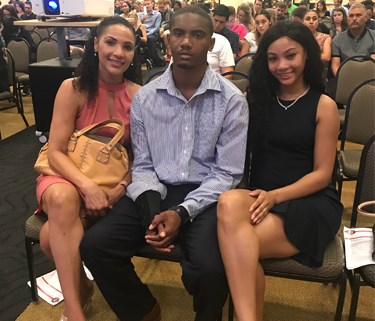
Two women sitting on either side of a man in the front of a conference room. They are all dressed up. There are many rows of people sitting behind them.

Coalition Demands Governor Northam Grant a Full Pardon of Neli Latson, a Young Black Man With Disabilities Subjected to a Decade of Injustice

WASHINGTON – Neli Latson should be a free man. Instead, he’s faced a decade of unjust prosecution and abuse in a criminal justice system where, as a young Black man with disabilities, he’s experienced the disastrous combination of systemic racism and ableism. As the nation faces a critical turning point in the fight against systemic racism and racial injustice — including the compounding injustices facing Black people with disabilities — it is time to #FreeNeli.

In a new letter to Virginia Governor Ralph Northam, a coalition of nearly 50 advocacy groups and legislators led by The Arc of the United States, The Arc of Virginia, the Center for Public Representation, and the Autistic Self Advocacy Network are calling on the Governor to right this wrong by immediately granting Mr. Latson a full pardon, committing to continue funding his disability services in Florida where he and his family now reside, and issue a public apology to Mr. Latson and his family.

In 2010, Mr. Latson was an 18-year-old special education student, sitting outside of a library in Stafford County, Virginia, waiting for it to open. Someone called the police reporting a “suspicious” Black male, possibly with a gun. Mr. Latson had committed no crime and was not armed. The resulting confrontation with a deputy was the beginning of years of horrific abuse in the criminal justice system. The prosecutors refused to consider Mr. Latson’s disabilities and rejected an offer of disability services as an alternative to incarceration. Instead, he was punished in the criminal justice system with long periods of solitary confinement, Taser shocks, and the use of a full-body restraint chair for hours on end for behaviors related to his disabilities.  At one point, Mr. Latson was even locked up in a small jail cell with no sink or toilet for days.

Virginia and national disability advocates urged then-Virginia Governor Terry McAuliffe to grant a pardon to Mr. Latson.  In 2015, Governor McAuliffe granted him a conditional pardon, requiring him to live in a restrictive residential setting and be subjected to on-going supervision by the criminal justice system. The terms of his 2015 conditional pardon mean that he could be sent back to jail at any time, causing Mr. Latson to experience constant anxiety.

“The time for Virginia to rectify its egregious wrongs in the case of Neli Latson is long past due and must happen now. Mr. Latson has suffered his entire adult life and received discriminatory and cruel treatment in the criminal justice system – because of behaviors connected to his disabilities and the color of his skin. Governor Northam, please issue a full pardon immediately,” said Peter Berns, CEO, The Arc.

“Mr. Latson’s life was stolen from him when he was barely an adult.  He must now receive the justice he deserves following a decade of mistreatment, with his young adult life lost to pain and anguish.  A full pardon and continued support services are the only ways to correct the wrong done to him,” said Tonya Milling, Executive Director of The Arc of Virginia.

“Mr. Latson’s case is a tragic example of how disability is too often criminalized, especially for Black people with disabilities,” said Alison Barkoff, Director of Advocacy at the Center for Public Representation.  “Virginia must begin to address the systemic racism and ableism in its criminal justice system.  We call on Governor Northam to take an important first step by granting a full pardon to Mr. Latson.”

“Despite years of advocacy, Neli’s freedom is still unnecessarily curtailed by his placement in a restrictive residential setting and ongoing supervision by the criminal system,” said Samantha Crane, Legal Director of the Autistic Self Advocacy Network. “He lacks the freedom to choose his daily activities, find a job, and pursue relationships on his own terms. It’s time for Virginia to provide Neli the supports he needs to live a more self-directed life integrated into the community where he now lives.”

Advocates have fought tirelessly for justice for Mr. Latson for nearly a decade and will keep fighting until we #FreeNeli.

The Arc logo

Supreme Court Ruling Hurts Students With Disabilities

WASHINGTON, D.C. – The Arc is deeply disappointed in this week’s U.S. Supreme Court ruling in Espinoza v. Montana Department of Revenue. The Court’s decision opens the door for public funds to go to religious private schools that are largely unbound by federal laws in place to protect the rights of students with disabilities.

“We have fought for decades to ensure that students with intellectual and developmental disabilities have access to special education and related services to meet their unique needs. This decision by the Supreme Court will allow for funding for additional private schools across the country that have few, if any, obligations to accept or appropriately support students with intellectual and developmental disabilities. Unless required by state law, private schools that accept vouchers are not subject to the Individuals with Disabilities Education Act nor the Americans with Disabilities Act. Families who choose to use vouchers may not even realize that they are forfeiting their rights when they move to a private school,” said Peter Berns, CEO, The Arc. 

Because of the potential negative impact on students with disabilities, The Arc of the United States and a coalition of advocacy and legal services organizations filed an amicus brief in the case in November 2019 asking the Court to uphold the decision made by the Montana Supreme Court invalidating the state’s private school tax-credit scholarship program.

“School voucher and tax credit programs like Montana’s put students with disabilities at risk of segregation in school and receiving inadequate services and supports. These disparities in education can have life-long negative impacts and we simply can’t afford to go backwards. We must focus on increasing funding for public schools and improving education for students with disabilities, rather than forcing families to choose between underfunded public schools and private schools that legally don’t have to serve students with disabilities,” said Berns.

The Arc advocates for and serves people wit­­h intellectual and developmental disabilities (I/DD), including Down syndrome, autism, Fetal Alcohol Spectrum Disorders, cerebral palsy and other diagnoses. The Arc has a network of over 600 chapters across the country promoting and protecting the human rights of people with I/DD and actively supporting their full inclusion and participation in the community throughout their lifetimes and without regard to diagnosis.

Editor’s Note: The Arc is not an acronym; always refer to us as The Arc, not The ARC and never ARC. The Arc should be considered as a title or a phrase.


A man lays in a hospital bed as an out of focus doctor in the foreground holds a chart

Resolution of Federal Civil Rights Complaint Raises the Bar in Prohibiting Medical Discrimination Against People With Disabilities During COVID-19 Pandemic

Today, the U.S. Department of Health & Human Services Office for Civil Rights (OCR) announced the resolution of a federal complaint filed against Tennessee, one of nearly a dozen complaints filed by a coalition of national disability advocates – the Center for Public Representation, The Arc of the United States, Bazelon Center for Mental Health Law, Autistic Self Advocacy Network, Disability Rights Education and Defense Fund and Samuel Bagenstos — challenging states’ plans for rationing medical care during the COVID-19 pandemic as discriminating against people with disabilities. Medical rationing policies have disproportionately impacted Black people with disabilities, who have higher rates of COVID-19 infection and hospitalization. Today’s resolution sets a national precedent, with OCR building off earlier resolutions of complaints regarding Alabama’s and Pennsylvania’s plans and weighing in for the first time on the discriminatory impact of a number of provisions common in many states’ rationing plans. 

The complaint against Tennessee, brought by the coalition of national disability advocates together with Tennessee advocates led by Disability Rights Tennessee and the Civil Rights Enforcement and Education Center (CREEC), alleged that Tennessee’s plan illegally excluded certain people with disabilities from accessing life-saving treatment like ventilators based on their disabilities and deprioritized others based on their disabilities.  In response to the complaint and engagement with OCR, Tennessee has revised its “Guidance for the Ethical Allocation of Scarce Resources During a Community-Wide Public Health Emergency” to comply with federal disability rights laws and ensure that people with disabilities are not discriminated against even when public health emergencies, such as the COVID-19 pandemic, necessitate the rationing of scarce medical resources.

The following are key precedent-setting changes in Tennessee’s policy to avoid discrimination against people with disabilities: 

  • No Categorical Exclusions Based on Disability or Resource Intensity:  An individual can no longer be excluded from medical treatment based solely on a diagnosed disability or the fact that an individual might require more time or resources to recover because they have a disability.  This is the first time OCR has addressed resource intensity as a factor.  Rather than making assumptions about a patient’s ability to respond to treatment based solely on stereotypes, medical personnel must perform an individualized assessment of each patient based on the best objective current medical evidence.
  • No Long-Term Survivability Considerations: Due to this resolution,Tennessee is now the first state to explicitly eliminate longer-term survivability as a consideration in treatment decisions, changing its Guidance to allow medical personnel to consider only “imminence of mortality.” Survivability is a factor that can be fraught with speculation, mistaken stereotypes, and assumptions about the quality of life and lifespan of people with disabilities.
  • Reasonable Modifications Required: Tennessee’s Guidance now requires hospitals to make reasonable modifications to the Sequential Organ Failure Assessment (SOFA)—the tool used to prioritize access to medical treatment—to avoid penalizing people with underlying conditions that are unrelated to their ability to benefit from treatment. This is the first time OCR has weighed in on modifications to assessment tools. It also requires hospitals and other long-term care facilities (such as nursing homes) to reasonably modify no-visitor policies when necessary to ensure equal access to care.
  • Reallocation of Personal Ventilators Prohibited: Medical personnel may not reallocate the personal ventilator of a patient who uses a ventilator in their daily life to another patient whom the personnel deem more likely to benefit from the ventilator in receiving treatment. This is the first OCR resolution addressing this issue.  

“Today’s OCR resolution makes clear that policies common in many states’ medical rationing plans – such as denying care based on the belief that disabled people take longer to recover or by using tools that penalize people for having disabilities that do not impact their ability to survive COVID19 – constitute illegal disability discrimination,” said Alison Barkoff, Director of Advocacy at the Center for Public Representation.  “We hope that states will revisit their policies in light of today’s resolution.” 

“This resolution makes major progress toward ensuring that people with disabilities have equal access to the care and tools necessary to fight COVID-19 infection,” said Shira Wakschlag, Director of Legal Advocacy and General Counsel at The Arc. “We are grateful to OCR for continuing to recognize the rights of people with disabilities during this pandemic and we will keep fighting for revisions to discriminatory policies that could mean the difference between life and death for people with disabilities.”

In addition to filing complaints with OCR, the national disability organizations have created resources to assist to assist stakeholders across the country in evaluating and advocating for non-discriminatory medical rationing plans at Center for Public Representation and The Arc

For more information about today’s resolution, contact:

Alison Barkoff, Center for Public Representation

abarkoff@cpr-us.org or 202-841-7562

Kristin Wright, The Arc of the United States

wright@thearc.org or 202-617-3271

Martie Lafferty, Civil Rights Education and Enforcement Center

mlafferty@creeclaw.org or 615- 913-5099