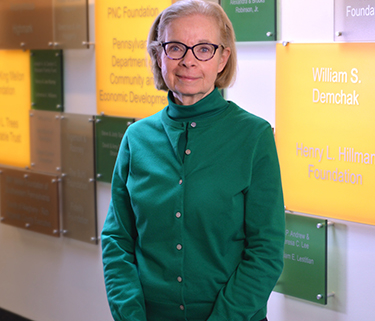
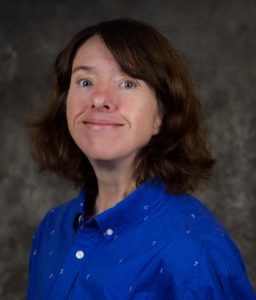
An older woman in glasses and a green turtleneck stands smiling at the camera with her hands clasped

Nancy Murray From The Arc of Greater Pittsburgh Selected to Serve on National Family Caregiver Council

The Arc is honored that Nancy Murray, the President of The Arc of Greater Pittsburgh at ACHIEVA, has been selected by the Administration on Community Living to serve on the RAISE Family Caregiving Advisory Council. Nancy brings a deep personal and professional understanding of the caregiver crisis facing millions of families and people with intellectual and development disabilities (I/DD).

Nancy is the mother of two adult children with Down syndrome and has been a caregiver to both of her aging parents. Nancy has also been a powerful voice in the disability field for over 40 years in the areas of family support, advocacy, public policy, supports coordination, and health care. As a member of the Family Caregiving Advisory Council, Nancy will help develop recommendations to the Secretary of the U.S. Department of Health and Human Services (HHS) on effective models of family caregiving and support to caregivers, as well as ways to improve coordination across federal programs.

The Council was established by the RAISE Family Caregivers Act enacted last year to help address the growing national caregiver crisis for family members and persons with I/DD, seniors, veterans, and others. This crisis for caregivers is reflected in the findings of The Arc’s Family & Individual Needs for Disability Supports (FINDS) 2017 Survey which shows that nearly two thirds of caregivers surveyed are employed and 45% of respondents provide more than 80 hours of care per week. Not surprisingly, nearly half of FINDS caregivers report feeling “very or extremely stressed.” The findings also underscore the need for accessible respite programs: 92% of caregivers say they have difficulty finding respite care.

We are confident Nancy will help leaders in the federal government find solutions for families. The RAISE Family Caregiving Advisory Council will hold its first meetings on August 28 and August 29, 2019 in Washington, D.C. and will be live streamed.

For more on Nancy’s contributions to the I/DD community, please click here.


The Arc logo

Introducing The Arc’s 2019 – 2020 National Sibling Council!

We are excited to welcome eight new members to our 2019-2020 National Sibling Council! They bring a wide range of expertise and passion and we are fortunate to be working with them for the next term year. The Sibling Council fosters active involvement of siblings of individuals with intellectual and developmental disabilities (I/DD) in The Arc’s grassroots advocacy efforts nationwide. Meet our new council members and learn more about why they joined the Sibling Council and what motivates them to promote and protect the rights of individuals with I/DD throughout the country!

Caitie Jones, Alaska

My brother, Chris, has Down syndrome and lives in Anchorage, Alaska. I have been a very active member of Chris’ support team and have been working in the disability field for five years. Currently, I am the Family Partner at Hope Community Resources, Inc., assisting families in accessing resources throughout the community and am working on opening a center where families of kids with disabilities can come together for support. I joined the sibling council to connect with other siblings and to continue advocating for people with disabilities.

Cameron Kell, Missouri

There are several reasons I wanted to join The Arc’s National Sibling Council. First, I am grateful for the work The Arc has done to benefit my brother, Nathan. As an advocate, I want to play a role in The Arc’s efforts to promote and protect the rights of people with I/DD across the country.

Karen McDowell Downer, Tennessee

My sister, Mindy, is 61 and lives in a residential facility in their hometown. As Mindy’s sister and supporter, I want to advocate for positive change in the continuity of her care and support systems. The most important issue Mindy currently faces is staff turnover among her direct service providers (DSP) and licensed professional nurses (LPN) due to their insufficient pay. I believe that this issue among DSPs and LPNs are representative of late in life issues people with I/DD will face — this is when siblings must step up.

Kim Keprios, Minnesota

I am the proud sibling of Mike Keprios, my constant teacher of what matters, and how I found The Arc and my rewarding career with the organization. I am grateful for the collective efforts of The Arc to change policies, attitudes, and lives with and for people with I/DD, their families, and our communities. New challenges emerge with our aging demographics growing. I am committed to the advocacy work The Arc is leading and raising awareness of unique needs siblings face. The Arc’s National Sibling Council provides me the opportunity to serve, connect with siblings, and advocate with and on behalf of people with I/DD.

Mary Valachovic, Massachusetts

I am the Executive Director of The Arc of Greater Plymouth in Plymouth MA. Although I have over 25 years of work experience supporting people with disabilities, my true journey began when my brother Matthew was born. Matthew has significant disabilities and has served as my inspiration over the years, both personally and professionally. It is Matthew that led me to The Arc’s National Sibling Council. At age 12, I became an active member of her local chapter youth group and my passion continues to this day. I am committed to the power of listening to people with disabilities and their families and am honored to serve on The Arc’s National Sibling Council.

Nayma Guerrero, California

I joined The Arc’s National Sibling Council because I know that my role as a sibling is very important in the life of my brother, Eric, who has autism. My passion and eagerness to advocate for others like my brother is one of the main reasons I am active with The Arc. I hope to make a difference in my community and to continue encouraging other siblings to become involved and a part of their siblings’ lives.

Rachel Hafner, North Dakota

I am the Executive Director of The Arc, Upper Valley in Grand Forks, North Dakota. I was 13 years old when my brother Timothy was born. Sibling issues have always been very important to me and have been the catalyst for the work I do as a professional. I hope that by serving on The Arc’s National Sibling Council, I can help shine a light on the important role siblings play in the lives of their brothers and sisters throughout their lifetime.

Sandra Tucker, Colorado

I am the Executive Director at Sibling Tree and my brother, David, is on the autism spectrum. I joined The Arc’s National Sibling Council because I believe that the sibling voice is important and needed in order to advocate for the unique needs of siblings, as well as the needs of brothers and sisters with I/DD.


The Arc logo

Talk About Sexual Violence: James’ Story

Sexual assault and violence disproportionately affect people with intellectual and developmental disabilities (IDD), with findings from NPR revealing that people with IDD are assaulted at seven times the rate of people without disabilities. The first step to tackling this epidemic is talking about it.

Read more from one survivor:

James Meadours smiles at the camera in a selfie, wearing a navy blue polo shirt and glasses.

I never thought lightning could strike twice in the same place, but in my life it happened. I was sexually assaulted four times during my life and this is not uncommon for men or women with disabilities. I want to share the last time it happened to me.

I was looking for a Church that welcomed people including those with disabilities. A friend encouraged me to join him for a Church service and when I was there I met a member who was deaf and wanted to teach me sign language. I thought we were becoming friends. One time we spoke on the phone and he asked if I was gay, I told him I was not. We got together the day before Church at my home and he began to be sexual with me. Even knowing I was not gay, he still approached me. Again, I told him I was not interested and let him know by shaking my head “NO” and backed away. I used sign language to say NO but he signed YES.

The next day when I went to Church I didn’t tell anyone. I felt ashamed and afraid if I told anyone I could be hurt. I reached out to the pastor and nothing was done and out of frustration I told my friend and he called 211 to make a report on my behalf with my permission.

I went to the hospital to make sure I was OK. People listened and took the time to help me. The SANE Nurse (Sexual Assault Nurse Examiner) was gentle and understanding. I wanted to make a formal report to law enforcement and hoped the officer would be kind and help me feel at ease. Later in the week an officer made a home visit and gathered evidence. The kindness the officer showed me is not typical.

I pressed charges and went to court. He went to jail.

My friends believed me and were helpful at different stages, but when I approached the local rape crisis center two weeks later they didn’t know how to provide support since they do not usually help many men, especially men with disabilities. It was a new experience for them, but despite them not having training, they tried to be helpful.

No one taught me the steps to recovery. I did remember what the SANE nurse told me – she looked me in the eye and said I needed to take care of myself before helping others who have suffered. After two years of recovery work, I realized when I was at a meeting to discuss sexual assault that I wanted to tell my story. This was the beginning of my journey to become an advocate to support others with disabilities who have suffered with sexual assault. I am now a national advocate and speaker at many conferences sharing my story and recommending changes so others can find healing and if they want they can become part of the MeToo movement.

As Sexual Assault Awareness Month draws to a close, join us in the movement to Talk About Sexual Violence! And, sign up for our criminal justice emails to receive resources, timely news, and ideas on how to advocate and get involved throughout the year.

Our Call to Action

Recommendations for Schools and Students

  1. Provide age-appropriate sex education for students with disabilities.
  2. Discuss safe vs. unsafe relationships.
  3. Identify who to report a sexual assault incident to.
  4. Ensure a personal safety plan is included in Individualized Education Plans (IEPs).

Recommendations for Individuals

  1. Reach out to a trusted person if you have experienced sexual assault.
  2. Learn about your rights as a crime victim and what can happen if you report.
  3. Locate and attend sexual assault support groups.
  4. If you are interviewed by law enforcement, request privacy.
  5. Know your rights about your accommodation needs.

Recommendations for Disability Service Providers

  1. Require sexual trauma training for providers.
  2. Demand deeper background checks for all employees.
  3. Listen and believe when someone discloses sexual assault.
  4. Provide accommodations when a person reports an incident.
  5. Ensure privacy when a person reports sexual violence.

Recommendations for Criminal Justice Professionals

  1. Required training for first responders, law enforcement, the courts, and sexual assault and rape crisis professionals about serving crime victims with I/DD.
  2. Learn effective strategies for interviewing crime victims with disabilities.
  3. Use disability specific accommodations.
  4. Consider community outreach to reduce fear of talking with law enforcement.
The Arc logo

#HandsOff: Why I Advocate to Stop the Shock

This was part of a series called #HandsOff, where we featured calls to action and stories from families across The Arc’s network about how key policy issues impact their day-to-day lives.

Written by: Nicole Jorwic, Former Senior Director of Public Policy at The Arc of the United States

Nicole and Chris Jorwic

People with disabilities are being tortured by shock devices at the Judge Rotenberg Center. These devices are worn by residents of JRC, an institution in Massachusetts for children and adults with disabilities. Staff members use remote controls to administer a shock to residents for perceived misbehavior.

This is despite the fact that there is a well-established body of evidence proving that there are alternative methods for behavioral supports for people with disabilities and other needs that do not include excessive force, pain, and fear. It continues to be shown that there is NO THERAPEUTIC benefit to these devices. The actions of the JRC remain a civil rights issue. With every day that passes without this rule being finalized by the FDA, the rights of people with disabilities and mental health issues will continue to be violated as they endure abuse and torture. We shouldn’t rest until this barbaric practice is halted and use of these devices are banned at the JRC and nationwide.

This issue is something that matters to me personally. My brother Chris is 29 and has autism. And it is my brother’s voice that I have heard during every tense Capitol Hill meeting, meeting with the FDA and submitting comments on why these tortious devices must be banned. This is a little ironic since my brother doesn’t use his voice to speak.

Chris types to communicate — and one thing that he always highlights when he is out training others on how to interact with people with disabilities, is that every behavior is a form of communication. Chris communicates with his behaviors too, and it terrifies me to know that if he were a resident at the JRC, he could very likely be shocked for trying to express himself or communicate his needs.

The FDA must act. All people with disabilities deserve the right to live free from the fear of torture. Continuing in their posture of inaction is to devalue the lives of people with disabilities. We will not stop fighting until we are able to STOP THE SHOCK. Learn more about how you can help.

The Arc logo

Talk About Sexual Violence: Kecia

April is Sexual Assault Awareness Month. Sexual assault and violence disproportionately affect people with intellectual and developmental disabilities (I/DD), with findings from NPR revealing that people with I/DD are assaulted at seven times the rate of people without disabilities. The first step to tackling this epidemic is talking about it.

Read more from one survivor:

Kecia Weller poses for a photo against a gray mottled background with a blue shirt on.

“Get involved. Help people with disabilities learn about safe relationships and prevention of sexual assault. Special attention must be provided at peer advocacy meetings to teach people how to support survivors when they report the abuse and create their own safety plans. There are many ways people with disabilities can be supportive. A few ideas include volunteering to be a listener on a hot line, educating school teachers about the frequency of abuse against students with disabilities and most important, learning more yourself about the alarming rate of sexual and other kinds of assault happening to men and women with disabilities.”

Read more of Kecia’s story.

During Sexual Assault Awareness Month, join us in the movement to Talk About Sexual Violence! And, sign up for our criminal justice emails to receive resources, timely news, and ideas on how to advocate and get involved throughout the year.

Our Call to Action

Recommendations for Schools and Students

  1. Provide age-appropriate sex education for students with disabilities.
  2. Discuss safe vs. unsafe relationships.
  3. Identify who to report a sexual assault incident to.
  4. Ensure a personal safety plan is included in Individualized Education Plans (IEPs).

Recommendations for Individuals

  1. Reach out to a trusted person if you have experienced sexual assault.
  2. Learn about your rights as a crime victim and what can happen if you report.
  3. Locate and attend sexual assault support groups.
  4. If you are interviewed by law enforcement, request privacy.
  5. Know your rights about your accommodation needs.

Recommendations for Disability Service Providers

  1. Require sexual trauma training for providers.
  2. Demand deeper background checks for all employees.
  3. Listen and believe when someone discloses sexual assault.
  4. Provide accommodations when a person reports an incident.
  5. Ensure privacy when a person reports sexual violence.

Recommendations for Criminal Justice Professionals

  1. Required training for first responders, law enforcement, the courts, and sexual assault and rape crisis professionals about serving crime victims with I/DD.
  2. Learn effective strategies for interviewing crime victims with disabilities.
  3. Use disability specific accommodations.
  4. Consider community outreach to reduce fear of talking with law enforcement.
The Arc logo

Talk About Sexual Violence: Chris’ Story

April is Sexual Assault Awareness Month. Sexual assault and violence disproportionately affect people with intellectual and developmental disabilities (I/DD), with findings from NPR revealing that people with I/DD are assaulted at seven times the rate of people without disabilities. The first step to tackling this epidemic is talking about it.

Read more from one survivor:

Chris Miller poses for a selfie in a blue shirt.

Chris Miller

“For as long as I can remember society has had the idea that men do not show emotion. We are told to be strong, not to cry or share feelings. These ideas are communicated from an early age; the expectations of manhood are very high and never include opening up about any type of abuse, especially sexual assault and violence perpetrated against them, as an adult or child.

We are told and it is believed that rape and assault do not happen to us – but the fact is that 1 in 6 men have been victims of sexual assault and the rate of men with disabilities is even higher. Men with disabilities face an even more difficult hurdle of not being believed or seen as credible when they do report because they have a disability, and can be even more difficult for those who are LGBTQ, who are at greater risk for sexual assault due to their sexual orientation. Some people with disabilities communicate in non-traditional ways, meaning not verbally or use a communication device, so they are often looked at as not reliable witnesses or just simply not believed. Another reason people do not speak up is simply a lack of having someone they trust. Many live segregated lives and reporting an assault can be threatening and result in loss of home, caregiver or job. Those in authority have looked the other way when we have disclosed. When disclosure happens we are not asked how we feel. For those that are not able to tell, they act out their fear and frustration and then are medicated and the abuse continues. Many of us do not believe there will be any consequences even if we do tell. This is a deep-reaching issue that we must deal with to have a healthy, inclusive and safer society. Every sexual assault survivor needs to know they matter, are respected and can be safe.”

During Sexual Assault Awareness Month, join us in the movement to Talk About Sexual Violence! And, sign up for our criminal justice emails to receive resources, timely news, and ideas on how to advocate and get involved throughout the year.

Our Call to Action

Recommendations for Schools and Students

  1. Provide age-appropriate sex education for students with disabilities.
  2. Discuss safe vs. unsafe relationships.
  3. Identify who to report a sexual assault incident to.
  4. Ensure a personal safety plan is included in Individualized Education Plans (IEPs).

Recommendations for Individuals

  1. Reach out to a trusted person if you have experienced sexual assault.
  2. Learn about your rights as a crime victim and what can happen if you report.
  3. Locate and attend sexual assault support groups.
  4. If you are interviewed by law enforcement, request privacy.
  5. Know your rights about your accommodation needs.

Recommendations for Disability Service Providers

  1. Require sexual trauma training for providers.
  2. Demand deeper background checks for all employees.
  3. Listen and believe when someone discloses sexual assault.
  4. Provide accommodations when a person reports an incident.
  5. Ensure privacy when a person reports sexual violence.

Recommendations for Criminal Justice Professionals

  1. Required training for first responders, law enforcement, the courts, and sexual assault and rape crisis professionals about serving crime victims with I/DD.
  2. Learn effective strategies for interviewing crime victims with disabilities.
  3. Use disability specific accommodations.
  4. Consider community outreach to reduce fear of talking with law enforcement.
The Arc logo

Sexual Assault Awareness Month: Shining the Light on a Silent Epidemic

Chris Miller, James Meadours, and Kecia Weller

Every day, in every community across the U.S., people with intellectual and developmental disabilities (I/DD) are being sexually assaulted. Too many have a story to tell, and yet few are ever heard. The Talk About Sexual Violence project aims to change that by educating health care providers about sexual violence in the lives of people with I/DD. Here are just three snapshots of this epidemic, shared directly by those affected by it:

Chris Miller

Chris Miller poses for a selfie in a blue shirt.For as long as I can remember society has had the idea that men do not show emotion. We are told to be strong, not to cry or share feelings. People don’t believe that rape and assault happens to us, but the fact is that 1 in 6 men have been victims of sexual assault and the rate of men with disabilities is even higher. Many of us do not believe there will be any consequences if we tell someone about what happened to us. This is a deep reaching issue that we must deal with to have a healthy, inclusive and safer society. Every sexual assault survivor needs to know they matter, are respected and can be safe.


James Meadours

I never thought lightning could strike twice in the same place, but in my life it happened. I was sexually assaulted four times during my life and this is not uncommon for men or women with disabilities. My friends believed me and were helpful at different stages, but when I talked to the local rape crisis center two weeks after the rape, they didn’t know how to provide support since they do not usually help many men, especially men with disabilities. It was a new experience for them, but even though they didn’t have any training, they tried to be helpful. No one taught me the steps to recovery. I did remember what the SANE nurse told me – she looked me in the eye and said I needed to take care of myself before helping others who have suffered. After two years of recovery work, I realized when I was at a meeting to discuss sexual assault that I wanted to tell my story. This was the beginning of my journey to become an advocate to support others with disabilities who have suffered with sexual assault. I am now a national advocate and speaker at many conferences sharing my story and recommending changes so others can find healing and if they want they can become part of the MeToo movement.


Kecia Weller

Kecia Weller poses for a photo against a gray mottled background with a blue shirt on.Get involved. Help people with disabilities learn about safe relationships and prevention of sexual assault. Special attention must be provided at peer advocacy meetings to teach people how to support survivors when they report the abuse and create their own safety plans. There are many ways people with disabilities can be supportive. A few ideas include volunteering to be a listener on a hot line, educating school teachers about the frequency of abuse against students with disabilities and most important, learning more yourself about the alarming rate of sexual and other kinds of assault happening to men and women with disabilities.


Learn more about educating health care providers about this silent epidemic and supporting people with I/DD to tell their truth. Men with disabilities and other marginalized individuals are especially alone and need outreach now more than ever. This Sexual Assault Awareness Month, join us in the movement to Talk About Sexual Violence!

The Arc logo

#HandsOff Our Kids: Advocating Against Restraint and Seclusion

This was part of a series called #HandsOff, where we featured calls to action and stories from families across The Arc’s network about how key policy issues impact their day-to-day lives.

Written by: Erik Smith, Dad to a Son with Autism

I went to Washington last month to support my wife in sharing our family’s story about restraint and seclusion. A few weeks before, the new executive of The Arc Rhode Island Family Advocacy Network put out a call to find families who would be willing to provide testimony at a Congressional hearing on this topic. Needless to say, my wife Renee and I jumped at the opportunity. We had mixed feelings about making our family’s experience so public, but felt strongly that we needed to advocate for all families to help them avoid the painful and unnecessary practices of restraint and seclusion that our son Dillon, who has autism, had experienced repeatedly in kindergarten and the first grade.

Renee Smith sits in front of Congress testifying, as an audience sits behind her.

Renee started her testimony by describing what our daily lives used to be like. She recounted the regular instances of restraint and seclusion that Dillon experienced, the multiple calls to 911 made by the school, Dillon’s increasing dislike of school, his missed educational opportunities, and the overwhelming stress on our family. I felt proud of Renee as I watched her recount, sometimes through tears, how much harm this had caused our then 6-year-old son and our family as a whole, including our marriage and our jobs. Fortunately, Renee was able to end her testimony on a very positive note. After we moved Dillon to a different public school in the same district that uses positive behavior intervention and support, Dillon is thriving.

In preparing for the hearing, we had the chance to learn more about the history of federal legislation to limit restraint and seclusion. We learned about a law (the Children’s Health Act of 2000) that includes serious limits on these practices. The only problem is that it doesn’t include school settings.

As I listened to Renee, I was struck by the contrast between my professional and personal life regarding the limitations on restraint and seclusion. I am a nurse and I work in a long-term care facility. The Centers for Medicare & Medicaid Services (CMS) strongly regulate the use of restraints in LTC facilities, with these regulations to be enforced through state Health agency survey and certification. I have always been well aware of what I can and cannot do when our patients exhibit challenging behaviors. I have received training by my employer on patient’s rights, on what we are legally barred from doing, and on effective alternatives to restraint and seclusion. I see firsthand how this benefits our patients and staff alike. But as a parent, I see how the lack of such protections have hurt my son.

This point was made in 2009 by the former chairman of the House Education and Labor Committee, Rep. George Miller, the last time there had been a hearing on restraint and seclusion:

Federal law restricts the use of seclusion-restraints to emergency circumstances for children in hospitals and community-based residential treatment facilities and other facilities supported by federal dollars. Yet these rules do not apply to public or private school. This means an untrained medical professional is forbidden from inappropriately restraining a patient and, if they do, there are laws specifically targeted to address such behavior. But untrained classroom staff are abusing student in schools without any accountability because of a lack of federal oversight. Our children are bearing physical and emotional burden of a system designed to fail them”

It is now almost a full decade later. Far too many children like my son continue to be restrained and secluded in school. It is past time to correct this problem.

The Arc logo

Rhode Island Advocate to Testify in Congress on Impact of Restraint and Seclusion on Son With Autism

On Wednesday, February 27, Rhode Island advocate Renee Smith will testify in Congress before the U.S. House Education and Labor’s Subcommittee on Early Childhood, Elementary, and Secondary Education hearing on the use of restraint and seclusion in schools.

The hearing is titled “Classrooms in Crisis: Examining the Inappropriate Use of Seclusion and Restraint Practices”, and Smith was invited to testify because of her now eight-year-old child’s traumatic experiences in school. When Dillon, who has autism spectrum disorder, was in kindergarten and first grade, he and his parents struggled with the school administration for proper, positive supports for him. Restraint and seclusion were repeatedly used to manage Dillon’s behavior, despite the fact that his parents knew other positive methods would lead to a better outcome, and positive reinforcement was a part of the documented individualized education program (IEP) for Dillon with the school.

Far too many times, Dillon was restrained and dragged into the “blue space” – a walled and padded area, with a small opening with a pad cover to keep a child from leaving the space. Again and again, situations escalated to the point where 9-1-1 was called, and if Dillon’s parents didn’t arrive before the ambulance, he would be taken alone to the hospital. The repeated trauma of restraint and seclusion, the threat of going to the hospital, and continued interruptions to his education were having a major impact on Dillon and his family.

“Dillon’s work avoidance, we now know, was in direct reaction to the restraint and seclusion he was experiencing. The more he was restrained and secluded, the less he was interested in school work, which resulted in more restraint and seclusion, a constant downward spiral. It broke my heart when Dillon told us that he no longer trusted any of the adults in that school. Without the school working with us to change this dynamic, we had to do something – we found another public school with a different approach,” said Smith.

Dillon started fresh at a new school, where the behavior program allows children to float between a special education classroom and a regular education classroom for work. There are several cool down spaces and one open space within the office of the school behaviorist. Teachers provide positive reinforcement in their classrooms and one-on-one with their students. Within only two weeks of the new placement, Dillon was in a regular education classroom 100% of the time with supports.

“At his old school, Dillon was trying to communicate that the strategies used were not working for him and not allowing him to develop coping skills for the future. Today, Dillon is doing really well. With the proper supports, he has blossomed as a student and enjoys school,” said Smith.

The Arc Rhode Island (RI) Family Advocacy Network (FAN) recruited Smith to bring this perspective to the halls of Congress. The Arc RI FAN is a newly created office that will lead state-level public policy activities as well as provide training, public awareness and education, and grassroots advocacy building to protect the rights of Rhode Islanders with intellectual and developmental disabilities (I/DD). The Arc has tapped Joanna Scocchi, founder of Rhode Island Advocacy for Children, as the Director. The Arc RI FAN joins a network of more than 620 state and local chapters of The Arc that provide direct support services and advocate for the rights of people with I/DD around the country.

“Dillon’s experience is horrifying, yet it’s happening in schools across Rhode Island and across the country. Nationally, students with disabilities are roughly 20 times more likely than their peers without disabilities to be restrained and secluded. Our kids deserve better – the approach to their education and the environment in which they learn are key ingredients to their success,” said Scocchi.

The Arc logo

#HandsOff: Advocating With Young Children

This was part of a series called #HandsOff, where we featured calls to action and stories from families across The Arc’s network about how key policy issues impact their day-to-day lives.

Written by: Julie Ross, Member of The Arc of Texas and Mother to a Daughter with Down Syndrome

julieross2

My almost seven-year-old daughter Niko is fun and full of energy, loves dancing, singing, and doing daredevil stunts. Niko adores her big sister, playing with her homeschool friends and caring for younger children. In addition to keeping up with her, my job has also been to advocate for her healthcare, inclusion, and civil rights – and it began the day she was born. Niko has Down syndrome and congenital heart disease. While she was still recovering in the NICU, a social worker explained to us about Medicaid and “waitlists”. The social worker said to apply for state and federal healthcare services immediately, even though some of these were adult services, because the wait was 14 years and growing. Afterwards, I joined my state chapter of The Arc and The Arc of the United States and learned that we could impact these issues—and more. We have high expectations for Niko, so if we could eliminate barriers that prevent her from reaching her potential, we were willing to demand change. From the start, we knew Niko would be at the center of these advocacy efforts.

Policies at both the state and federal level greatly impact Niko’s access to services and healthcare she needs to live a full, happy life. And it often feels as if the impact of legislation on the disability community isn’t being considered by elected officials. In order to become a better advocate, I joined state and national disability advocacy organizations and attended rallies led by self-advocates. Niko and I made a host of new friends and I was mentored by other families. I drove with both of my daughters to our state capitol to meet with our elected officials to advocate for Medicaid and Early Childhood Intervention funding.

We took advice from The Arc and contacted our federal lawmakers. Niko and I made office visits to Senator Ted Cruz and Senator John Cornyn’s district offices. We talked about the importance of phasing out subminimum wage, fully funding Medicaid, saving the Affordable Care Act, and supporting legislation such as Money Follows the Person to ensure Niko could live free from the threat of institutionalization. At these meetings, I would carry a stash of snacks and coloring books to entertain Niko while I did most of the talking (although she would vocalize occasionally and toss cookie crumbs on the floor). Whenever I felt fear or intimidation of how lawmakers and staff may react to my child attending our meeting, I would remind myself that my taxpayer dollars pay for their offices and these lawmakers work for us! Most of all, I want lawmakers to know my daughter’s name, face, and story to remind them of what is at stake when they vote. And to make that connection, it is important for them to meet Niko in person.

We always try to make a lasting impression. Once we even celebrated Niko’s birthday in our Senator’s offices. I brought balloons, cupcakes, and birthday cards for their staff to sign and share with the Senators – urging them to protect Medicaid and ACA to preserve Niko’s healthcare protections so she could celebrate many more birthdays. And last Valentine’s Day, we asked our Congressman to “have a heart” and oppose a dangerous bill that would have weakened the protections afforded by the Americans with Disabilities Act.

We’ve seen the positive changes that result from state and national disability advocacy. When we exercise our constituent power and families, individuals, and self-advocates deliver our “ask” and our personal stories – we make a tremendous impact. And while Niko still acquires new interests and hobbies as she grows up, I’m delighted that she and I can include advocacy as an integral part of our family life.

julieross1 julieross3