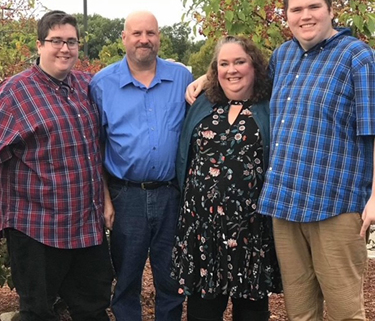
A mother, father, and their two adult children stand smiling with their arms around each other in front of trees,

Care During COVID-19: An “Essential” Working Family’s Story

By Sethany Griffin

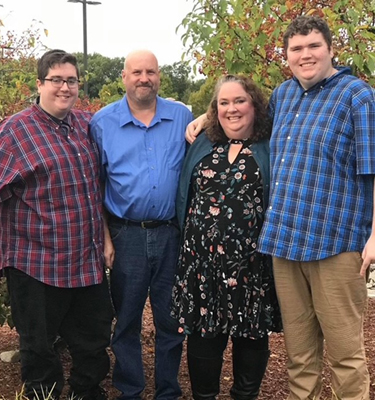
A mother, father, and their two adult children stand smiling with their arms around each other in front of trees,

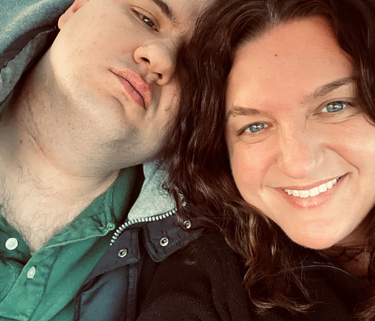
I am a member of The Arc and both a provider for adults and children with disabilities and a mother of an adult with autism and an intellectual delay. My son Karl is 19, and he typically attends an adult transition program five days a week where he learns vocational skills in the hopes of someday finding him a paying job. He also focuses on social interactions, self-advocacy, problem solving, self-care skills and strength building through physical therapy. 

My son’s transition program, like so many others, closed temporarily and without notice in the early months of the coronavirus pandemic. Like many families, we were left scrambling to ensure his needs were being met and that he wasn’t left alone, grappling with the unknown timetable of when things would be back to normal.

I work as the Director of Family supports for a large non-profit agency for families like myself, with children and adult family members with disabilities. My husband, Dana, had just started a new job and was not yet eligible for leave time. Our older son DJ, who is also Karl’s co-guardian, works as a direct service professional at a day program for the same non-profit as I do. All three of us are considered “essential workers.” We are also the only people who can effectively support Karl at home.

It has been—and continues to be—a huge struggle trying to juggle the work schedules of three “essential” adults while ensuring someone is staying with my son who can both understand and meet his needs. Karl is a wonderful young man. He loves all things Marvel and can tell you anything you ever wanted to know about Marvel heroes and the TV show “Supernatural.” He likes to ride his adult tricycle around the neighborhood and swim, and he wants to make money to buy all the Marvel Legends action figures in existence. When he is anxious, which is almost always, he knits his brows and rocks in place. For the unfamiliar onlooker, he can appear terrifying. He is also 6’6 and 330 pounds and can become aggressive when he is frustrated or scared. This isn’t something that just anyone could handle.
  
Ultimately, we decided that DJ would take an unpaid leave of absence to care for his brother. DJ is still living with us, so we covered his rent and paid for his food. But, going without a paycheck meant that he was no longer able to purchase non-essentials or save any money. By covering his bills, we have made our family financial situation even more precarious.

It is unfair to all of us that he had to make this sacrifice, but we weren’t left with any other choices.

Now that our state has started to re-open, we find the struggle even harder. All four of us are in one form or another back to work. When Karl returned to his program, he did it in a hybrid fashion, He doesn’t do well with “remote teaching” so those times were essentially useless and required a full-time caregiver. I am lucky enough to be able to work some hours from home, and my husband has started earning his paid time off. We are making it work, but this isn’t what “vacation time” was supposed to be used for. Right now, if Karl were to spike a fever for any reason, he would be required to stay home for two weeks. I don’t know what we are going to do when that happens, but we are a strong and resilient family, so we will continue to brainstorm and try to find viable solutions.

For people with disabilities and their families, it is so important that paid leave policies include all caregivers—not just parents. Siblings, cousins, Godparents, aunts, uncles, and grandparents have all stepped in and tried to help us. Paid leave for all caregivers would remove so much pressure from families who are already struggling with the expenses of caring for an individual with additional emotional and healthcare needs. A paid leave option for all caregivers is long overdue.

A close up of keys hanging in a door.

Eviction Moratorium Welcome Step, Further Action Needed

WASHINGTON – The Centers for Disease Control (CDC) has taken vital action to help millions of tenants, including many people with disabilities. The Arc is encouraged that this week the CDC issued a national, broad moratorium on evictions for nonpayment of rent. The temporary halt on evictions authorized by the Coronavirus Aid, Relief, and Economic Security (CARES) Act has expired. The CDC’s order is crucial to help ensure that people with disabilities who are suffering job loss and economic instability are not forced out of their homes and into homelessness or unsafe living situations during a global pandemic.

“Many people with intellectual and developmental disabilities (IDD) have few financial resources and remain among the country’s poorest. During the pandemic, many people with disabilities and their families face even more economic uncertainty, loss of steady income, and unemployment. It would be deplorable to add homelessness to the list. We are encouraged to see the CDC recognize the potential housing disaster that is upon us,” said Peter Berns, CEO, The Arc. “Keeping people affordably and stably housed during this public health emergency is critical.”

This national moratorium is a welcome step, but we need further action. We continue to call for an extended eviction moratorium into 2021, sufficient emergency rental assistance to help cover back-rent when the moratorium ends, and strengthened foreclosure protections.

“Even before the COVID-19 crisis, people with disabilities and their families faced a national shortage of accessible and affordable housing, particularly low-income renters. Now, the long-term consequences could be dire. Without additional measures to prevent, and not just postpone, evictions and foreclosures, many people will still be at risk of losing their homes, and people with IDD will face even greater obstacles to living in the community rather than segregated institutions and other congregate settings. We must ensure that people with IDD can stay in their homes and remain in the community during a time when our health and safety may depend on it,” said Berns.

A man uses a walker with a basekt it on it holding the walker with one hand and a sign in the other hand. He is standing in front of the Capitol building. The sign has The Arc logo in the top left corner and is blank in the middle.

Congress Adjourns for Recess, Failing to Address Needs of People With Disabilities

WASHINGTON – The negotiations around a fourth COVID relief package have reached a stalemate and people with disabilities will be worse off for it. Despite the House passing a comprehensive relief package on May 15, 2020, the Senate has not brought that bill to a vote. They adjourned last night for August recess, which will only make the struggles facing people with disabilities, their families, and support system infinitely worse.

Negotiations have collapsed, and by walking away from the table, our leaders have failed to address the dire needs of people with disabilities, their families, and direct support workforce in the middle of a pandemic. We are outraged that Senators are returning home to their districts for recess without passing coronavirus relief legislation to help the millions of people who are suffering.

“This political standoff is at the expense of millions of people with disabilities, their families, and service providers like our chapters scrambling to make sure that people with disabilities have the care they need. Three months of inaction are inexcusable, and now, they’ve left town without a resolution. The Senate must return and take up the House bill and provide solutions to the millions of people who do not know how they will get through this national crisis,” said Peter Berns, CEO, The Arc.

This impasse means that the very systems that people are relying on to address the crisis and that provide the services that many people with disability rely on, such as Medicaid, are in jeopardy. Without proper funding, these systems will face massive budget cuts and people with disabilities will be the ones who lose.

In May, the House of Representatives passed legislation that includes many of the things that people with disabilities need, but a recent proposal from some Senators does not address most of the critical needs of people with disabilities and has not even been brought up for a vote. The Senators returning home this week have abandoned the millions of people with disabilities who are relying on them. Congress must pass a bill that includes:

  • Dedicated funding for Medicaid home and community-based services (HCBS). These funds are necessary to serve people with disabilities in their homes and communities and will provide better wages and support for the DSP workforce. Access to HCBS will limit the risk of people with disabilities being put in institutions.
  • Personal protective equipment (PPE) for direct support professionals. This is urgently needed to protect the health and safety of this critical workforce. DSPs must be designated as essential workers so that they can get access to the PPE and medical supplies they need.
  • Paid leave for all caregivers. As more people with disabilities lose their usual sources of care, family caregivers are scrambling and need access to paid leave and sick days to help their loved ones. Congress should include all family caregivers in the emergency paid leave provisions.
  • Economic impact payments for all people with disabilities. Stimulus payments need to be available to everyone, including adults with disabilities who are claimed as dependents.

“People with disabilities and those who support them can’t be left behind. #WeAreEssential and it is far past time for Congress to recognize that and act,” said Berns.

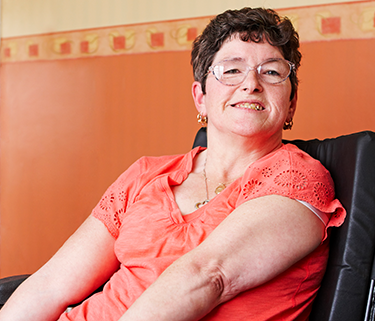
A woman sitting in a black leather chair and smiling. She has short curly brown hair, glasses, a white watch on, and is wearing a short-sleeve coral t-shirt. There is a wall behind her with orange wallpaper on it.

New HUD Rule Weakens Fair Housing Protections for People With Disabilities

WASHINGTON – The U.S. Department of Housing and Urban Development (HUD) is moving forward with a harmful rule that threatens the protections of The Fair Housing Act for millions of people with disabilities. The new Affirmatively Furthering Fair Housing (AFFH) rule, called the “Preserving Community and Neighborhood Choice,” published today, is a big step backward from efforts to fight housing discrimination and segregation in the U.S.

People with disabilities face a profound and longstanding housing crisis, including the lack of safe, affordable, accessible and integrated housing, and significant housing-related discrimination. These circumstances, based in a history of exclusion and segregation, make it difficult for people with disabilities to live and participate in their community, and puts many people with disabilities at risk of unnecessary institutionalization or homelessness.

Under the new rule, HUD has effectively given up on ensuring that housing agencies and communities receiving HUD funding significantly advance fair housing. It means less oversight, weaker to no standards, and lost opportunities to improve housing for people most in need, including people with disabilities. The new rule strips away the prior regulations and assessment tools, which included relevant data, analysis and public input. It replaces them with a toothless self-certification, where “any action” related to promoting fair housing is sufficient. The final rule also eliminated language requiring steps to expand opportunities for people with disabilities to live in “the most integrated setting appropriate.” And it makes these changes based on a process that ignores the comments received on the earlier, proposed version.

“A home, either rented or owned, is the cornerstone of independence. Living as independently as possible and being part of a community are crucial for people with intellectual and developmental disabilities, but HUD’s new rule could result in many people with disabilities continuing to be stuck in or forced into institutional settings, into housing that is substandard or unsafe, or homelessness, instead of a life they choose in the community,” said Peter Berns, CEO, The Arc. “The Arc will advocate to reinstate this critical tool to desegregate communities and continue to fight for fair housing.”


Small orange icons of people arranged to form a map of the United States

The Census Must Go On: The Futures of People With Disabilities and Hard-to-Count Populations Are at Stake

WASHINGTON – The Arc is distressed that the U.S. Census Bureau is cutting short efforts to count all persons living in the country for the 2020 Census. Ending the self-response phase and critical door-knocking efforts of the census one month early on September 30th risks severely undercounting already hard-to-count populations like people with disabilities, immigrants, people of color, those who are low-income or experiencing homelessness, and other communities. An undercount means the loss of important federal funding for programs like Medicaid, food assistance, housing vouchers, education services, and more – across communities in every state.

“The Arc condemns last-minute plans to essentially cut short the 2020 Census, particularly at a time when people with disabilities and other hard-to-count populations are experiencing unprecedented crisis and indefinite hardship. People with intellectual and developmental disabilities are full members of society and we count. The Administration must not limit our chance to participate in our democracy and be counted,” said Peter Berns, CEO, The Arc. “We urgently call on Congress to act immediately to extend the legal deadline for reporting census data so that there is more time to finish the survey and include everyone.”

Data collected in the decennial census is the foundation for the next decade and must be as accurate as possible for allocating federal funding and ensuring that communities are not shortchanged. Furthermore, the Constitution’s enumeration clause of the 14th Amendment makes it clear that dividing representation and seats in the U.S. House of Representatives must be based on a count of all persons living in the U.S. Abandoning the adjusted timeline for the 2020 Census will unfairly skew Congressional representation and redistricting for the next decade.

The pandemic has brought unprecedented challenges to executing the census. In April, the Census Bureau determined that additional time was needed to safely collect data and to protect the health of the public and census workers who will soon be going door to door to households that have not yet responded. The Census Bureau’s new hastily expedited timeline creates confusion, disrupts the planned public education efforts, and makes the job of counting everyone even more difficult.

The Arc also opposed the Administration’s directive issued last month to exclude undocumented immigrants in the 2020 Census count as it applies to Congressional representation.

“This action to rush the census further undermines the ability of the Census Bureau to complete a fair and accurate count. We will continue to push back against attempts to undercut an accurate count and dismiss people with disabilities and other hard-to-count populations. The Arc and our coalition partners have long advocated for the importance of people with disabilities participating in the census and we will not stop here,” said Berns.

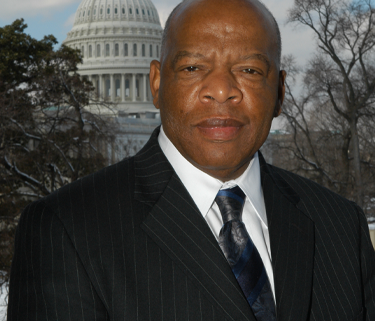
A man wearing a black pinstripe suit jacket, white dress shirt and blue floral silk tie posing. In the background is a photo of trees and the Capitol building.

The Arc Honors the Legacy of Civil Rights Icon Representative John Lewis

The Arc issued the following statement in remembrance of Representative John Lewis (D-GA):

“The Arc mourns the loss of a fearless leader whose lifelong commitment to civil and human rights made a difference in the lives of countless individuals across the country. From his experiences on Bloody Sunday in Selma, Alabama to weathering racist attacks at the lunch counters in Nashville, Tennessee, Representative Lewis’ career as a leader in the civil rights movement and Representative for Georgia’s 5th Congressional District was characterized by his indomitable spirit in the face of adversity and championing the rights of marginalized people and communities.

“As we reflect on the 30th anniversary of the Americans with Disabilities Act, we remember the critical role he played in fighting discrimination and injustice in all its forms. He embraced the rights of people with disabilities in his fight for racial, economic and social justice for all people. He staunchly opposed efforts to repeal the Affordable Care Act – he appreciated the importance of that law in guaranteeing access to health care for people with disabilities. While Representative Lewis will no longer be among us, his passion will live on in the generations of Americans who continue the fight for justice, equity and inclusion today.

“In honor of Rep. Lewis’s legacy, The Arc commits to continue fighting all forms of discrimination based on disability, race, sex, gender identity and expression, sexual orientation, national origin, or any other protected status. And we will continue our work to promote the voting rights of people with intellectual and developmental disabilities, whose participation in our democratic process must be recognized and valued. To quote Rep. Lewis, ‘The vote is precious. It is almost sacred.’,” Peter Berns, CEO, The Arc.

A woman and her brother take a selfie in a car. The woman is smiling and the man has his eyes closed and a neutral expression.

Three Years to the Day Since Senator John McCain’s Thumbs Down: Congress Is Still Forgetting #WeAreEssential

By: Nicole Jorwic, JD, Senior Director of Public Policy

I was up at midnight when the clock turned over to July 28, 2017, my brother Chris’ 28th birthday. My brother has autism and is the person I have on my shoulder, in my heart, and in my head when I advocate every day. I watched Senator McCain come to the Senate floor to give his infamous thumbs down with tears streaming down my face, realizing that it was the end of the fight that the disability community just won.

And now we sit three years later, and that win feels so long ago. We have been waiting two months to see what the Senate will do with the $3 trillion HEROES Act that passed the House on May 15, 2020, a bill that included many priorities for the community.

Individuals with disabilities, their families, the workforce, and allies have been diligently reaching out to their Senators since May. And yesterday when Senate Republicans unveiled their plans, it appears that almost nothing of what the disability community needs is part of the new proposals. In fact, the HEALS Act—introduced the day after the 30th Anniversary of the Americans with Disabilities Act (ADA)—would gut the civil rights protections of the ADA in the face of the pandemic. The HEALS Act is a non-starter, while the HEROES Act that passed the House in May had many proposals that recognize the needs of people with disabilities.

The HEROES Act in the House included the top priorities of the disability community:

  • $13 billion in funding for Medicaid Home and Community Based Services (HCBS). Funds that will help keep people with disabilities out of dangerous congregate settings, support recruitment and retention of the direct support professional (DSP) workforce, and prevent rate cuts for service providers.
  • Access to PPE and supports for the DSP workforce.
  • Stimulus payments without limitations for people with disabilities.
  • Paid leave provisions to support family caregivers who must miss work to support their family members with disabilities.
  • Broad FMAP increased to 14% to stabilize the Medicaid program, one of the only funding sources for Long-Term Services and Supports.

From the summaries, the Senate proposals only ensure that people with disabilities are eligible for stimulus payments. The proposals do nothing to support HCBS, Medicaid, PPE and supports for DSPs, or paid leave for family caregivers. Already five pieces of COVID-19 relief legislation have moved, including three large relief packages, and the needs of the disability community have been overlooked in each. We will not be ignored again. The asks of the disability community around this crisis are simple: recognize that whether it is individuals with disabilities like my brother Chris, family members, or the DSP workforce, #WeAreEssential. On the anniversary of Senator McCain’s bold and brave thumbs down, we must all act and tell the Senate to protect the Medicaid programs that people with disabilities rely on.

Photo of desks in a classroom with dim, moody lighting

Court Rules That Federal Disability Rights Class Action Against Charleston, West Virginia School District Can Proceed

Washington, D.C. – A federal judge has denied Kanawha County Schools’ (KCS) motion to dismiss a civil rights class action lawsuit filed by The Arc of West Virginia on behalf of children with disabilities in the county. The lawsuit alleges that the school district, which educates children in the Charleston, West Virginia area, fails to provide effective behavioral supports to students with disabilities and sends them home instead of educating them in violation of federal law. Plaintiffs The Arc of West Virginia and parents of two students with disabilities are represented by Disability Rights of West Virginia, Mountain State Justice, The Arc of the United States, the Bazelon Center for Mental Health Law, and the global law firm Latham & Watkins LLP.

The amended complaint, filed in April, describes how KCS disciplines students with disabilities for “infractions” as minor as touching another student with a plastic fork or refusing to get off the playground slide at the end of recess.  Children with disabilities are suspended or sent to a separate special education classroom, instead of receiving individualized supports for behavior, required by federal law, that have been shown to help children to succeed in school. Specifically, the complaint alleges that KCS is:

1) violating the Individuals with Disabilities Education Act (IDEA) by failing to provide children with disabilities with the special education they need to receive a “free appropriate public education” in the least restrictive environment; and

2) violating the Americans with Disabilities Act (ADA), Section 504 of the Rehabilitation Act, and the West Virginia Human Rights Act by failing to educate children with disabilities in the most integrated setting appropriate to their needs, and denying them equal educational opportunity.

KCS moved to dismiss the children’s case, arguing, among other things, that the case could not proceed as a class action because the IDEA requires that every individual student file a “due process” complaint with the West Virginia Department of Education before claims alleging systemic problems can be filed in federal court.  Judge Irene Berger of the U.S. District Court for the Southern District of West Virginia disagreed, holding that the students’ allegations were “structural in nature, and the[ir] experiences demonstrate the inadequacy of the relief available through due process complaints. … Requiring hundreds or thousands of impacted putative class members to individually exhaust remedies would serve no purpose.” Judge Berger also noted that “the remedies available [in due process proceedings] would not adequately address the alleged issues, and results would likely be piecemeal and inconsistent. West Virginia has two hearing officers, and the delay inherent in individual exhaustion would render any relief futile for many students.”

“The Arc has long fought for the rights of students with disabilities to receive the supports they need to thrive in their neighborhood schools alongside their peers without disabilities,” said Peter Berns, Chief Executive Officer of The Arc of the United States. “We are pleased that this decision allows West Virginia students with disabilities to continue to pursue this goal and vindicate their rights in court.”

“The Arc of West Virginia is committed to supporting the rights of students with disabilities throughout the state to receive the supports they need to progress academically and socially,” said Liz Ford, Executive Director of The Arc of West Virginia. “Students throughout West Virginia are struggling greatly during this pandemic and it is essential that we continue our advocacy to ensure that they have the behavior supports they need upon returning to school, particularly during this challenging time.”

Data from the West Virginia Department of Education shows that over 1,000 KCS children with disabilities were suspended during the 2018-2019 school year, causing them to fall farther and farther behind academically and socially. This number does not include all of the additional students with disability-related behaviors who were informally sent home from school early and/or told to stay home, without a formal suspension. It also does not include students with disabilities who were expelled from school for their disability-related behavior; those who were separated unnecessarily from mainstream classrooms and moved to segregated classrooms where they receive an inferior education; or those who were placed on “homebound” status where they may receive only a few hours of tutoring each week. The problem is only getting worse: in the 2018-2019 school year, KCS removed nearly 250 more students with disabilities from the classroom than in the prior academic year, despite overall KCS enrollment decreasing during that same period. Read more about the case, which is continuing following last week’s decision, here.

About The Arc

The Arc is the largest national community-based organization advocating for and serving people with intellectual and developmental disabilities (I/DD) and their families. In partnership with its network of more than 600 chapters across the country, including The Arc of West Virginia, The Arc works to promote and protect the rights of people with I/DD to live, work, and learn in the community free from discrimination. To learn more, visit www.thearc.org and www.thearcofwv.org

About Disability Rights of West Virginia

Disability Rights of West Virginia (DRWV) is the federally mandated protection and advocacy system for people with disabilities in West Virginia. DRWV protects and advocates for the human and legal rights of persons with disabilities. To learn more, visit https://www.drofwv.org/.

About Mountain State Justice

Mountain State Justice is a non-profit legal services firm dedicated to redressing entrenched and emerging systemic social, political, and economic imbalances of power for underserved West Virginians, through legal advocacy and community empowerment offered regardless of ability to pay. To learn more, visit https://mountainstatejustice.org/.

About the Bazelon Center for Mental Health Law

The Bazelon Center for Mental Health Law is a national legal advocacy organization protecting and advancing the rights of people with mental disabilities. The Center promotes laws and policies that enable adults and children with mental disabilities to live independently in their own homes, schools, and communities, and to enjoy the same opportunities that everyone else does. To learn more, visit www.bazelon.org.

About Latham & Watkins LLP

Latham & Watkins LLP is global law firm with more than 2,700 lawyers located in Asia, Europe, the Middle East, and the United States. For more information, please visit its website at www.lw.com.

Two women sitting on either side of a man in the front of a conference room. They are all dressed up. There are many rows of people sitting behind them.

Coalition Demands Governor Northam Grant a Full Pardon of Neli Latson, a Young Black Man With Disabilities Subjected to a Decade of Injustice

WASHINGTON – Neli Latson should be a free man. Instead, he’s faced a decade of unjust prosecution and abuse in a criminal justice system where, as a young Black man with disabilities, he’s experienced the disastrous combination of systemic racism and ableism. As the nation faces a critical turning point in the fight against systemic racism and racial injustice — including the compounding injustices facing Black people with disabilities — it is time to #FreeNeli.

In a new letter to Virginia Governor Ralph Northam, a coalition of nearly 50 advocacy groups and legislators led by The Arc of the United States, The Arc of Virginia, the Center for Public Representation, and the Autistic Self Advocacy Network are calling on the Governor to right this wrong by immediately granting Mr. Latson a full pardon, committing to continue funding his disability services in Florida where he and his family now reside, and issue a public apology to Mr. Latson and his family.

In 2010, Mr. Latson was an 18-year-old special education student, sitting outside of a library in Stafford County, Virginia, waiting for it to open. Someone called the police reporting a “suspicious” Black male, possibly with a gun. Mr. Latson had committed no crime and was not armed. The resulting confrontation with a deputy was the beginning of years of horrific abuse in the criminal justice system. The prosecutors refused to consider Mr. Latson’s disabilities and rejected an offer of disability services as an alternative to incarceration. Instead, he was punished in the criminal justice system with long periods of solitary confinement, Taser shocks, and the use of a full-body restraint chair for hours on end for behaviors related to his disabilities.  At one point, Mr. Latson was even locked up in a small jail cell with no sink or toilet for days.

Virginia and national disability advocates urged then-Virginia Governor Terry McAuliffe to grant a pardon to Mr. Latson.  In 2015, Governor McAuliffe granted him a conditional pardon, requiring him to live in a restrictive residential setting and be subjected to on-going supervision by the criminal justice system. The terms of his 2015 conditional pardon mean that he could be sent back to jail at any time, causing Mr. Latson to experience constant anxiety.

“The time for Virginia to rectify its egregious wrongs in the case of Neli Latson is long past due and must happen now. Mr. Latson has suffered his entire adult life and received discriminatory and cruel treatment in the criminal justice system – because of behaviors connected to his disabilities and the color of his skin. Governor Northam, please issue a full pardon immediately,” said Peter Berns, CEO, The Arc.

“Mr. Latson’s life was stolen from him when he was barely an adult.  He must now receive the justice he deserves following a decade of mistreatment, with his young adult life lost to pain and anguish.  A full pardon and continued support services are the only ways to correct the wrong done to him,” said Tonya Milling, Executive Director of The Arc of Virginia.

“Mr. Latson’s case is a tragic example of how disability is too often criminalized, especially for Black people with disabilities,” said Alison Barkoff, Director of Advocacy at the Center for Public Representation.  “Virginia must begin to address the systemic racism and ableism in its criminal justice system.  We call on Governor Northam to take an important first step by granting a full pardon to Mr. Latson.”

“Despite years of advocacy, Neli’s freedom is still unnecessarily curtailed by his placement in a restrictive residential setting and ongoing supervision by the criminal system,” said Samantha Crane, Legal Director of the Autistic Self Advocacy Network. “He lacks the freedom to choose his daily activities, find a job, and pursue relationships on his own terms. It’s time for Virginia to provide Neli the supports he needs to live a more self-directed life integrated into the community where he now lives.”

Advocates have fought tirelessly for justice for Mr. Latson for nearly a decade and will keep fighting until we #FreeNeli.

A woman and her son standing close together. The woman has short brown hair, glasses, and a pink shirt on. The young man has a blue polo shirt and a green hat. They are standing in front of a brick building.

During a Crisis and Beyond, Congress Must Provide Paid Leave to Caregivers of People With Disabilities

By Peter Berns and Debra L. Ness

Before this pandemic, far too many people with disabilities and their families were on shaky financial ground, with little to no savings for a crisis. Workers with disabilities and workers whose families include people with disabilities were fearful of the consequences to their job if they faced a significant illness. Let’s be honest – before COVID-19 became a constant in our lives, disability equaled inequity in many aspects of American life.

And here we are, several months into a worldwide pandemic, yet Congress has failed to address the critical needs of people with disabilities and their families, especially when it comes to access to paid leave.

Access to paid sick days and paid leave are key to our country’s health and well-being, especially during this time of crisis. The coronavirus relief packages that have been signed into law fail to provide paid leave for millions of family caregivers of people with disabilities. Many employers, if they provide time off, will not be eligible for the tax credits to cover the costs of paid sick days and expansions to the Family and Medical Leave Act. As disability service providers have been ordered by government agencies to stop some services, families are scrambling to provide care to their family members with disabilities, often at the expense of their job.

Brandi and Caiden

Take Brandi Wetherald. Brandi’s 18-year-old son, Caiden, has disabilities – including autism and a chromosomal disorder. Brandi, a single mother, has always struggled to be there for Caiden without paid leave and has lost jobs because she has taken time off to be a caregiver and fight for her son.

“I was looking for better. I was looking for more understanding. I was looking for what would serve him best and people just weren’t getting it,” Brandi said.

In her early 40s, she had to drop out of college to make sure that Caiden was getting the support he needed, putting off her goal of furthering her education and opportunities. But in August 2019, she started taking classes again, and she and Caiden are hoping to graduate together next year.

Those plans feel like they’re slipping away. Caiden has lost almost all of the services he usually receives in school due to the disruption caused by this pandemic. The isolation and loss of routine is affecting Caiden’s mental health and Brandi is trying to keep both of them on track to graduate. But Brandi’s remaining paid sick time is in the negative. She had the flu last year and Caiden was hospitalized. And now she’s running out of vacation days. So while Brandi can work from home, she doesn’t have the time she needs to provide the supports that Caiden was getting in school to reach his goals and to be present for him.

“It is overwhelming,” said Brandi, adding that Caiden needs her now more than ever. “When you talk about kids who are isolated already and don’t have a large network of friends, they are even more isolated during this pandemic.” Brandi fears what’s next because she is unable to invest enough time in Caiden or her job. “It has been terrible because there have just been some days where I haven’t been able to get my work done and I worry about that,” she said.

This reality is all-too-familiar for people with disabilities and their families, who experience every day the hardship that can result from a lack of paid leave for caregivers. The fact is 1 in 4 adults in the United States lives with a disability. And more than 65 million people in the United States are providing care for family members who are ill, aged or living with a disability – including parents, grandparents, siblings and others.

Almost all caregivers for people with disabilities have had to go into work late, leave early, or take time off during the day to support their family members. Many have been forced to take a leave of absence, retire early, or give up work entirely to provide care. This is because only 19 percent of all workers have access to paid family leave through an employer. This imposes a huge economic burden on families: it’s estimated that workers lose $22.5 billion in wages annually when they have to take leave without pay to care for a family member, income they cannot afford to lose. And we can expect this to get worse as additional supports families rely on, such as day programs, daycare centers, and school services, face closures due to outbreaks.

The struggles of families like Brandi and Caiden were the focus of two hearings in the U.S. House of Representatives on paid family and medical leave earlier this year. And Congress did pass limited provisions in March, providing some caregivers with 10 days of emergency paid sick time and an additional 10 weeks of paid family leave.

But they didn’t go far enough. Congress didn’t cover millions of workers like Brandi. The new emergency law left out workers for employers with more than 500 employees and limits access to paid family leave to only parents whose child’s school or child care is closed. This emergency paid leave needs to be expanded to cover all family caregivers and their reasons for leave. And then we have to go further – we need to ensure that family caregivers are protected by a permanent, comprehensive, inclusive, national paid family and medical leave program that would support all of our families, including families with members with disabilities. It would guarantee that workers are not just entitled to time, but that they have the income and job security needed to take that time. So that Brandi can work and be there to support Caiden when he needs her. “I owe it to him. He’s my purpose,” said Brandi.

By helping caregivers stay in the workforce and improve financial stability, paid leave helps businesses reduce the high costs of turnover and supports the economy in our local communities. The evidence is overwhelming that paid leave is not just good for families, it also benefits businesses and our economy.  

It’s past time for Congress to prioritize the needs of the people with disabilities and their families—both in emergency legislation in response to the pandemic and in a permanent, national solution. Brandi, Caiden, and millions of other Americans need the stability and security of a system set up to ensure that all families and caregivers have the ability to care for themselves and loved ones without risking their job, their health, or their family’s security.

Peter Berns is the Chief Executive Officer of The Arc, the world’s largest community-based organization of and for people with intellectual and developmental disabilities (I/DD), with 600 state and local chapters across the country.

Debra L. Ness is president of the National Partnership for Women & Families, a nonprofit, nonpartisan organization that works to achieve equality for all women.