The Arc logo

Part One: For Jud, Chris, and Millions of People With Disabilities – a Bill 70 Years in the Making Has Arrived

By: Marty Ford, Senior Advisor, The Arc

The Arc of the United States was founded over 70 years ago by families like mine who wanted their family members with intellectual and developmental disabilities included in every aspect of life in their homes and communities. Congress has finally proposed a bill, the Home and Community-Based Services Access Act (HAA), that would provide the resources to turn this foundational goal into a reality and ensure that home and community-based services (HCBS) are there to help ALL people with disabilities live their lives in their communities, with their friends and family.

The fuel for change is always the personal experience. In the first of a two-part blog series, Marty Ford, Senior Advisor at The Arc, shares her perspective about the journey to this moment.

Marty: For me, making community life a reality has been a life-long goal. I was three years old in 1956 when my brother Jud was born with profound IDD, including autism, into a large family. Little was known at the time about how to serve someone with his level of service needs. Even though my mother was a practicing pediatrician, my parents, as well as others at the time, were learning through personal experience and they were determined that Jud would be part of our family and community life.

There were no supports available outside of the public schools and the schools were not prepared to serve children with high levels of need. When my brother was kicked out of school at a very young age (before the federal law ensuring a right to education) for his disability-related behaviors, he had nowhere to go except home all day with a very loving caregiver. He missed the routines and rhythms of school and had a hard time staying home while everyone else went to work or school daily. He waited all day for the staggered returns of kids and parents, dinner, and then his beloved ride to the drugstore for a Coke and a long drive listening to rock and roll and beach music on the radio. Jud also had daily trips to the Post Office with our Dad to pick up the mail for his business, trips to the barbershop, church on Sundays, other local gathering places, and a house full of our friends and exchange students who lived with us at various times. He loved all the interaction and was known all over town.

Sadly, as each of his older siblings began to leave home for college, military service, or otherwise, Jud’s physical size and his inability to control his frustrations and emotions became dangerous for our aging parents. After much searching and trying many approaches, the only available service for someone with his needs was the state institutional system. This was devastating for Jud, for our whole family, and for the many friends who had known him over the years. Jud suffered greatly from the travel distance from his family (even though we visited regularly), home and hometown, friends, and routines. And while there were some wonderful staff who supported him in his new location, we were horrified to learn that he also suffered some terrible abuses– the kinds of things that can be hidden when people who are unable to communicate or be understood cannot tell others what is happening to them. My father found that Jud had been burned with cigarettes and that other men in his unit had been more extensively burned. In other incidents, men in his unit died after being subjected to dangerous restraint methods. He also suffered from toxic environmental conditions, including asbestos and sewage leakage. As a family, we were determined to end these abuses.

Jud’s experiences fueled my passion to change the system. I worked in Washington to pass federal legislation to move the Medicaid funding bias away from institutions and to build the community service system, making the community the preferred service setting. My advocacy led me to a career in The Arc’s national public policy office, which I joined in 1984. While our systems have evolved since the 70s through the late 80s when my brother was experiencing so much pain, we still have a long way to go. I am happy to report that Jud was eventually able to leave the state institution and live in a group home about 7 minutes from our widowed mother in his beloved hometown for the last 20+ years of his life. Jud also experienced some serious problems in his group home, but those were able to be discovered and remedied because family were nearby and able to observe how he was doing. For those who understood him, Jud continued his mantra: “Stay at the new house; not gonna keep saying it” throughout those years, lest anyone think he would ever want to go back to the institution.


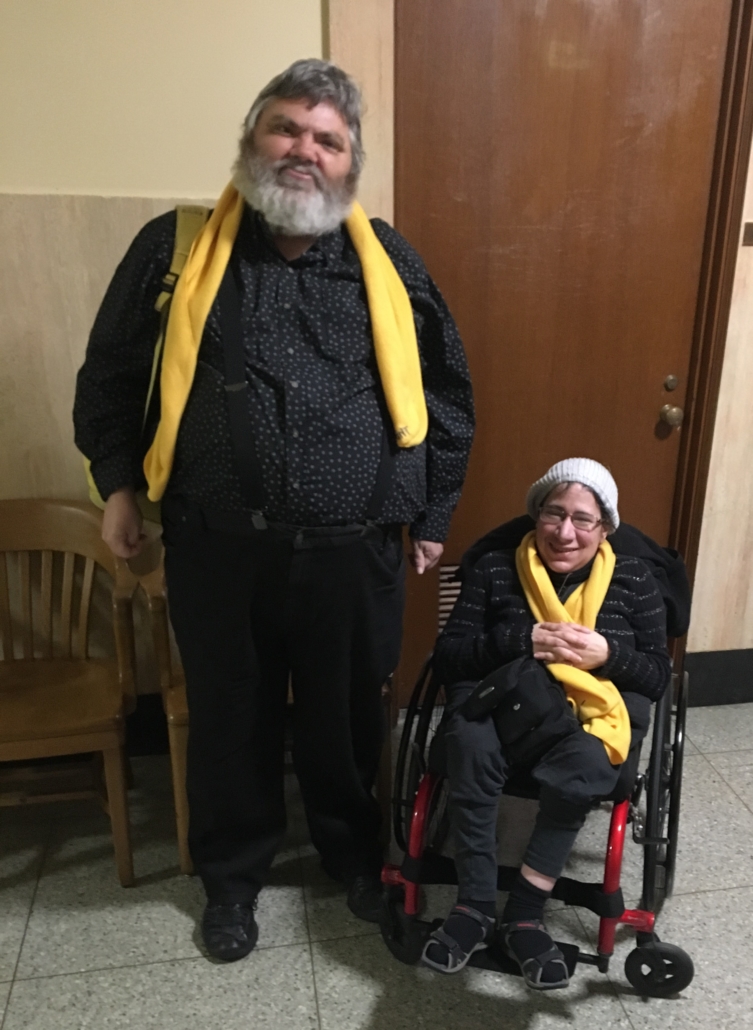
One of the things I’m most proud of during my nearly 40-year career in disability rights is my work on what was known as the Chafee bill, after Senator John Chafee (R-RI) who was the lead Senate sponsor. In 1983, he proposed sweeping changes to the service system, the kind of shift that families like mine were fighting for across the country. As is typical in major change legislation, the Chafee bill did not pass as originally written, but the bill’s groundswell of grassroots demands for progress, and the resulting recognition at the state level that change was coming, began the hard work in the states for the evolution toward better provision of services. There were so many heroes in this effort: state directors of DD services who pushed their governors and legislatures, parents and families who rallied in support, self-advocates who began to speak on behalf of their fellow friends in institutions, chapters of The Arc and other plaintiffs who took states to court, chapters of The Arc which forced state changes, Members of Congress of both parties in both the House and Senate who supported real reform for the sake of the people affected, and many more.

In the end of the Chafee bill efforts, the Community Supported Living Amendments (CSLA) option was enacted to provide funds to 8 states over 5 years to create new Medicaid community services – 36 states applied for the funds, indicating the pent-up desire at the state level for new approaches. These were new funds available in addition to the Home and Community-Based Waiver program. The CSLA option helped to alter the way the HCBS waiver and long term supports and services for people with IDD were later implemented. There have been many bills which have passed over the years, refining and improving what is available. It was the Chafee bill that laid the groundwork, and thinking back to this bipartisan effort gives me hope that this country can do great things when we work together to improve lives.

The work must continue and advocates should not be discouraged by set-backs. We are much farther ahead than we were when my brother Jud arrived on the scene in 1956, but we still have work to do to make our communities welcoming and ready for each person, regardless of need.

You can make a difference. Tell your members of Congress why this bill is so critical to your or your family member’s future.


The Arc logo

The Arc Condemns Racism and Escalating Violence Against Asian Americans and Asians Around the World

The Arc is grieving the immeasurable loss of life and condemning the racially motivated killings at three spas in the Atlanta, Georgia area. A white gunman shot and killed six Asian women and two other people during the rampage. The Arc condemns these killings and continues to condemn all actions motivated by racism and hate.

“Sadly, we have been witnessing an escalation of racism, violence, and harassment against Asian Americans and Asian people around the world since the start of the COVID-19 pandemic. We must recognize these incidents as racially motivated, and we call on our nation’s leaders to support the Asian-American community and take action to ensure that those responsible for the brutal attacks in Georgia and elsewhere are held accountable.

“The Arc is unified in solidarity with Asian and Asian-American communities. It is not enough to simply reject racism. We must be anti-racist to truly address the hateful attacks on these communities and all communities of color.

“At The Arc, we advocate for human and civil rights, and as an organization, we continue our efforts to better understand and address the persistence of racism, white supremacy, and the impact on those who live at the intersection of multiply marginalized identities. We commit to continuing our own equity journey as an organization and pledge to lift the voices of those who are directly impacted by racism, ableism, sexism, and all other forms of oppression.

“There is no time or place for such hate,” said Peter Berns, Chief Executive Officer of The Arc.

A photo of a woman holding a spoon close to her mouth and laughing

Independence Can’t Wait: New Bill in Congress Championed by The Arc Will Make Home and Community-Based Services Available to All

Washington, D.C. – As the nation continues to face a pandemic that has put a glaring spotlight on the health dangers facing people living in nursing homes and institutions, today Members of Congress unveiled a critical bill developed with The Arc and other disability and aging advocates, that will fundamentally change how people with intellectual and developmental disabilities (IDD) and older adults live their lives.

The Home and Community-Based Services Access Act (HAA) is a discussion draft bill that would eventually end waiting lists to receive disability services everywhere and help people with disabilities and older adults access the Medicaid home and community-based services (HCBS) they need in order to live at home in their communities with their friends and family, instead of institutions and nursing homes. Today, there are nearly 850,000 people on waiting lists across the country. People with disabilities and their families often wait years—sometimes decades—to access these services.

“For over 70 years, The Arc has been fighting for people with disabilities to live independently with the right supports. We believe that everyone benefits when people with disabilities are a part of the fabric of their communities, not locked away in the institutions that to this day, exist in 36 states. Yet this country has treated access to the services that help people with disabilities gain independence as an option, not a right. As we have seen in the COVID-19 pandemic, this puts people in grave danger. The Arc is leading the charge to change this reality,” said Peter Berns, CEO, The Arc.

People with disabilities and older adults often need help with things like working at a job in the community, making food and eating, managing money and medications, and bathing and dressing. These services are only available through a part of Medicaid called home and community-based services, or HCBS.

Many state Medicaid programs have long waiting lists for HCBS. And these lists don’t capture those who may not know there is a list to be on, or what services are available. Why the wait? Medicaid is required to cover health care services, provided by doctors and hospitals, as well as many institutional services, such as nursing homes and long-term care facilities for people with disabilities without any waiting lists. But states are allowed to treat HCBS as optional – even though they are anything but to people with intellectual and developmental disabilities and their families. This is the “institutional bias” in Medicaid – and The Arc has been advocating to change this for decades.

The bill tackles another decades-long problem – low pay for direct support professionals, or DSPs – the people who provide the services to people with IDD and older adults. DSPs are disproportionately women of color, doing critical tasks that support people with disabilities with taking medications, bathing, eating, getting out into the community, and more.  Due to low wages, there is more than 50% turnover annually, and the average wage is less than $11/ hour, making it difficult to provide continuity in services, provide a family sustaining wage, and threatening the quality of care.  The bill will require states to ensure that the direct care workforce is paid a family sustaining wage.

And finally, this legislation addresses an issue people with disabilities and their families face once they are getting services. Often, they end up stuck in one place, tied to Medicaid-funded services in one state that can’t be transferred over state lines. This lack of portability stops adults with disabilities from moving to be closer to their siblings or other family members, when their parents with whom they live can no longer support them or pass away. It leaves parents and siblings of people with disabilities desperate due to the lack of availability of services and long waiting lists, to get what their loved one need in another state.  The problem is particularly hard for military families that move frequently.

The HAA solves these problems by increasing Medicaid funding to states for HCBS, establishing a basic set of services that all states must provide, and providing other tools to help states build the capacity that they need to serve all people who need HCBS.

“Our goal is for people with intellectual and developmental disabilities to have timely access to the quality supports and services they need and want to achieve a life of personal significance. This legislation provides real solutions to problems that have persisted for decades, and people with disabilities, their families, and the staff that support their lives can’t wait any longer. We thank the bill’s lead sponsors – Senators Hassan, Brown and Casey, and Representative Dingell, for their commitment and persistence in solving these problems that inhibit the lives of millions of people with disabilities and their family members,” said Berns.

For more information on HCBS and resources, visit thearc.org/medicaidcantwait.

The Arc advocates for and serves people wit­­h intellectual and developmental disabilities (IDD), including Down syndrome, autism, Fetal Alcohol Spectrum Disorders, cerebral palsy and other diagnoses. The Arc has a network of over 600 chapters across the country promoting and protecting the human rights of people with IDD and actively supporting their full inclusion and participation in the community throughout their lifetimes and without regard to diagnosis.

Editor’s Note: The Arc is not an acronym; always refer to us as The Arc, not The ARC and never ARC. The Arc should be considered as a title or a phrase.

A gloved hand holding a vaccine vial, with the words COVID-19 in black on a board behind it.

New COVID-19 Response Legislation Finally Recognizes Urgent Needs of People With Disabilities

The Arc is relieved that Congress has finally taken action to tackle the dire challenges people with disabilities face as the COVID-19 pandemic continues into a second year. The Arc and our advocates have fought every day since the start of this crisis to ensure that the needs of people with intellectual and developmental disabilities (IDD) are included in relief legislation to address the disproportionate impact of the pandemic on them, their families, and the direct support workforce.

The COVID-19 Emergency Relief legislation, passed by Congress on Tuesday, includes vital dedicated funding to strengthen and expand access to Medicaid home and community-based services (HCBS), which help people with disabilities live as independently as possible in their community and out of the danger of institutions and nursing homes.

“After almost a full year of leaving the most urgent needs of people with intellectual and developmental disabilities out of relief legislation, Members of Congress are finally providing the resources necessary for people with disabilities to live safely, in the community, with the support they need,” said Peter Berns, Chief Executive Officer of The Arc. “This funding is desperately needed by the systems, providers and workforce that support people with disabilities.”

Many people with disabilities rely on HCBS to live at home in their own communities with family or roommates with support. They often need help with things like working at a job in the community, making food and eating, managing money and medications, and bathing and dressing. These services are almost solely available through Medicaid HCBS funding. For over 70 years, The Arc has been fighting for people with disabilities to live independently with the right supports and lead the same kind of life as everyone else – Medicaid HCBS makes this possible.

Over the last year, while the COVID-19 pandemic has raged across the country, the system that provides HCBS has buckled under the pressure without a single dedicated dollar in federal aid to address the crisis. Meanwhile, the health and wellbeing of people with disabilities has been at grave risk, with too many people stuck in the very places that have proven to be the most dangerous during the pandemic – large, congregate settings like the institutions that exist in 36 states, and nursing homes. Families have been left to scramble and scrape together supports for their loved ones to keep them out of harm’s way, and direct support professionals have been skipped over and over again in priority for personal protective equipment and supports as the essential workforce that they are. This bill provides a significant, yearlong 10% increase in the federal match for the Medicaid program, a state and federal partnership, which will invest billions of federal dollars into this strapped system.

“This significant boost for home and community-based services will make an immediate impact for people with disabilities across the country. Robust HCBS funding is critical to keeping people with disabilities healthy, safe, and out of nursing homes and other institutional settings where the virus runs rampant. We have more work to do because the reality is, the system needed reform and investment before COVID-19 arrived on our doorstep. The new relief legislation reassures us that our work with and for people with IDD matters, and we will carry that energy forward in our ongoing advocacy,” said Berns.

Congress also authorized another round of stimulus payments, this time including all people with disabilities, even those who are defined by the IRS to be “adult dependents.” The Arc led efforts earlier in the pandemic to ensure that people with disabilities on Social Security and Supplemental Security Income benefits received their stimulus payments automatically.

In addition, we are pleased to see the following provisions in the legislation:

  • Extension of Supplemental Nutrition Assistance Program (SNAP) benefit increase through September to help people access food;
  • Temporary increase in premium tax credits under the Affordable Care Act to make it easier to have health insurance in this public health crisis;
  • Extension and expansion of tax credits to cover COVID leave, so that families can support loved ones while care is interrupted;
  • Expansion of Earned Income Tax Credit for childless adults to help family finances; and
  • Expansion of and refundability for the Child Tax Credit to help low-income families.
A gloved hand holding a vaccine vial, with the words COVID-19 in black on a board behind it.

Vaccine Discrimination: Disability Advocacy Groups File Federal Lawsuit Alleging 6 Maryland Jurisdictions Discriminate in Vaccine Process

Today, The Arc Maryland, represented by Disability Rights Maryland, The Arc of the United States, and Brown & Barron, LLC filed a federal lawsuit alleging that six jurisdictions in Maryland, including Baltimore City, discriminate against people with intellectual and developmental disabilities (IDD) by denying them opportunities to access COVID-19 vaccinations inconsistent with the State’s Executive order and Vaccination Plan. This discrimination puts lives at stake and violates the Americans with Disabilities Act and Section 504 of the Rehabilitation Act.

Five counties and Baltimore City are identified in the lawsuit as excluding individuals with IDD in their list of who is eligible, preventing those with IDD from accessing vaccinations. The counties include, Queen Anne’s County, Carroll County, Garrett County, Somerset County, and Talbot County.

Ivis Burris has muscular dystrophy and requires support staff to come to her apartment to assist her with nursing needs. She lives in Baltimore City with her adult son who has Down syndrome. Under the state Vaccination Plan, they are both eligible for the vaccine under Phase 1B as individuals with IDD. But when Ms. Burris went to the Baltimore City COVID-19 website, she thought she wasn’t eligible to request the vaccine for herself and her son because the City excludes people with IDD from its list of those eligible for Phase 1B. Ms. Burris explains, “I want a fair chance like everybody else to live. My son deserves a fair chance to live. Considering our situation – I need a ventilator to breathe and my son is at higher risk because of his Down syndrome – it is really critical that we get the vaccine. Our disabilities put us at higher risk.”

“It is frustrating to have our state recognize people with IDD to be the 1B priority group for the vaccine, only for people with IDD to be denied equitable access to the vaccine from the counties in which they live. We hope this action will result in immediate change for the benefit of all,” said Ray Marshall, board president of The Arc Maryland.

It is well established that COVID-19-related fatality rates among people with IDD who test positive for COVID-19 are nearly three times greater than the mortality rates among the general population who are positive for the virus. People with IDD also face heightened risk because many rely on caregivers or direct support professionals who provide assistance with activities of daily living, for which social distancing is often not possible. Frequently, such caregivers serve multiple people raising risks of transmission. Despite advocacy from The Arc Maryland, people with IDD are not getting equal access to vaccines, compelling the need for the lawsuit.

“We need these localities to take immediate corrective action to fix their information; to fix forms that exclude individuals with disabilities from claiming eligibility and seeking vaccine appointments; to tell health department staff and others that people with disabilities are eligible and to assist them with obtaining the vaccine. The Americans with Disabilities Act was passed over thirty years ago with a purpose of ending historic inequities in health care. We need immediate action to protect lives,” said Lauren Young, Litigation Director for Disability Rights Maryland.

“Throughout this pandemic, The Arc has fought to ensure that people with disabilities nationwide have equal access to treatment and are not subject to medical discrimination,” said Peter Berns, CEO for The Arc of the United States. “As vaccines are distributed around the country, we will remain vigilant to ensure people with IDD are not discriminated against in this process.”

“Ensuring that vulnerable populations have access to life-saving vaccines, and that the State’s distribution plan prioritizing these populations is followed, is in accordance with Brown & Barron’s core principles and values of promoting access to quality healthcare for all. We are proud to stand behind The Arc in supporting these individuals and communities at this crucial time,” said Brian Brown, managing member of Brown & Barron, LLC.”

The Arc of the United States is the largest grassroots organization dedicated to advancing the civil rights of people with intellectual and developmental disabilities. The Arc Maryland is an affiliate of The Arc of the United States. There are 11 chapters of The Arc throughout the state, including The Arc Maryland.

Disability Rights Maryland (DRM), a non-profit 501(c)(3) organization, is Maryland’s designated Protection & Advocacy agency. DRM advocates to advance the civil rights of people with disabilities throughout Maryland. 

Brown & Barron, LLC is a civil justice law firm in Baltimore, Maryland.

The Arc logo

The Arc Partners With Comcast NBCUniversal to Increase Access to Special Education Services for Students of Color With Disabilities

Washington, D.C. – During this time of unprecedented challenges for special education students, The Arc is pleased to announce that we have been awarded a $200,000 grant from Comcast NBCUniversal focused on helping more students of color access greater resources to help them thrive.

The funding will allow The Arc@School to expand support of students with intellectual and developmental disabilities (IDD) through advocacy resources. These resources are meant to serve those who might not otherwise be reached during this critical time and to ensure that students receive the benefits of public education in the least restrictive setting possible, as mandated by federal and state law.

The Arc@School supports students with IDD (and other disabilities) and their families to successfully navigate the special education system and get the supports and services they need to thrive in school. The program also supports educators to better understand and fulfill their responsibilities toward students and families in the special education system.

“The Arc is committed to equal access to education for all students with intellectual and developmental disabilities to increase opportunity throughout their lifetimes. We are grateful for Comcast NBCUniversal’s support of our education advocacy, particularly as the pandemic has created so much upheaval in education. Now more than ever, families need help to understand their rights in the classroom – whether that classroom is in person or virtual. We could not do it without this generous support,” said Peter Berns, Chief Executive Officer of The Arc.

“Students of color with disabilities are traditionally overlooked when seeking the right special education for themselves, and we are working closely with The Arc to provide families with much-needed access,” said Dalila Wilson-Scott, Executive Vice President and Chief Diversity Officer of Comcast Corporation. “We believe creating tools for families to advocate for special education services is such an important step toward a more equitable future.”

The grant gives The Arc@School resources to:

  • Recruit 250 families nationwide to receive scholarships to access The Arc@School’s special education advocacy curriculum at no cost this year. We will award scholarships to families of color and low-income families.
  • Create special education “Know Your Rights” resources in Spanish, available on a new Spanish section of The Arc@School’s website.
  • Develop a facilitation guide that chapters of The Arc and other parent training organizations can use with The Arc@School’s Advocacy Curriculum. The guide will support working groups and study groups for students, families, and professionals.

About Comcast Corporation

Comcast Corporation (Nasdaq: CMCSA) is a global media and technology company with three primary businesses:  Comcast Cable, NBCUniversal, and Sky.  Comcast Cable is one of the United States’ largest video, high-speed internet, and phone providers to residential customers under the Xfinity brand, and also provides these services to businesses.  It also provides wireless and security and automation services to residential customers under the Xfinity brand.  NBCUniversal is global and operates news, entertainment and sports cable networks, the NBC and Telemundo broadcast networks, television production operations, television station groups, Universal Pictures, and Universal Parks and Resorts.  Sky is one of Europe’s leading media and entertainment companies, connecting customers to a broad range of video content through its pay television services.  It also provides communications services, including residential high-speed internet, phone, and wireless services.  Sky operates the Sky News broadcast network and sports and entertainment networks, produces original content, and has exclusive content rights.  Visit www.comcastcorporation.com for more information.


The Arc logo

When People With Disabilities Are Forced to Choose Between Love and Needed Benefits: Marriage Penalties

This Valentine’s Day, as many as 6 million couples will choose to celebrate their love by becoming engaged. But for many people with IDD, this dream of marriage forces them to choose between love and necessary supports to live independently.

When Jen Met Eddie…

Jen and Eddie at an advocacy event.

Eddie and Jen first met while planning an Oregon self-advocacy event in 2006. They both noticed each other across a table and shared with friends that they thought the other was cute. Eventually, Eddie and Jen started getting lunch together and going out – and decided to become girlfriend and boyfriend.

At lunch one day, Eddie popped the question for the first time to Jen. She asked him to come to Christmas with her and ask for her parents’ permission. At Christmas, Eddie popped the question again. “I got on one knee and asked her hand in marriage. It was quite nice.”

Both Eddie and Jen are long-time professional self-advocates and knew of the Social Security and Supplemental Security Income (SSI) marriage penalties. The marriage penalties are punitive rules that cut benefits and limit savings for married couples who rely on critical Social Security SSI benefits.

While they wanted to get married, Eddie and Jen were terrified of what getting married would mean for their lives.

Jen, who has a spinal condition that requires 24-hour medical assistance, explains, “I would lose my Medicaid and have to pay out of pocket for medical needs, and I don’t earn enough to pay out-of-pocket for medications or other medical equipment.”

Eddie, who lives in an adult foster home, adds, “It would impact me significantly if I lost my benefits. I would have no money to live on…. I would have no place to live, [as the rental costs in my county are very high].”

In the end, Jen and Eddie decided not to pursue a legal marriage—and this has meant giving up dreams, big and small.

Both Eddie and Jen wanted to foster a child and become parents, and they believed that they would be great parents to a little boy or girl. However, without a legal marriage, this dream seemed far away. Now in their late 40s, they are not sure if it could ever happen.

And, while Eddie and Jen are committed to each other, not having a legal marriage means not having the legal backing to make medical decisions for each other if needed. According to Jen, “we’d like to [be able to] make medical decisions for our partner.” But, without the legal standing, Eddie and Jen may not be able to do this.

For the past several years, Eddie and Jen have been advocating to remove this unjust rule that no couple should have to deal with.

 “It’s an unfair [rule] that has been around forever. We should be able to [get married and not worry about our benefits], just like everyone else. People don’t understand that people with disabilities are just like everyone else. We pay taxes, we work, [and] we contribute to society.”

Jen and Eddie’s story is one of many. Married people with disabilities often experience penalties that force the couple to give up necessary benefits to marry. This may mean taking a pay cut, working less, or having to quit a job altogether.

No one should have to decide between being legally married and getting the support they need to live in the community.

The Arc logo

In Final Days of Trump Administration and in Middle of Pandemic, Federal Officials Approve Cuts to Medicaid in Tennessee

Washington, D.C. – As the Trump Administration wraps up its tenure, officials at the Centers for Medicare and Medicaid Services (CMS) finalized an agreement with the state of Tennessee that will cut funding for the Medicaid program in that state, known as TennCare.

“This decision will harm people with disabilities, low-income families, and older adults in Tennessee, and sets a dangerous precedent across the country.

“It will cut federal money coming in, and fundamentally change the Medicaid program and Federal funding guarantee to the detriment of people with intellectual and developmental disabilities. There will be less federal oversight and accountability for beneficiary protections, and its implementation will have devastating consequences on access to prescription drugs. And to take this action while a dangerous pandemic rages across the country – stretching our health care system, impacting state resources, and harming the economy – is simply unconscionable.

“We are very skeptical about the state’s claim that some of the savings in this restructuring scheme might be used to eliminate the waiting list for services for people with intellectual and developmental disabilities. Right now in Tennessee, there are already challenges with providers because the low reimbursement rates for many services make it difficult to hire and retain qualified workers. Elimination of the waiting list is only relevant if people are getting what they need, when they need it, and cutting funding won’t help. The concept that less money will lead to more innovation and more people getting services is a fallacy.

“The incoming Administration must address the inequities that this block grant will create and ensure that this harmful policy is not replicated in other states.. People with disabilities should not have to endure these cuts now in this public health crisis, or in the future,” said Peter Berns, CEO, The Arc.

The Arc advocates for and serves people wit­­h intellectual and developmental disabilities (IDD), including Down syndrome, autism, Fetal Alcohol Spectrum Disorders, cerebral palsy and other diagnoses. The Arc has a network of over 600 chapters across the country promoting and protecting the human rights of people with IDD and actively supporting their full inclusion and participation in the community throughout their lifetimes and without regard to diagnosis.

Editor’s Note: The Arc is not an acronym; always refer to us as The Arc, not The ARC and never ARC. The Arc should be considered as a title or a phrase.

A woman in a motorized chair plays with a small dog on a grassy field in front of a community of houses

Important Step for Community Living for People With Disabilities: Congress Makes Overdue Investment in Money Follows the Person Program

Last night, Congress passed three years of funding for the Money Follows the Person program. This program provides federal dollars to move people with disabilities out of large congregate settings like institutions and nursing homes, and back into their homes and communities. This is an important step in our decades-long fight to bring people with intellectual and developmental disabilities (IDD) out of institutions to live meaningful, independent lives in the community. 

This news comes after eight short-term reauthorizations, one as short as 7 days, that almost made the program collapse because states couldn’t count on the federal funds and were shutting down their programs, despite the desperate need for the funding due to the pandemic. The last round of funding for the effective program was set to expire on December 20, so it’s future was uncertain in the waning days of the Congressional session. (Citation: Tesla Aktie Dividende)

“Without this investment, more people would continue to be stuck in institutions and nursing homes – and the COVID-19 pandemic has shown how dangerous these settings can be. An enormous barrier for people with disabilities is access to the supports and services necessary to make a life in the community, so Congress did the right thing by investing in this program. It’s a victory, but one harder to celebrate given the fact that once again, Congress absolutely failed to address the dire needs of people with disabilities, their families, and service providers in their latest COVID-19 relief deal,” said Peter Berns, CEO, The Arc.

The Money Follows the Person (MFP) program provides states with 100% federal Medicaid funding for one year to transition people out of institutions and nursing homes, and back to their communities. MFP has moved more than 105,000 seniors and individuals with disabilities out of these institutions, and has helped 44 states improve access to home and community-based services (HCBS). Medicaid requires states to provide care in nursing homes, but HCBS is optional. The MFP program is then critical because it incentivizes investment in HCBS by providing federal funding for transitional services for individuals who wish to leave a nursing home or other institution.

The MFP program supports people to move back home by providing necessary community-based supports like staff to support individuals in their homes, home modifications, and HCBS. The program is also cost-saving for states – longitudinal studies of the program show  20% savings per beneficiary per month for state Medicaid programs and most importantly, better quality of life outcomes for people receiving services in the community instead of institutional care.

“This program will make it possible for more people with disabilities to change their lives, on their own terms. We’ve got a lot of work to do in the new year to continue to help people with disabilities to live in safer settings with the right services for each individual, and the necessary resources for the dedicated staff supporting them. Families are struggling too, and The Arc will continue to lead this fight for equality and justice during and after this public health crisis,” said Berns.

close up of medical form with stethoscope

The Affordable Care Act: What’s at Risk?

The Affordable Care Act (ACA) made significant progress in expanding access to health care for individuals with intellectual and/or developmental disabilities (IDD). Access to consistent and reliable healthcare is critical for individuals with IDD, and the ACA created much-needed reforms to health insurance, addressed systemic discrimination, and expanded coverage. Yet it will all be at risk on November 10 when the U.S. Supreme Court hears a case seeking to overturn the law. Leading up to the ACA’s day in court, here is a primer on what the ACA does for people with IDD, and what’s at stake if the law goes away.

The ACA:

  • Helps people get health insurance
  • Requires that plans can’t exclude you or charge you more based on preexisting conditions
  • Bans benefits caps (annual and lifetime caps)
  • Requires all plans to cover “essential benefits”
  • Provides financial assistance for low-income people to access healthcare 

Loss of Health Coverage: Without the ACA, millions of adults and children may lose their health coverage, or it may become unaffordable. Millions of families may be left with limited and expensive options, with inadequate coverage. 

Pre-existing Conditions: We are concerned about the possible loss of protections for people with pre-existing medical conditions, including people with IDD. Millions of Americans have “pre-existing” medical conditions that could disqualify them from buying a health insurance policy if the ACA is dismantled. A “pre-existing condition” is any health problem a person has before new health coverage starts. It includes a broad range of common conditions such as diabetes, high blood pressure, cancer, or seizure disorders, including all types of disabilities. 

Without the protections of the ACA, any “pre-existing condition” could mean a person or family buying insurance would pay much more for a policy, if they could get one at all. Before the ACA, an insurer could outright deny people coverage for a specific pre-existing condition, charge them more, cancel a policy after the fact for utilizing needed health care, or deny health insurance coverage overall. Without the ACA, employers could drop coverage for any or all of the conditions they are now required to cover. The Trump Administration publicly committed to “protecting individuals with pre-existing conditions” but there are no specifics on how this would be accomplished.  

COVID Connection: Some of the millions of Americans infected by COVID-19 will have long-term health conditions that are “pre-existing conditions.” This new reality could make it challenging to find health insurance.  And millions of Americans are now also without jobs and without employer-provided health insurance, so the need for affordable care is even greater.

Lifetime and Annual Limits: Before the ACA, lifetime and annual caps were permitted. Even with insurance, this meant enormous out-of-pocket costs or losing your insurance if medical bills cost more than the capped amount. Individuals and families face going without needed treatment or bankruptcy when the caps are exceeded.

Essential Benefits: Before the ACA’s passage, many plans did not cover important services, like maternity care or mental health treatment. The ACA requires all plans to cover 10 “essential health benefits,” including rehabilitative and habilitative services and devices that are vital to people with IDD.

Preventive Care: If we lose the ACA, we also lose preventive care with no out-of-pocket cost. This means adults and children would no longer be able to access important services including immunizations, preventive screenings, well baby and well child visits without cost-sharing. Fewer people may get preventive exams to catch medical issues before they became serious or life-threatening (and more difficult and expensive to treat).

Expanded Coverage for Children until age 26: Prior to the ACA, many health plans removed adult children from their parents’ coverage, regardless of whether they were a student or lived at home with their parents. Under the ACA, plans that offer coverage for children must cover them until they turn 26. It’s been an important coverage expansion for millions of young adult children who have been able to stay on their family health insurance plan.

Affordability Provisions and Loss of Federal Subsidies: The ACA allowed states to extend their Medicaid programs to childless adults earning up to 138% of the federal poverty level. This change has provided coverage to millions of people, including individuals with IDD and other disabilities who were not otherwise eligible for Medicaid. If we lose the ACA, States would be forced to cover the 90% of the cost of the Medicaid expansion that the federal government currently pays, which may be all but impossible in the current economic situation. We may also lose refundable tax credits and cost-sharing assistance that helps reduce the burden on lower-income individuals and families.

Long Term Supports and Services: Several provisions of the ACA were designed to assist states to rebalance their long termsupports systems and invest in the community instead of costly and outdated institutions. States who expanded these options could face a devastating blow if the ACA is struck down. For example, with Community First Choice or 1915(k), 392,7000 individuals in 8 states (California, Connecticut, Maryland, Montana, New York, Oregon, Texas and Washington) would lose services totaling $8.7 billion per year. With respect to the State Plan Home and Community-Based Services Option or 1915(i), 81,000 individuals in 10 states and DC (California, Connecticut, Delaware, DC, Idaho, Indiana, Iowa, Mississippi, Nevada, Ohio, Texas) would lose services totaling $641 million per year.  This change would hurt people with IDD and curtail their opportunity for a full life in their community.

Protecting Civil Rights in Health Care: The ACA also includes the fundamentally important Section 1557 nondiscrimination provision, that prohibits discrimination on the basis of disability (and other protected categories) in health programs and activities.

Impacts on the Health Care System: Overall, a court decision that strikes down the ACA (or important parts of it) could have a broad, harmful impact on the health care system, especially during a pandemic when resources and staff are already strained. It would also increase uncompensated-care costs for hospitals. Health care systems and hospitals that serve disproportionately high numbers of low-income people will be the most at risk, and could be forced to cut services.