The Arc logo

The Arc on Bipartisan, Two-Year Budget Deal

The Arc is pleased that Congress was able to negotiate a bipartisan budget deal last week. The deal provides welcome temporary relief for the non-defense discretionary part of the budget that funds a range of programs – such as education, housing, and employment – that help make community living possible for people with intellectual and developmental disabilities. Further, by raising the debt ceiling though March of 2019, it provides a measure of stability that will allow Congress time to continue to develop appropriations legislation to keep the federal government operating. However, despite these and many other beneficial provisions, The Arc remains concerned about future efforts to make program cuts in order to deal with the increased spending authorized in the deal and reduced revenue from the tax law enacted in December.

The Arc logo

Less Than One Month Left Until we Converge on DC

It’s the final countdown – Disability Policy Seminar is this month!

Join other advocates and professionals from all over the country to get up-to-date on the latest policy issues and legislation. It is an excellent opportunity to advance our grassroots movement, meet with your Members of Congress, and educate them on the needs of people with disabilities.

2017 was a tumultuous year in Washington for disability rights. Congress repeatedly attempted to cut and cap Medicaid, and repeal the Affordable Care Act, but was met with resistance from the disability community at every turn. We won those battles together, thanks to your advocacy, energy, and persistence! But the fight isn’t over. We need you in Washington, DC to advocate for the programs that people with disabilities rely on to make a life in community possible. The Disability Policy Seminar is your chance to make an impact! Register today at disabilitypolicyseminar.org.

The Arc logo

Child with Down Syndrome Expelled from Daycare for Failure to Reach Toilet Training Milestone

The Disability Rights Section of the U.S. Department of Justice is currently pursuing an Americans with Disabilities Act case against Nobel Learning Communities, a private daycare that expelled a child with Down Syndrome for failure to become toilet trained on the school’s set timeline. The Arc is looking to learn more about the scope of this problem. If any of you are aware of individuals with I/DD who have been disenrolled pursuant to NLC’s toileting policy or other accounts of disability-based discrimination at these schools, please contact The Arc’s Director of Legal Advocacy, Shira Wakschlag. NLC operates the following schools under different names: Chesterbrook Academy (FL, IL, MD, NC, NJ, PA, SC, VA); Merryhill School (CA, CO, NV, TX); Enchanted Care (OH); Discovery Isle (CA); Xplor (TX); Carrington Academy (GA); Evergreen Academy (WA); Touchstone School (OR); Boise Montessori (ID); Brighton School (WA); Lake Forest Park Montessori (WA); The Honor Roll (TX); Southern Highlands Prep School (NV); Camelback Desert School (AZ); Bethesda Country Day School (MD); Montessori Center (NJ); Esther Peterson Child Development Center (D.C.); The Roades School (CA); Riverstone Education (CO); Heritage Oak (CA).

The Arc logo

Good Outcome in Connecticut School Funding Case

In January, the Connecticut Supreme Court issued an opinion reversing the lower court’s decision in CCJEF v. Rell. While this case focused on school funding, not disability, the lower court judge used this as an opportunity to attack special education, noting that children with “profound” disabilities have “minimal or no chance for education” and, therefore, schools “should not make expense, extensive, and ultimately pro-forma efforts” to provide them with a free appropriate public education. The State appealed the case and The Arc, with The Arc Connecticut, filed an amicus brief arguing that the lower court opinion violated the IDEA. Though it reversed on other grounds and did not substantively address special education in its opinion—other than noting that funding decisions relating to special education are best left to legislatures—it is a victory that the egregious language about students with disabilities in the lower court opinion no longer stands.

The Arc logo

Making a Difference on Comcast Cares Day: The Arc of Greater Twin Cities

Comcast NBCUniversal invites chapters of The Arc to get involved and become local partners on their corporate day of giving!

For over 15 years, Comcast Cares Day has provided an opportunity for Comcast NBCUniversal staff to volunteer their time with non-profits, schools, parks and other organizations to a positive impact within their local communities. ComcastUniversal and The Arc have partnered on ComcastCares Day in communities across the country, providing transformative volunteer opportunities for ComcastUniversal staff and extra hands and support during events hosted by chapters of The Arc.

As we prepare for this year’s Comcast Day (April 21), we’d like to share this terrific story of the ongoing partnership between The Arc of Twin Cities and their local ComcastUniversal office. Read about how their partnership has grown over the years – from a small-scale volunteer opportunity at one of The Arc’s thrift stores to a massive event involving more than 350 staff and volunteers – providing a fulfilling experience for ComcastUniversal volunteers and an important boost for The Arc of Twin Cities activities. Read more here.

Interested in contacting your local ComcastUniversal office to find out more on volunteer and sponsorship opportunities for a special event? Contact Stephane Leblois.

The Arc logo

Free Training on Financial Literacy: Limited Spots Available

In collaboration with the Capital Area Asset Builders (CAAB), The Arc’s Center for Future Planning is offering training to 5 chapters of The Arc on how to help low-income families improve their financial literacy (e.g. understanding credit and debt, choosing financial products and services, investing, asset protection). In addition, the training will address information on financial vehicles available to families that include a child with I/DD such as special needs trusts and ABLE accounts. This train-the-trainer curriculum will support chapters to offer financial planning training to at least 10-15 low-income families. Funding will be offered to chapters to provide this training to families. Please contact Liz Mahar at mahar@thearc.org to learn more about how you can be involved in this project. The deadline to apply for this grant is Thursday, February 15.

The Arc logo

Chapter Benefits Spotlight

The Arc offers almost 70 different benefits, services and discounts to chapters of The Arc. Created with your guidance and feedback, these opportunities are designed for the range of chapters in our network. Whether you’re small, large, all-volunteer or with paid staff, frontier, rural, suburban or urban, providing services, advocacy, grassroots and tops organizing, or public policy education, there’s something for everyone. View this link in the for chapters section.

The Arc logo

“Our Community Serves Each Other…”

There’s a reason for Dr. Martin Luther King, Jr.’s famous quote, “Everybody can be great because anybody can serve.” Community service, especially inclusive community service, does so much more than benefit the person receiving it. Inclusive community service creates opportunities to build and strengthen connections among members of the community who might not otherwise meet and work together. This was the case for The Arc of Davidson County and Greater Nashville, which organized activities with Upsilon Psi Omega Chapter of Alpha Kappa Alpha (AKA) Sorority and the Nashville IDD Housing Group.

In 2016, The Arc of Davidson County & Greater Nashville was awarded a MLK Day of Service* grant to provide food assistance to people in need in their community. The chapter reached out to Upsilon Psi Omega Chapter of Alpha Kappa Alpha (AKA) Sorority to plan an event for the MLK Jr. holiday. AKA, famous for its members Toni Morrison and Star Jones, and fabulous for its pink and green colors, is the oldest Greek organization founded by black women.

Community service is an important value of AKA, and members of the sorority and The Arc of Davidson County and Greater Nashville teamed up to commemorate Dr. Martin Luther King’s life and legacy by volunteering at Second Harvest Food Bank of Middle Tennessee in January 2017. All volunteers had a great time. AKA member Belva Weathersby shared, “as a volunteer it is important for me to make a difference, and to be able to see the difference I can make to someone’s life. By volunteering with The Arc Davidson County & Greater Nashville, I truly enjoyed my experience, and hope to volunteer again.”

The Arc of Davidson County and Greater Nashville continued volunteering in the spring, and reached out to the Nashville IDD Housing Group, a nonprofit that provides affordable housing to people with I/DD and students at Vanderbilt University’s School of Divinity. These residents live alongside one another in a supportive community. The chapter donated forty boxes of food to residents, who per Carolyn Naifeh, Co-Founder and Executive Director, Nashville IDD Housing Group, have food budgets as low as $30 each week.

Both The Arc of Davidson County and Greater Nashville’s experiences illustrate how The MLK Day of Service Project can act as a community web, weaving together members of AKA, Vanderbilt Divinity Students, and people with I/DD, who without the project might not have had reason to come together.

For more on inclusive volunteering and how disability organizations can build partnerships that serve community needs and strengthen The Arc’s presence in the community, visit https://www.thearc.org/inclusive-volunteering.

*In 2015, The Arc was selected by the Corporation for National and Community Service (CNCS), the federal agency that leads the Martin Luther King, Jr. Day of Service, to plan and execute volunteer projects that unite Americans in service for the MLK Day of Service and throughout the year. To date, 16 chapters of The Arc around the country have organized inclusive volunteer service projects where people with intellectual and developmental disabilities (I/DD) volunteer alongside people without disabilities to provide food to people in their communities who are in need. In total, these projects have brought together over 1,000 volunteers to serve more than 14,000 people in need. 

The Arc logo

How the Family and Medical Leave Act Saved My Family

This was part of a series called #HandsOff, where we featured calls to action and stories from families across The Arc’s network about how key policy issues impact their day-to-day lives.

Written by: Debbi Harris, Mom to a Medically Complex Son

As we celebrate the 25th anniversary of the Family and Medical Leave Act (FMLA), I am compelled to reflect on the early and difficult birth of our son, Joshua, and the challenges that my family and I faced in securing the leave we needed to care for him. The FMLA allows covered employees to take up to 12 weeks of unpaid leave for certain family and medical reasons, generally with a guarantee to keep their job and benefits afterward. This Act has been invaluable for many people with disabilities and their families – and as you’ll learn from my story, its protections can sometimes mean the difference between the life and death of a loved one.
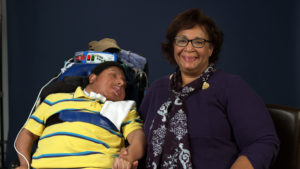
Josh and Debbi

Josh and Debbi
Photo by Jerry Smith

Josh was born in January of 1993, about 8 weeks before he was due. Complications immediately prior to and during labor led to an emergency C-section. With my husband Victor by my side, we learned upon his delivery that Josh had experienced a grade IV brain hemorrhage in utero, and had suffered from anoxia and hydrocephalus at birth as a result. The next few months in the NICU became a rollercoaster of medical ups and downs, as doctors tried to stabilize Joshua’s initial condition, while, at the same time, treat the morbidities that come with prematurity, along with the unanticipated medical effects of what would later emerge as Joshua’s disabilities.

At the time, I was working full-time as a technical writer and Victor was a full-time applications developer, under contract. We didn’t qualify for any financial supports and were unfamiliar with programs like Medicaid – but we were able to rely on the private insurance I received through my employer to provide Josh’s life-sustaining medical care. We also already had two children at home, making it imperative that both of us remain in our jobs to earn enough to support them, as well.

In the first year of his life, Josh had 10 surgeries and as many Pediatric Intensive Care Unit (PICU) hospitalizations for respiratory and shunt infections. Victor and I tried our best to juggle our jobs with daycare, Kindergarten, and Victor’s duties in the U.S. Marine Corps Reserve, all while bearing the anxiety and sadness of watching our youngest son go through this terrible ordeal. We spent countless days and nights at the hospital, often bringing our other boys along and letting them play with their toys underneath the giant metal PICU crib that held their little brother.

Despite the new stresses in our lives, I was determined to make up for any lost time at work and to meet my professional obligations. I never missed a deadline, even if that meant reporting to the office late at night and staying until the early hours of morning. It was exceedingly difficult. Still, my supervisors lacked compassion for our situation, and I feared what the loss of my job would mean for Josh – if we were to lose the health insurance that was, in those very moments, sustaining his life.

Fortunately, about a month after Josh was born – February 5, 1993 – the FMLA had become law. With the pressures at work mounting, and Joshua’s medical outcomes becoming less clear, I knew the FMLA would be my family’s last recourse to getting the time we needed to support our son.

At the time, the FMLA was new and awareness about the law was often low, including at my company. As I began to explore how to request time off through the FMLA, it became apparent very quickly that I would receive little to no support from my corporation in my decision. Even more shocking, my boss and some of my colleagues were openly critical of my need to take that time, implying that my son’s condition would simply create a lasting burden for the organization. Lack of knowledge created unwarranted fears and tension. My hope was only to have the time and resources to keep my son alive, and to give him the opportunity to thrive. Our family’s experience with Josh was a clear example of the need for the law.

Thankfully, I was ultimately able to use FMLA leave – but only after being required by my employer to first use up all of my vacation, sick time, and long- and short-term disability. Afterwards, when Josh was perhaps a year old the FMLA protected me from losing my job and our health insurance, meaning that Josh could continue to receive his vital medical care.

Josh’s needs were still critical when he first came home from the hospital at almost four months old. He was technology-dependent, needed constant skilled nursing assessment, and was discharged on ‘in lieu of hospitalization’ status. While he was prescribed home care nursing, it was difficult to find consistent, trained home care nurses, which forced me to decrease my hours to half-time and, ultimately, to work from home two days a week. After a trying period, my husband secured a job that provided us with benefits and enough income to support our family, which allowed me to resign from my job to care of our children full-time.

Without the protections offered by the FMLA, I cannot say whether Josh would still be with us – which is why I am grateful for the protections it offered us and why I will continue to speak out in support of its policies. As I reflect on our experience in fighting for leave in the months and years after Josh’s birth, I cannot help but think of how different our situation would have been if we were allowed paid family leave. The FMLA gives families like ours a chance to take care of their loved ones without bearing the repercussions of losing out on employment or health insurance. As the FMLA enters its 25th year, I believe that the next step – paid leave – should be a protected right of all working individuals.

The Arc logo

Kecia’s #MeToo Story

WARNING: This article contains descriptions of sexual assault

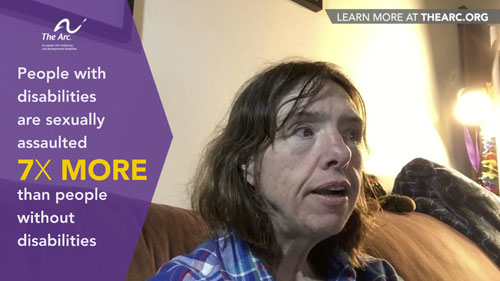
Individuals with disabilities are seven times more likely to be victims of sexual assault than those without disabilities. Kecia, sexual assault survivor-turned-advocate, is one of those individuals. She was raped, but justice was denied to her because of the failings of our criminal justice system. This is her story, in her words.

Kecia #MeTooI met this man at a self-advocacy meeting and we had very similar hobbies. I invited Michael back to my house to play chess with me. As soon as Michael entered my house, he started to kiss me and then drag me towards the couch where he proceeded to rape me.

I called the police after Michael left to report the rape. They sent a female investigator to take my report. After asking me questions, the investigator told me they would interview Michael about the rape and get back with me. Michael lied and said I wanted to have sexual contact with him. I was informed by a detective later in the week that the case closed since it was a “he said/she said” incident. For the record, I absolutely didn’t want to have any sexual contact with Michael whatsoever.

Shaken up, I called my social service agency for help and reported the rape to my case manager. My case manager listened and filled out a Special Incident Report (SIR) without offering any additional support.

I checked back with my case manager but she didn’t respond back to me for many days. I had to keep calling her to get a response. I never received a copy of the SIR report.

I am unaware if my case manager reported my rape to APS because I never received a visit from a social worker. I am totally unaware if my case manager told anyone else about my rape because once she took my report, she simply stopped responding to me.

The system had totally failed me—law enforcement, my case worker, and the case management agency. As a result of the system failing to help me, I sunk into a deep depression for several years with very severe physical and psychological events.

I am healthy today because I was referred to an excellent in-patient program with specialized therapy and a structured follow up that continues today. I have been in recovery for three years and have gained strength and found my voice so I can speak of the rape incident now.

Today I am an Abuse Awareness Prevention Advocate with the earnest desire to help other individuals rise from abusive situations and become stronger, like I am. It is because of the rape incident that I am a very strong person and I love to help others.

Kecia’s #MeToo story is a stark reminder that society needs to be discussing the very real risk individuals with disabilities are facing every day, every hour, and every minute in this country. This month, NPR released a powerful series on sexual assault and disability that included testimony from survivors – completely in their own words.

This series is drawing national attention to the epidemic facing individuals with disabilities, and we must keep the momentum on this issue going. Only then will we be able to change these jarring statistics and make systemic changes to ensure no victim has to suffer alone. All victims must have a way to tell their stories when they are ready, to be heard and believed, and to get the help they need to move from victim to survivor – just like Kecia did.

Kecia is helping others speak out and get help in many ways. One way is by supporting the work of The Arc’s National Center on Criminal Justice and Disability® (NCCJD®). Kecia is a National Advisory Committee Member and is working with NCCJD to ensure people with intellectual and developmental disabilities have equal access to the justice system, and that criminal justice professionals are well-trained to understand disability issues. She is also featured in the Talk About Sexual Violence project, which is a compilation of resources for health care professionals, families, and advocates to help them know how to talk about and prevent sexual violence.

Every person has a role to play to STOP sexual assault and violence in the lives of people with disabilities. That includes you.