Answering the Call to Service: Promoting Inclusion Through Community Volunteering
 For The Arc, the quote from Martin Luther King, Jr. – “Everybody can be great because everyone can serve” – has a special meaning. Many perceive people with disabilities as the ones in need of service – but in reality, they are an important part of civic engagement at the state, local, and national levels. That’s why we’re grateful to have been selected for a third year by the Corporation for National and Community Service to execute volunteer projects for the annual Martin Luther King, Jr. Day of Service.
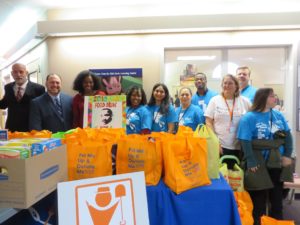
We issued grants to 12 of our chapters across the country to engage in events that addressed the problem of food insecurity in communities across the country. Events included sandwich-making competitions, donation cook-offs, food drives and delivery, and food bank volunteer events. Each chapter’s creative and engaging projects helped further our mission of community inclusion and participation for people with intellectual and developmental disabilities.
“I think it is very important as citizens and self-advocates that we show we care about the needs of people around us by getting outside our own routines and giving our time and energy to the Martin Luther King projects… I was very happy to serve in whatever way I was able to such a good cause and project.” – Sean Lewis, President of Tulsa People First in Oklahoma
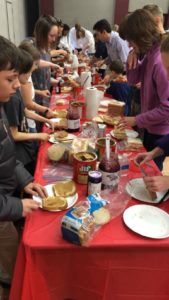 Our 2018 grantees included The Arc of the Glades (FL), The Arc of Nature Coast (FL), The Arc of South Carolina, The Arc of Northeastern Pennsylvania (PA), The Arc Rockland (NY), The Arc of Kent County (MI), The Arc of the Quad Cities Area (IL), The Arc of North Texas (TX), TARC (OK), The Arc of Davidson County and Greater Nashville (TN), The Arc of Lane County (OR), and Choices for Community Living – Delaware (a subsidiary of Liberty Arc (NY).
Inclusive volunteering gives people with and without I/DD the opportunity to meet new people in the community while helping those in need. These new connections can lead to long-lasting friendships that impact not only community members being served by the volunteers but the volunteers themselves. The projects also have led to building job skills and new community partnerships. Volunteering truly is a win-win for everyone involved! To date, chapters have collectively done 4,285 hours of service with 762 volunteers and helped 10,609 people. Congratulations to each chapter on their 2018 events so far – and stay tuned on each chapter’s social media as they continue to host events in their communities.
Martin Luther King, Jr. also said: “Life’s most persistent and urgent question is: what are you doing for others?” In our chapters, people with and without disabilities continue to answer this call to service year after year.
Learn more about The Arc’s volunteering efforts at thearc.org/inclusive-volunteering.
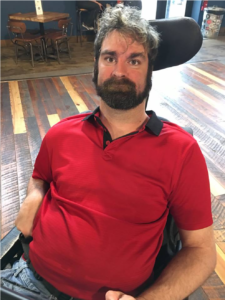 My name is Steve. I live in Roanoke, Virginia, and I have cerebral palsy. I like to do the kinds of activities many people do—go out to the mall, restaurants, concerts, bars, and travel to places like the beach. I am an advocate with people with disabilities. I go to a lot of events to talk with members of the legislature and other government officials. I recently attended an event with U.S. Senator Kaine and a town hall meeting with Delegate Rasoul. I also serve on several state boards.
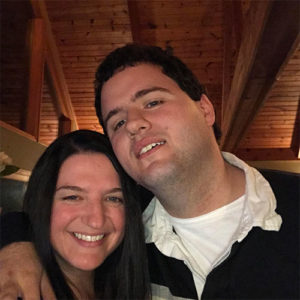 My home state of Illinois still has seven state-run institutions for people with intellectual and developmental disabilities (I/DD) open. In 2018, 37 states still have institutions where people with I/DD live institutional lives away from their families and communities. Some may recall the horrible investigative reports that showed the terrible conditions in institutions, but fail to realize that they still exist — and that state and federal government dollars are still funding them. The Arc of the United States was founded by families like mine trying to eliminate the need for those institutions, and to get their family members with disabilities back home and included in their communities. While we have come a long way, there is still much to do from state capitals to DC.
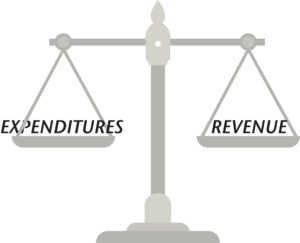 A balanced budget amendment is a proposed federal constitutional rule requiring that the government not spend more than its income in a given year. Most state constitutions have balanced-budget provisions and most of these make an exception for times of war or national emergency, or allow the legislature to suspend the rule by a supermajority vote. The U.S. Constitution does not require a balanced budget. Some members of Congress are looking to change that by passing legislation to add an amendment to the U.S. Constitution.