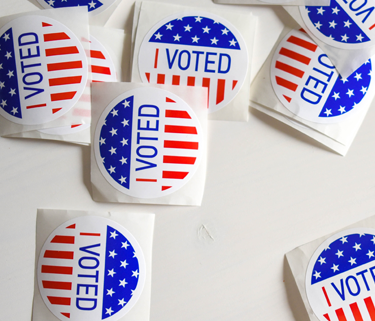
Red, white, and blue stickers that say "I Voted."

The SAVE America Act Threatens Accessible Voting for People With Disabilities

As Congress debates the SAVE America Act, people with disabilities have reason to be alarmed. The bill would require in-person proof of citizenship to register to vote in federal elections, government-issued photo ID that matches current name and address for in-person voting, and copies of photo ID with mail-in ballots. For voters with disabilities, that means new barriers at every stage of the voting process.

The reality is that too many people with disabilities face real barriers to voting. A Government Accountability Office study found that 60% of polling places had barriers for voters with disabilities, and 65% had voting stations that weren’t set up to allow a private and independent vote. Federal law mandates that voters with disabilities must have a full and equal opportunity to vote, including during registration, at the polling place, and through early or absentee voting.

Mail voting and accessible voting technology aren’t simply conveniences for people with disabilities. They’re civil rights. In the 2020 election, more than half of voters with disabilities cast their ballot by mail. The SAVE America Act would severely restrict mail registration and force online voter registration systems to be overhauled to meet its new requirements. Millions of Americans rely on those options to make their voices heard. Federal guidance makes clear that vote by mail must be accessible. When lawmakers add new in-person paperwork, photo ID requirements, or other hurdles to mail voting and registration, they risk shutting out voters who can’t easily travel, print, copy, scan, or navigate inaccessible systems.

Courts have ruled that systemic barriers preventing voters with disabilities from casting ballots are illegal. The Americans with Disabilities Act covers voter registration, polling places, and absentee voting. The Help America Vote Act requires accessible voting systems so voters with disabilities can cast a ballot with the same privacy and independence as others. The Voting Rights Act protects the right of voters with disabilities to use an assistor of their choice. The Arc has fought and won challenges against laws that restricted in-person and mail-in voting, and we’ll continue to challenge attempts to suppress the disability vote.

But statistics and legal protections only tell part of the story. Voters with disabilities live these barriers every election.

  • Lydia, who has muscular dystrophy, told us: “I think it really boils down to whether people believe that disabled people or any people from marginalized groups are deserving of the full benefits of democracy. We’re all interconnected. And I think that’s the promise of democracy—we all get to enjoy the same basic human rights and privileges as everyone else.” Lydia prefers to vote in person but needs the option to vote by mail when her specialized mobility equipment isn’t working properly.
  • Danielle, who has autism, dyslexia, and dysgraphia, has difficulty voting because she is sensitive to abrupt changes or alterations to routine. As Danielle’s mother, who assists her with voting, shared: “My daughter just needs a little more help, but she can vote. It’s her constitutional right… She wants to practice her civic duty, and she should be able to vote… People with disabilities are a part of our community and the fabric of our lives. They need to be heard.”
  • Ralph has Chronic Inflammatory Demyelinating Polyneuropathy and was hospitalized due to this condition for 6 months. Vote by mail was the only option available to him because he couldn’t leave the hospital during treatment.
  • Laura has Limb Girdle muscular dystrophy and chronic muscular respiratory failure. It’s important for her to have access to different methods of voting because her ability and energy levels fluctuate daily. It’s also much safer for her to vote by mail since she’s immunocompromised.

People with disabilities are one of the largest voting blocs in the country. One in 6 eligible voters has a disability, and 1 in 3 eligible voters has a disability or lives with someone who does. When voting is accessible, participation rises. When it’s not, people with disabilities are pushed out of decisions that shape their health care, education, housing, transportation, employment, and community living. Their votes aren’t optional, and their participation isn’t secondary.

If a bill makes it harder for people with disabilities to register, vote by mail, or cast a ballot privately and independently, it’s moving this country in the wrong direction and violating federal laws. The Arc will continue to fight in courtrooms, Congress, and communities nationwide until every voter with a disability can cast a ballot that’s accessible, private, and counted.

SAVE America Act FAQ: What Voters With Disabilities Need to Know

What is the SAVE America Act?
The Safeguard American Voter Eligibility (SAVE America) Act is the federal voting bill now being debated in Congress. It would require in-person proof of citizenship to register to vote in federal elections, government-issued photo ID for in-person voting, and copies of photo ID with mail-in ballots. Some people may still refer to an earlier version of this proposal as the SAVE Act.

How would the SAVE America Act affect voters with disabilities?
It would add new steps to registration, in-person voting, and vote by mail in a system that is already too inaccessible for many voters with disabilities. The bill includes an accessibility provision, but it is limited and does not include a clear enforcement mechanism. Federal law requires equal access to all parts of voting, including absentee voting.

Does the SAVE America Act affect mail-in voting?
Yes. The bill would require copies of photo ID with mail-in ballots, and the current debate around the bill has also included proposals to narrow mail voting further. That matters because voters with disabilities are more likely to rely on voting by mail, and mail voting must be accessible.

Why are election officials and disability advocates concerned about implementation?
The SAVE America Act would take effect immediately, gives the Election Assistance Commission just 10 days to issue guidance, and provides no funding for states to make the required changes. That rushed timeline raises serious concerns about confusion, administrative errors, and whether accessible systems would be implemented well enough to protect voters with disabilities.

Why do voters with disabilities rely on mail voting and accessible voting machines?
Because many polling places still present physical and technological barriers, and accessible voting systems plus mail voting can be the difference between having a private, independent vote and not being able to vote at all.

What laws protect the voting rights of people with disabilities?
Key protections include the Americans with Disabilities Act, the Help America Vote Act, the National Voter Registration Act, the Voting Accessibility for the Elderly and Handicapped Act, and the Voting Rights Act.

A man with disabilities stands indoors at a busy event space holding a sign that reads “I’M VOTING BECAUSE… it’s my voice!” The sign has The Arc logo in the top left and the hashtag #REVUP in the bottom right.

Voter 101: Why Voting Matters to People With Disabilities

What Is Voting?

Voting is how people make choices together. When you vote, you say what you want. We vote for people who want to lead our country, state, and city. These people are called candidates. When they win, they become elected officials.

Elected officials make choices about our lives. They decide how programs work. This includes Medicaid, Supplemental Security Income (SSI), education, housing, and transportation. When you vote, you help choose who will speak for the disability community.

Visit TheArc.org/Vote for more information about voting, including resources about guardianship and voting, tips for helping someone vote, what to do if your voting rights are denied, and more.

Why Does Voting Matter?

Laws and rules affect people with disabilities every day. Voting helps make sure leaders hear you.

People with disabilities vote less often than people without disabilities. This is called the voting gap. The gap exists because voting can be hard. Polling places may not be accessible. Rules can be confusing. Some people do not get the help they need.

When people with disabilities get clear information and support, more people vote. When more people vote, leaders pay attention. Voting helps close the gap.

Your Right to Vote

People with disabilities have the right to vote. You can vote privately and independently. Laws like the Americans with Disabilities Act and the Help America Vote Act support this right. These laws help make polling places accessible. They allow voting tools and help from a person you trust or a poll worker if needed.

Who Can Vote?

You can vote if you:

  • Are a U.S. citizen
  • Are 18 or older by Election Day
  • Live in the state where you vote
  • Register by your state’s deadline

Some people think people with disabilities cannot vote. That is not true. People with disabilities can and do vote.

Some people may not be able to vote, like non-citizens, some people with guardians, or some people with past convictions. Rules vary by state. If you are not sure, check with your local election office.

How Do You Register to Vote?

Each state has its own rules. You must register by your state’s deadline. You may need your name, address, Social Security number, and/or a state or government identification (ID).

You can check or update your registration on The Arc’s online Election Center. If you move or change your name, make sure to update your registration.

You can ask for help. A friend, family member, or support worker can help you register.

Remember: Voting is powerful. When you vote, you help shape your future and your community.

Three people with and without disabilities stand outdoors in front of the US Capitol, smiling and holding protest signs. The signs read "We Vote!," "Equity," "Disability Rights Are Human Rights," and "Stop Discrimination Now."

2026 Disability Advocacy: What We’re Watching & How to Help

Important decisions about programs for people with disabilities are happening right now. Congress is closely divided, so every action and message can make a difference. Here’s what we’re watching this spring and how you can help.

Federal Funding for Disability Programs

Every year, Congress decides how much money federal programs get.

Our policy team watches what Congress and the President want to spend money on. This includes:

  • Developmental Disability Act programs
  • Special education
  • Housing
  • Other important services

We want to make sure that the programs that people with disabilities and their families rely on stay strong.

Key Bills to Watch

Some bills in Congress could make a big difference for people with disabilities:

  • SSI Savings Penalty Elimination Act: This bill would update the rules for Supplemental Security Income (SSI) and end marriage penalties for people who get SSI. These rules haven’t changed in almost 40 years.
  • Direct Support Professional (DSP) Recognition: This bill would improve federal data on DSPs, the people who help individuals with disabilities at home and in the community. Better data could help solve workforce shortages.
  • Money Follows the Person: This program helps people move from institutions into community homes. It must be renewed to continue. We want it to keep helping people live in their communities.
  • Keeping All Students Safe Act (KASSA): This bill would ban seclusion and dangerous restraints in schools. It now has support from both parties in the House, which is an important step forward.

Education: A Critical Issue in 2026

Education policy is a major focus this year.

  • Lawmakers are talking about moving the Office of Special Education Programs (OSEP) out of the Department of Education. This could weaken how the government enforces the Individuals with Disabilities Education Act (IDEA). We are working with officials to keep strong oversight.
  • A new federal voucher program lets states choose to participate. Students who use vouchers may lose IDEA protections. Families need clear information before making decisions.

State-Level Changes to Medicaid and SNAP

Federal changes to Medicaid and SNAP passed last year. Now, each state is deciding how to put them into action. The Arc is working with our chapters to:

  • Track what happens in each state
  • Share state-specific information
  • Support local advocacy
  • Local decisions can affect communities quickly, so getting involved at the state level is important.

Ways to Get Involved in 2026

Start advocating early and often this year. Acting early is especially important because many decisions will happen by July due to midterm elections.

Here are a few ways you can help:

  • Use our Action Center to advocate for federal issues.
  • Connect with your state or local chapter of The Arc to address Medicaid and SNAP changes.
  • Contact your members of Congress or state lawmakers in person or online. Use this toolkit to make it easier.
  • Vote! One of the biggest ways to advocate is by voting for leaders who will make the decisions you want them to make about schools, jobs, health care, and daily life. Make sure you register and are ready to vote.

Every action matters. Together, we can protect rights, services, and opportunities and make sure the disability community is strengthened in 2026.

Written by: Jenny Alexander, Director, National Initiatives

A diverse group of young adults with disabilities stand together in a circle with their heads close, smiling. The view point is looking up at them from inside the circle.

Developmental Disabilities Awareness Month: 2026 Theme & Ways to Act

Developmental Disabilities Awareness Month is observed every March to recognize people with developmental disabilities, celebrate inclusion, and spotlight the barriers that still block full participation in community life. The month traces back to a 1987 presidential proclamation calling the nation to increase awareness of the needs and potential of Americans with developmental disabilities.

Key Takeaways

  • Developmental Disabilities Awareness Month happens every March.
  • The 2026 theme is “We’re Here: Then, Now, Always.”
  • You can take action by donating, volunteering, and sharing accurate information and stories (with consent).

What Is a Developmental Disability?

A developmental disability is a lifelong condition that can affect learning, language, mobility, or independent living. Developmental disabilities occur in every community and across all backgrounds.

The Big Picture

Here’s what drives us at The Arc: the fundamental belief that everyone deserves to write their own life story. That means real access to education, meaningful employment, quality health care, and genuine community connections. Too many barriers still stand in the way of these basic rights. This month, we’re making more space for self-advocates and families to share what needs to change, and what real inclusion looks like.

History

The roots of Developmental Disabilities Awareness Month trace back to 1987, when President Ronald Reagan proclaimed March 1987 as National Developmental Disabilities Awareness Month.

2026 Theme: “We’re Here: Then, Now, Always”

This year’s national theme from the National Association of Councils on Developmental Disabilities (NACDD) is “We’re Here: Then, Now, Always.” It connects past, present, and future, recognizing progress, naming what’s still at risk, and reinforcing that community living and inclusion must be protected and funded.

What We’re Doing

Change happens when people come together, and that’s what The Arc’s nationwide network does every day. This month, we’re sharing stories from people with developmental disabilities and their families that reflect real life: goals, barriers, pride, and the supports that make inclusion possible.

There’s Marcus, whose job search shows how talented, dedicated workers face discrimination. Lawrence, who’s showing the world what’s possible for athletes with disabilities. Ashley, who’s revolutionizing how we think about diversity and inclusion. Steve, who shows us that people with disabilities thrive when they can live independently in their communities, not institutions. Carlos, who persevered through immigration, bullying, and discrimination to graduate college and build his accounting career. And Mitch, whose voice on our board helps shape how we support people with disabilities.

Three Ways to Take Action

“Segregation and discrimination still cast an ugly shadow over the lives of millions of people with disabilities. This month, we must elevate the leadership and priorities calling for true inclusion—in our schools, workplaces, and communities. When we follow self-advocates’ lead and remove unfair barriers, communities get stronger for everyone.” – Katy Neas, CEO of The Arc

Frequently Asked Questions

What is Developmental Disabilities Awareness Month?
It’s observed every March to recognize people with developmental disabilities, celebrate inclusion, and highlight barriers that still exist.

When is Developmental Disabilities Awareness Month?
Every March.

What is the 2026 DDAM theme?
“We’re Here: Then, Now, Always.”

What is a developmental disability?
A lifelong condition that can affect learning, language, mobility, or independent living.

How can I support DD Awareness Month?
Learn, share accurate resources, support disability-led leadership, volunteer locally, and donate if you’re able.